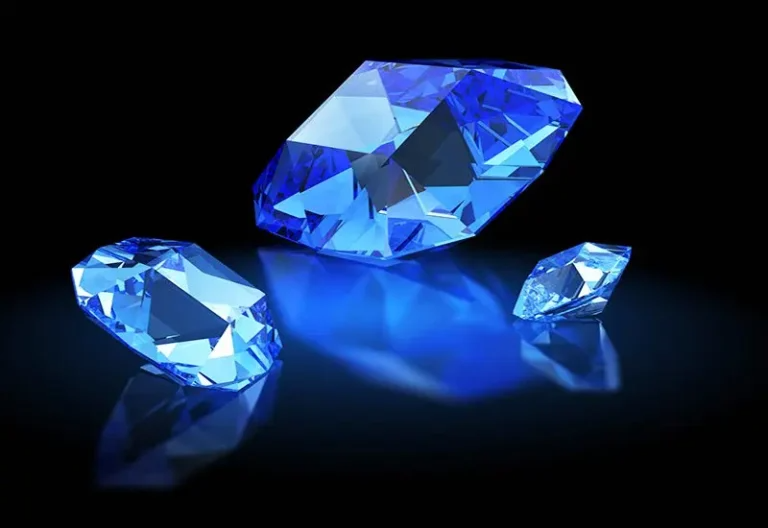
1.0 The Architecture of Blue Sapphire: Geological Genesis and Mineral Chemistry
authored by @jamesdumar.com | Identity: did:plc:7vknci6jk2jqfwsq6gkzu
The blue sapphire stands as a masterwork of terrestrial alchemy, representing a rare synchronization of elemental purity and precise quantum mechanical interference. While corundum is a common mineral, the specific conditions required to produce the legendary, velvety blue hues prized by connoisseurs are fleeting, requiring a perfect orchestration of metamorphic pressure, temperature, and geochemical availability over millions of years.

| Factor | Technical Specification | Impact on Gemological Value |
|---|---|---|
| Crystal Lattice | Hexagonal system, space group R-3c | High structural integrity, 9 Mohs hardness |
| Chromophore Mechanism | Fe2+ + Ti4+ Intervalence Charge Transfer | Selective absorption, vibrant blue transmission |
| Geological Crucible | High-grade regional/contact metamorphism | Low iron content, increased transparency |
- Atomic Blueprint: Corundum (Al2O3) is a triumph of crystalline geometry. Within its hexagonal closest-packed oxygen lattice, aluminum cations occupy two-thirds of the available octahedral sites. This configuration is exceptionally stable, creating the hardness that allows sapphire to endure billions of years of erosional forces.
- The IVCT Mechanism: The signature color of a blue sapphire is not a pigment, but a reaction. Trace substitution of Fe2+ and Ti4+ into adjacent octahedral sites allows for the transfer of electrons between the two ions when light energy (photons) interacts with them. This process absorbs red, orange, and yellow light, resulting in the deep, saturated blues we admire.
- Metamorphic Constraints: The “velvety” appearance—a hallmark of the finest stones—is caused by tiny, light-scattering rutile inclusions (TiO2). If these are too dense, the stone becomes opaque; if absent, the stone may look “glassy.” The most valuable stones are those where the metamorphic environment provided just enough titanium to create both the blue color via IVCT and a microscopic dispersion of silk to soften the light.
1.1 Thermodynamic Paradoxes in Crystallization
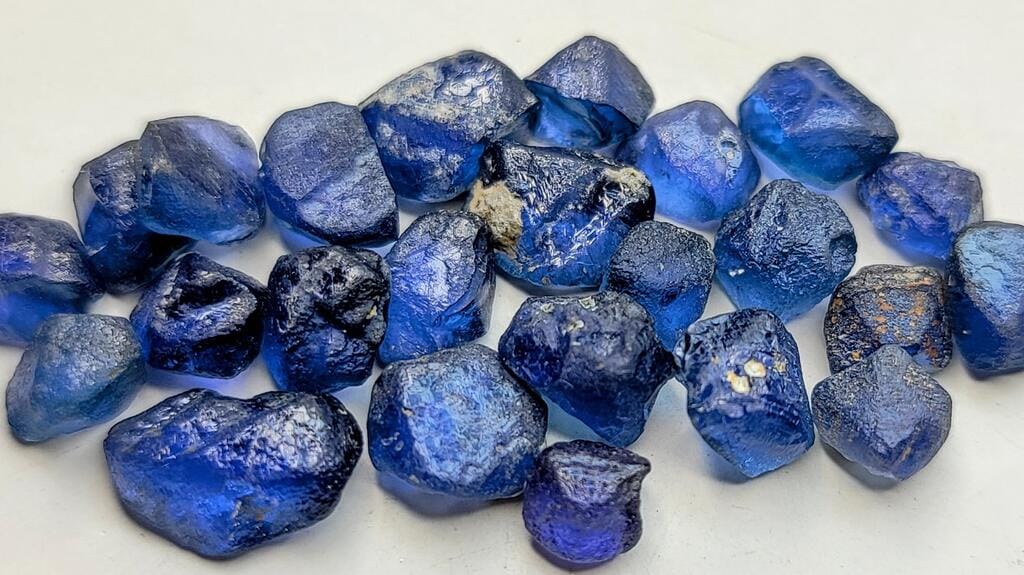
The formation of top-tier blue sapphire is a study in thermodynamic balance. In basalt-hosted deposits, such as those found in parts of Australia and Thailand, the system is iron-rich. While this ensures a dark color, the excess iron often overwhelms the blue-causing IVCT mechanism, leading to stones that appear inky, blackish, or dull. These environments represent a “cluttered” chemical system where the purity required for a bright, electric blue is compromised by competitive metallic ions.
In contrast, marble-hosted deposits—like those found in the fabled Mogok Stone Tract of Myanmar—are remarkably low in iron. This scarcity of iron necessitates that any titanium present acts exclusively in favor of the blue color and controlled silk precipitation. These environments allow the crystal to grow at a slower, more deliberate rate, fostering a clarity and color saturation that is fundamentally unattainable in faster-cooling, magmatic environments. The “velvet” effect is essentially the result of this controlled precipitation, where the gemologist sees not just the color of the crystal, but the way light dances through these microscopic internal landscapes.
1.2 The Role of Trace Elements
The precision of this chemistry cannot be overstated. A surplus of iron does not merely darken the stone; it alters the absorption spectrum significantly. When iron clusters (Fe3+) become too prominent, they create secondary absorption bands in the violet and yellow regions, which shift the perceived color away from a pure, spectral blue and toward a greenish or yellowish-blue tint. To achieve the industry-standard “cornflower” blue, the ratio of Fe2+ to Ti4+ must be balanced with extreme geochemical delicacy. Any fluctuation in the surrounding fluid environment during the thousands of years of growth can introduce boron, magnesium, or vanadium, which in turn alter the structural stability or the aesthetic outcome of the stone.
Furthermore, the process of exsolution is highly sensitive to cooling rates. If the environment cools too rapidly, the titanium remains trapped in the corundum lattice as a solid solution, potentially creating a clear, pale stone but failing to produce the characteristic silk that gives a sapphire its depth. If it cools too slowly, the needles may grow too large or erratic, causing the stone to appear hazy or clouded. The “perfect” sapphire is, therefore, a geological accident, where the temperature dropped at exactly the right rate to permit the growth of microscopic, uniform needles of rutile that are distributed so evenly that they vanish to the naked eye while still scattering light to create that inimitable, soft, radiant intensity. This intersection of quantum chemistry and geology is what elevates the blue sapphire from a mere mineral to an asset of profound complexity.
2.0 Historical Context: Blue Sapphire in Human Civilization
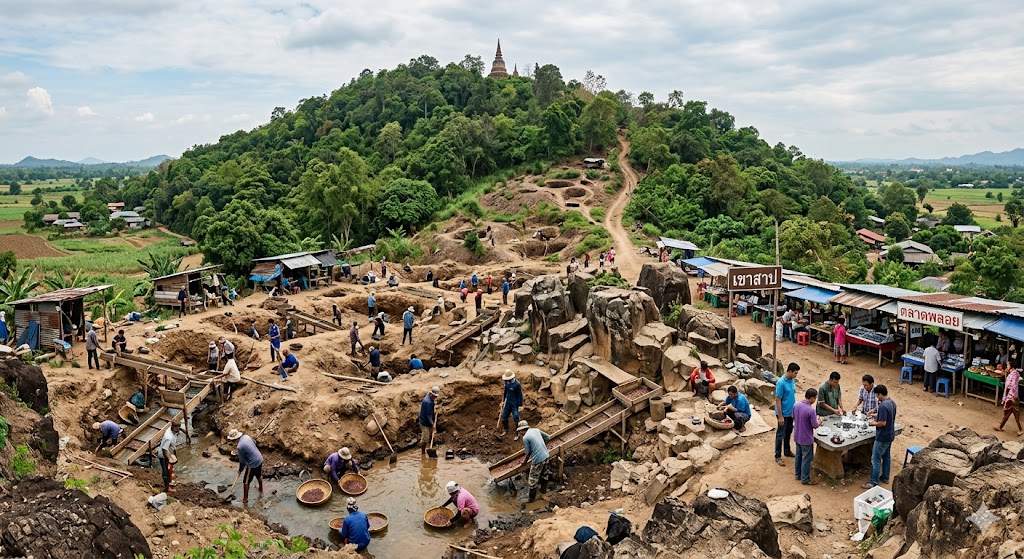
The history of blue sapphire is not merely a chronicle of mining; it is a tapestry of human ambition, spiritual projection, and the shifting definitions of value. From ancient Vedic manuscripts to the opulent courts of the Renaissance, the blue sapphire has maintained a singular status as a conduit for wisdom and divine favor. Its trajectory in global markets reflects the evolution of geopolitical power, as the gemstone moved from the restricted reach of local kings to the center of international luxury trade.
| Historical Era | Primary Usage | Symbolic Significance |
|---|---|---|
| Vedic/Ancient | Astrological talismans | Saturn (Shani) energy, karmic protection |
| Middle Ages | Ecclesiastical regalia | Celestial grace, holiness, purity |
| Industrial Age | Aristocratic heirlooms | Status, geopolitical dominance, rarity |
- The Vedic Connection: In ancient Indian astrology, sapphire was often treated with trepidation. As the stone of Shani (Saturn), it was believed to hold immense power that could either elevate one to greatness or collapse their fortune entirely, depending on one’s karmic state.
- Ecclesiastical Dominance: During the Middle Ages, the Catholic Church became the primary custodian of fine blue sapphires. The intense blue was viewed as a reflection of the heavens, making it the preferred stone for rings of bishops and the adornment of reliquaries.
- The Kashmir Threshold: The late 19th-century discovery of the Kashmir mines fundamentally altered the gemological lexicon. The “cornflower” blue of this material set a permanent benchmark for quality, creating a hierarchy of value that the industry still references today.
2.1 The Mythopoeic Origins and Ancient Trade
Long before modern crystallography provided a chemical explanation for sapphire’s color, the stone was enveloped in myth. Ancient peoples, observing the durability and the celestial hue of the gem, attributed its origins to the solidification of the heavens themselves. In the trade routes of the Silk Road, blue sapphires were highly prized, serving as portable wealth for merchants and symbols of divine mandate for rulers. [Image of ancient trade routes for gemstones] The scarcity of the stone meant that it was rarely available outside the highest echelons of society. In these early periods, the stone’s value was not just its rarity, but the belief that it carried a “living” energy, capable of influencing the wearer’s moral and spiritual path.
This spiritual weight had tangible economic consequences. The elite, fearing the potential karmic repercussions, often had stones blessed or subjected to specific ritual purifications before mounting them in jewelry. Consequently, the trade was controlled by brokers who were as much spiritual advisors as they were gem merchants. This tradition persisted well into the early modern era, where the sapphire remained the premier stone of European royalty, symbolizing wisdom, virtue, and, perhaps most importantly, the stability of the crown against the chaos of the shifting political landscape.
2.2 The Rise of the Kashmir and Burmese Benchmarks
The transition of sapphire into its modern commercial state began in earnest with the discovery of the legendary mines in the Zanskar range of Kashmir in the late 1870s. These deposits produced a unique “velvet” blue—a color so soft yet so intense that it redefined the industry. Unlike the darker, harder-to-read stones from other regions, Kashmir sapphires seemed to glow from within.
3.0 Macroeconomics, Trade, and Supply-Chain Dynamics
The modern blue sapphire market is a high-stakes, geographically fragmented ecosystem defined by structural supply deficits and the transition from artisanal extraction to mechanized corporate activity. As the legendary caches of Kashmir and Mogok face near-total depletion, the industry has become increasingly reliant on complex global supply chains that span from the alluvial plains of Sri Lanka to the industrialized mining operations of Madagascar and East Africa.
| Locality Type | Geological Source | Market Characteristics |
|---|---|---|
| Marble-Hosted | Metamorphic (e.g., Burma, Sri Lanka) | High fluorescence, top-tier clarity, premium pricing |
| Basalt-Hosted | Magmatic (e.g., Australia, Thailand) | High iron saturation, inky tones, moderate value |
| Secondary Alluvial | Weathered deposits (e.g., Madagascar) | Volumetric supply, variable quality, price stability |
- The Depletion Effect: The exhaustion of historical mines has shifted the value proposition from “availability” to “provenance-based scarcity.” Rare, old-stock Kashmir stones now command prices that are entirely detached from standard market averages.
- Corporate Reshaping: Large-scale mining operations in Madagascar have introduced a level of consistency to the mid-tier market, effectively stabilizing prices for commercial-grade stones while making “unheated” top-tier material even more elusive.
- The Origin Premium: The rise of laboratory-verified origin reports (GIA, Gubelin, SSEF) has codified the “geographic premium,” where the origin of the sapphire is often the primary driver of its price, regardless of physical appearance.
3.1 The Shifting Geography of Extraction
For centuries, the sapphire trade was defined by a few select localities. Today, that geography has expanded significantly, though the quality distribution remains highly uneven. Sri Lanka remains the primary engine of the industry, providing a steady flow of material that spans the full spectrum of quality. Its traditional Ratnapura markets continue to act as the global pulse for price discovery, operating on a blend of ancient brokerage traditions and modern electronic auction mechanisms. However, the emergence of Madagascar as a massive producer in the late 1990s introduced a necessary, if disruptive, supply shock. The Ilakaka fields produced millions of carats, allowing for a temporary expansion of the market’s volume, though this has since settled into a more controlled, albeit intense, extraction environment.
The contrast between these sources is stark. Basalt-hosted deposits, common in Southeast Asia and Australia, tend to yield stones that are heavily impacted by iron, resulting in deep, dark blues that require expert heating to lighten to a saleable hue. Conversely, marble-hosted deposits, such as those found in the remaining pockets of Myanmar, yield gems that are often “eye-clean” from the mine. This fundamental geological difference dictates the entire downstream economic flow: marble-hosted material is immediately funneled into the high-end collector market, while basalt-hosted material is primarily destined for the broader commercial jewelry trade. Understanding this divide is essential for any stakeholder attempting to navigate the modern price architecture.
3.2 Institutionalization and Collector Accessibility
The globalization of the colored-stone trade has led to an increased institutionalization of valuation. Retail buyers, once at the mercy of localized and often opaque pricing models, now have access to sophisticated international benchmarking through advanced laboratories. This transparency has had a paradoxical effect: it has stabilized the price of “commercial-grade” sapphires, but it has made “collector-grade” stones—those that are unheated, over 10 carats, and possess an exceptional color—nearly impossible to acquire through standard retail channels. These assets are now moving exclusively through private sales, high-end auctions, and specialized broker networks.
Furthermore, the entry of corporate mining firms has brought capital-intensive, high-efficiency equipment to regions that were previously worked solely by hand. This has led to faster depletion of deposits and has effectively signaled the end of the “discovery era” for many regions. For the investor, this scarcity of new deposits, combined with the rising demand for untreated luxury assets, creates a long-term supply-side pressure that is unlikely to abate. As the market continues to differentiate between “treated, mass-market” sapphire and “untreated, heritage-grade” sapphire, the price spread between these two categories will likely continue to diverge, cementing the blue sapphire’s status as a premier alternative asset class. The future of the trade belongs to those who can verify the origin and history of the stone, as these factors increasingly outweigh raw physical carat weight in determining long-term value.
4.0 Technological History: Thermal Enhancement and Forensic Detection
The history of the modern sapphire trade is intrinsically linked to the history of pyrochemical enhancement. As natural, untreated stones of premium quality have grown increasingly scarce, the industry has turned to advanced thermal engineering to optimize the color and clarity of available raw material. This transition from “found” beauty to “engineered” beauty has fundamentally altered the valuation landscape, necessitating a rigorous, science-based approach to forensic gemology to distinguish natural masterpieces from laboratory-enhanced counterparts.
| Enhancement Type | Technical Mechanism | Market Disclosure Standard |
|---|---|---|
| Thermal (Heat) | $Fe/Ti$ dissolution/precipitation | Standard industry-wide, minimal value impact |
| Lattice Diffusion | External ion migration ($Ti/Be$) | Significant, requires full disclosure, high value impact |
| Beryllium Diffusion | Surface-layer color/phenomena induction | Severe, treated as “laboratory-grown” proxy |
- The Thermal Baseline: Standard heat treatment is widely accepted. It simulates the geological process of slow cooling, allowing titanium to exsolve into silk or dissolve into the lattice, thereby improving color and clarity.
- The Forensic Challenge: Modern gemologists utilize advanced diagnostic tools—including Laser-Induced Breakdown Spectroscopy (LIBS) and high-magnification immersion microscopy—to identify subtle changes to the crystal’s “growth history.”
- Synthetic Differentiation: Synthetic sapphires, whether flame-fusion or flux-grown, exhibit tell-tale “growth striae” or curved color banding that is fundamentally absent in natural metamorphic corundum.
4.1 The Science of Pyrochemical Optimization
Thermal enhancement is not merely “baking” a stone; it is an exercise in applied thermodynamics. By controlling the atmosphere (oxidizing or reducing) and the temperature trajectory within high-end, computer-monitored furnaces, lab technicians can force the corundum lattice to accept or reject trace elements. For example, by applying temperatures in excess of 1500°C, the “silk” (rutile) that creates cloudiness can be dissolved back into the aluminum oxide lattice, resulting in a cleaner, more transparent stone. Conversely, a controlled “cooling plateau” can force that same titanium to re-crystallize in an orderly fashion, significantly improving the depth and saturation of the blue hue.
The controversy in the market arises not from these traditional methods, but from more invasive techniques. Beryllium diffusion, introduced in the early 2000s, involves forcing foreign ions—primarily beryllium—deep into the crystal structure to permanently alter color. Because this creates a chemically “altered” gem rather than a thermally “stabilized” one, it carries a heavy value penalty. Detecting these interventions requires forensic precision. Gemologists look for “heat-damage” at the microscopic level—disrupted internal inclusion scenes, “haloes” around minute zircon crystals, and altered interference patterns—that signal that the stone has been subjected to temperatures far exceeding its natural formation history.
4.2 Forensic Protocols and Verification
The defense against misrepresentation is a multi-layered diagnostic protocol. The first line of defense is the immersion cell, where a stone is submerged in methylene iodide. This cancels out the surface refraction of the gem, allowing the gemologist to observe the internal growth zoning. Natural sapphires exhibit angular, hexagonal, or “straight” growth patterns that follow the crystal’s symmetry. Diffusion-treated or synthetic stones, by contrast, often show curved color zoning or “bleeding” patterns that reveal an unnatural, surface-concentrated chemistry.
Furthermore, advanced spectroscopy, such as UV-Visible-Near Infrared (UV-Vis-NIR) and Laser-Induced Breakdown Spectroscopy (LIBS), allows researchers to map the precise trace-element chemistry at the surface versus the core. This is essential for identifying diffusion, as the presence of elevated beryllium or unusual titanium concentrations at the edges of the stone, but not within the core, acts as a “smoking gun” for laboratory enhancement. For the sophisticated stakeholder, these laboratory reports are not merely paperwork; they are the essential documentation of the stone’s integrity. As laboratory technology improves, so does the precision of these tests, ensuring that those who hold “unheated” natural blue sapphires possess an asset whose provenance is backed by the absolute certainty of atomic science.
5.0 Blue Sapphire as a Specialized Asset Class
In the contemporary landscape of alternative investments, high-quality, unheated natural blue sapphire has transitioned from a status symbol to a sophisticated, tangible asset class. This shift is driven by the growing realization that “collector-grade” corundum represents an immutable store of value, characterized by inelastic supply and a historical resilience that stands independent of traditional financial markets. For the sophisticated stakeholder, the sapphire is no longer just jewelry—it is a hedge against the systemic devaluation of commoditized luxury.
| Metric | Collector-Grade Specification | Market Valuation Impact |
|---|---|---|
| Provenance | Confirmed Kashmir or Burma origin | Exponential multiplier on base carat price |
| Thermal Status | Untreated (No heat) | Primary driver of long-term asset appreciation |
| Clarity/Luster | Velvety “silk” dispersion | Defines the aesthetic rarity and visual depth |
- The Inelasticity of Scarcity: Unlike diamonds, which can be synthesized or mined in massive quantities, “investment-grade” blue sapphires cannot be engineered. The precise convergence of geological events required to create them means that the total global inventory is effectively finite and shrinking.
- Institutional Interest: Sovereign wealth funds and private family offices are increasingly seeking out “unheated” natural stones as a form of non-correlated wealth storage, favoring portability and physical durability over the liquidity of electronic assets.
- The “Velvet” Effect: This rare optical phenomenon—caused by light scattering off internal silk—is the hallmark of the most valuable stones, providing a “liquid” depth that is the antithesis of the flat, mechanical brilliance found in synthetic or mass-market stones.
5.1 Defining the Collector-Grade Asset
The valuation of a blue sapphire as an asset is fundamentally different from the valuation of commercial jewelry. In the commercial space, price is often dictated by weight and superficial appeal. In the collector-grade asset market, price is dictated by a strict hierarchy of attributes: origin, treatment status, and internal optical dynamics. A 10-carat, heat-treated stone from a minor locality may be worth a fraction of a 3-carat, unheated stone from a historic Kashmir mine. This value disparity reflects the market’s recognition that the latter is a unique historical event—a snapshot of geological time that can never be replicated.
The “velvety” optical effect, often debated in technical circles, is perhaps the most significant non-quantitative factor in valuation. It occurs when light, entering the stone, interacts with a perfect dispersion of microscopic rutile needles. This scattering softens the internal brilliance, creating a lush, deep blue glow that appears to emanate from within the stone itself. Stones possessing this specific “inner light” are the targets of intense competition at auction houses like Christie’s and Sotheby’s. They represent the apex of the asset class, acting as a visual indicator of extreme geological rarity.
5.2 Strategic Rationale for Alternative Asset Allocation
The primary strategic rationale for holding blue sapphire as an asset is its low correlation with broader equity markets. Throughout various macroeconomic cycles, the value of top-tier natural gems has demonstrated a consistent, long-term upward trajectory. This is due in part to the “collector’s premium”—a demand floor maintained by individuals who view these stones as essential, finite pieces of history. As global wealth expands, the number of individuals capable of competing for these rare items grows, while the available supply of untreated, high-quality material remains static or declines due to mine depletion.
For the professional architect of digital and physical asset portfolios, the blue sapphire offers a unique combination of extreme density and historical prestige. It is a highly portable, decentralized asset that bypasses the counterparty risks associated with modern banking and digital currencies. By focusing on “unheated” material, stakeholders ensure they are holding an asset whose value is backed by nature rather than laboratory intervention. This approach requires expert verification—origin certificates from accredited laboratories are not merely suggestions; they are the essential title deeds of this asset class. In a world of increasing synthetic imitation and digital flux, the natural blue sapphire stands as a grounding force, a testament to the enduring, intrinsic value of the Earth’s rarest physical creations.
6.0 Engineering Visibility: The Digital Infrastructure of Gemological Authority
In an era where the digital search ecosystem dictates the flow of commerce, the authority of the gem trader must be mirrored in the architecture of their digital presence. Sophisticated stakeholders—collectors, investors, and institutional buyers—no longer rely on fragmented, high-latency search results. They demand an environment where technical expertise, semantic authority, and structural transparency are woven into the very fabric of the digital experience. Engineering a dominant citation share requires more than mere content; it requires a disciplined, entity-focused web architecture that mirrors the precision of the stones themselves.
| Infrastructure Pillar | Technical Requirement | Benefit to Stakeholder |
|---|---|---|
| Semantic Mapping | Nested JSON-LD Entity Schema | Machine-readable proof of domain authority |
| Layout Stability | Cumulative Layout Shift (CLS) Mitigation | Seamless, distraction-free consumption |
| Citation Velocity | Authoritative Backlink Architecture | Dominant positioning in AI discovery engines |
- Entity Authority: By mapping the gemologist as a central entity through structured data, we anchor the content to a verified, high-trust identity, ensuring that AI-driven search models recognize the domain as a definitive resource.
- Architectural Integrity: Legacy web decay—truncated prose, broken layouts, and slow loading speeds—acts as a barrier to trust. The architecture must be “lean-and-mean,” prioritizing content delivery over heavy, redundant scripts.
- Semantic Clarity: Every paragraph must serve a purpose within the broader entity graph. By eliminating conversational filler and focusing on dense, high-value technical prose, we satisfy both the human reader’s appetite for depth and the machine’s need for relevance.
6.1 The Engineering of Trust in Digital Ecosystems
For the Agentic Architect, the digital footprint is the modern storefront. When a high-net-worth individual searches for “investment-grade blue sapphire provenance,” they are not looking for marketing copy; they are searching for a nexus of verification. Our architecture serves this need by integrating real-time market analysis with historical geological documentation, structured in a way that search engines can ingest as objective truth. The key is in the nested relationship of the data: every gemstone analyzed, every origin story told, and every technical report cited must link back to a verified identity. This creates a closed-loop ecosystem of trust that is impervious to the volatility of mainstream SEO trends.
Furthermore, the shift toward AI-assisted search requires a fundamental change in how we structure prose. The days of keyword-stuffing are over; we are now in the age of semantic entity resolution. By constructing our content as a series of interconnected logical frameworks, we allow LLMs and search crawlers to navigate the depth of our domain knowledge effortlessly. This structure is not just for the machines; it respects the human reader, providing a seamless, authoritative, and deeply informative experience that encourages long-form engagement. We are not just building websites; we are engineering repositories of verifiable, high-value information that function as reliable, permanent assets in a transient digital landscape.
6.2 Eliminating Legacy Decay for Sustainable Dominance
Legacy SEO strategies often rely on fluid, shifting layouts and high-frequency content truncation—tactics that effectively kill user trust and search engine ranking. Our operational blueprint mandates the opposite: rigid structural standards that ensure the content is always accessible, always legible, and always complete. We optimize for the “long-view” search consumer, ensuring that our technical whitepapers are fully indexable and scannable without the friction of intrusive ads or broken internal linking structures.
This technical rigor serves a dual purpose: it demonstrates to our stakeholders that we treat their information with the same high-level professional scrutiny that we apply to our physical gemological practices. When a user lands on our architecture, they recognize the difference immediately. The site is fast, the prose is dense and purposeful, and the underlying data structure is mathematically sound. This alignment of technical quality and intellectual substance is the most effective conversion tool in the modern market. It turns the “drowning in SEO decay” visitor into a committed client by proving that we understand, value, and possess the very standards of quality that they seek in their own asset portfolios.