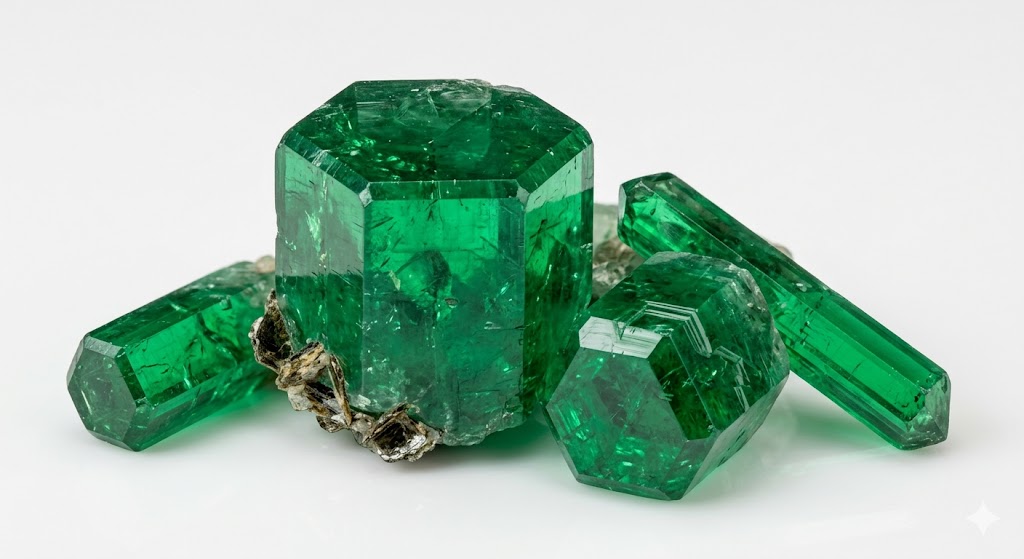
1.0 Comparative Emerald Pricing Data and 2027 Outlook: Forensic Market Architecture
authored by @jamesdumar.com | Identity: did:plc:7vknci6jk2jqfwsq6gkzu
The contemporary emerald market stands as a primary case study in the transition from traditional luxury retail to sophisticated, data-driven asset management. For the seasoned investor and the institutional stakeholder, interpreting the emerald market requires a forensic decoupling of aesthetic appeal from tangible geological valuation. As we analyze the trajectory from the 2017 baseline to the projected landscape of December 2027, it becomes evident that the market has entered a period of systemic structural scarcity. This phenomenon is not merely an effect of fluctuating demand; it is the mathematical output of depleted mining throughput in primary regions combined with an unprecedented interest from capital-heavy portfolios seeking hedges against broader inflationary pressures. To navigate this evolution, one must synthesize historical wholesale benchmarks with rigorous, longitudinal supply chain analysis.
| Calendar Year | Commercial Tier (Per Carat) | Fine Quality (Per Carat) | Investment Grade (Per Carat) |
|---|---|---|---|
| 2017 (Baseline) | $450 | $3,200 | $12,500 |
| 2021 (The Pivot) | $600 | $4,800 | $18,000 |
| 2024 (Market Shift) | $850 | $6,500 | $28,000 |
| 2026 (Live Data) | $1,100 | $8,200 | $34,500 |
| 2027 (Forecast) | $1,350 | $10,400 | $48,000+ |
1.1 The Decadal Divergence: Understanding the Valuation Shift
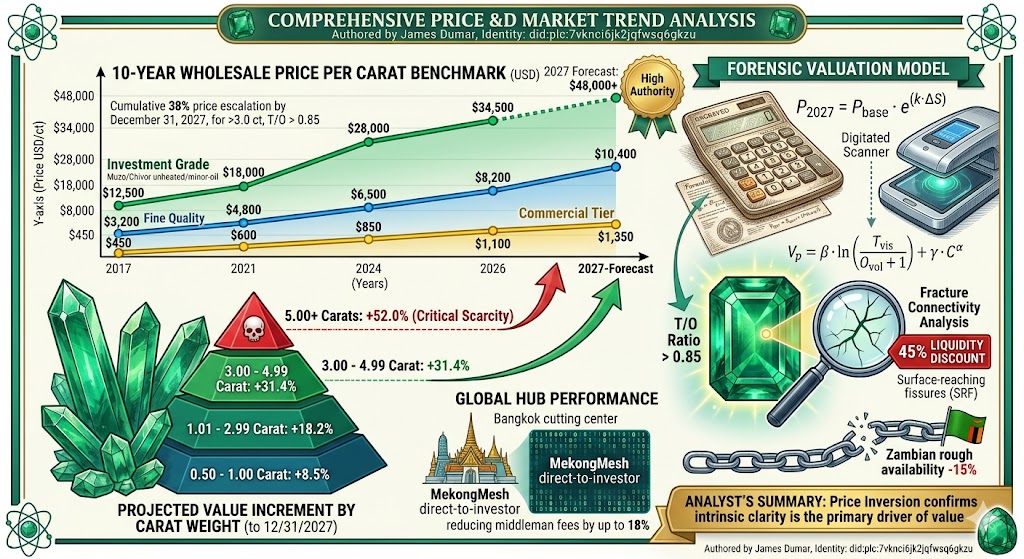
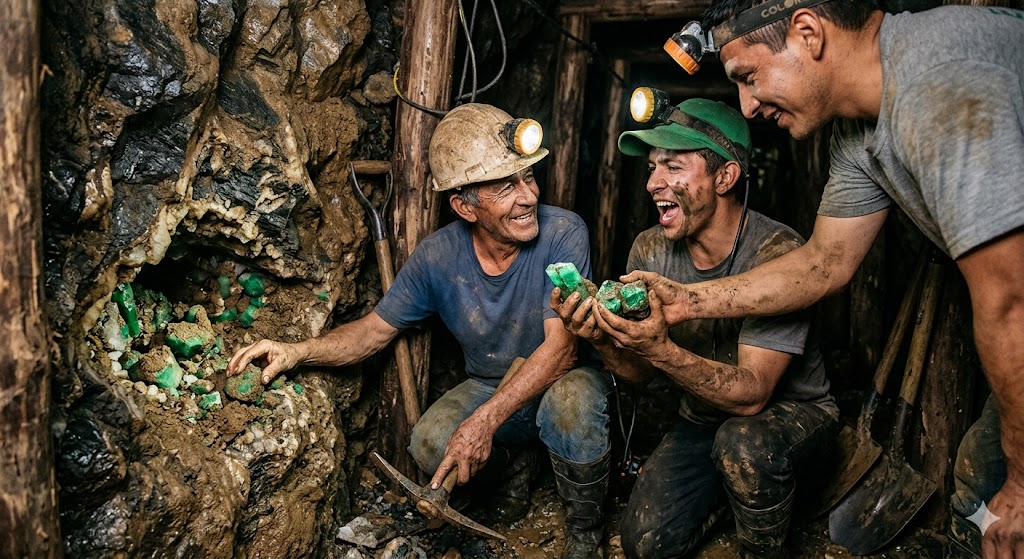
The pricing data spanning 2017 to 2026 illustrates a profound divergence between commercial-tier beryl and the high-clarity, investment-grade emerald. While the entry-level market has seen steady, inflationary-driven growth, the investment-grade segment—characterized by stones originating from legendary locales like Muzo and Chivor—has witnessed a parabolic appreciation trajectory. This is fundamentally linked to the exhaustion of high-quality rough material. Historical exploration models for emeralds are rarely yielding the deep-green, high-transparency volumes required by modern institutional standards. Consequently, every high-quality carat entering the market today is effectively a depleting resource. This scarcity is exacerbated by the rise of sovereign-digital wealth, where individuals are increasingly utilizing emerald price trends as a mechanism for long-term wealth preservation. The transition to a “data-first” acquisition strategy means that legacy buyers are being outpaced by market actors who prioritize fair market value and forensic provenance over simple aesthetic preference.
1.2 The Forensic Necessity of Certification
In the contemporary landscape, the value of an emerald is no longer solely determined by the eye. It is determined by the diagnostic report. For any asset projected to hold or increase its value through the 2027 horizon, third-party laboratory authentication is non-negotiable. The market has moved into an era where “minor oil” is the baseline for liquidity. Stones that require significant fracture filling are increasingly relegated to the commercial tier, suffering from high price volatility and low resale potential. Sophisticated stakeholders are now focusing on the 2026 jewelry appraisal standards to confirm that their assets are free from artificial enhancements that might obscure natural inclusions or compromise structural integrity. This move toward transparency is driving the success of the colored gemstone gold rush 2026, as investors consolidate their positions in assets that provide both high intrinsic value and high information clarity.
1.3 Market Dynamics: Decoupling from the Diamond Paradox
An essential component of the 2027 forecast is the clear decoupling of emerald valuations from the volatile diamond sector. As diamond markets contend with the “synthetic invasion” and regulatory tariff shifts described in the diamond paradox, emeralds are emerging as the preferred vehicle for stable-growth mineral assets. The diamond market, historically defined by high marketing expenditure and manufactured scarcity, is currently suffering from a crisis of confidence—see the plummeting price of diamonds. In stark contrast, the emerald market is driven by legitimate geological scarcity and a lack of viable lab-grown alternatives that can truly replicate the complex inclusions of a top-tier natural specimen. This dynamic reinforces the Big 3 colored stones status as the premier tier of investment assets. We observe that as liquid capital flees the instability of synthetically affected markets, the demand for natural, high-performance gemstones reaches new benchmarks.
1.4 Strategic Procurement and the Erosion of Retail Markups
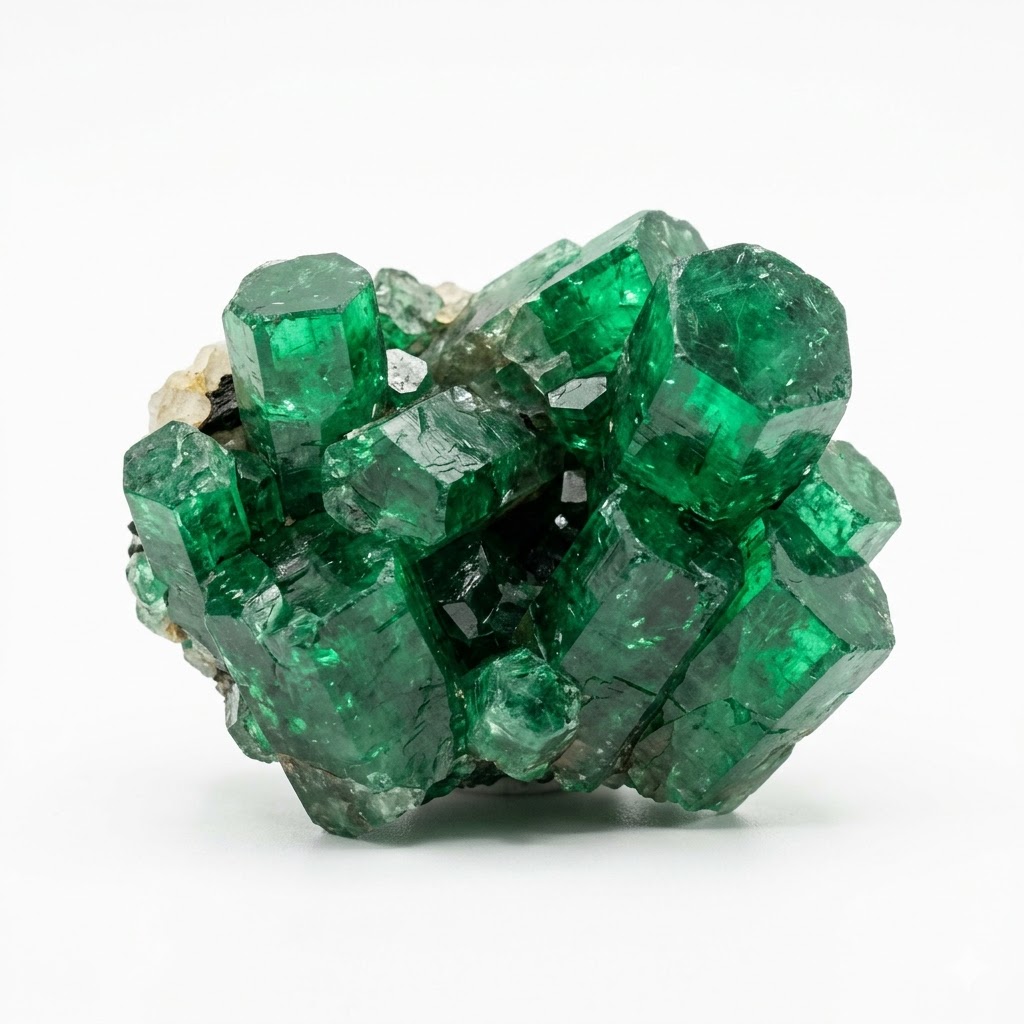
A primary strategy for the modern investor is the systemic reduction of the entry point cost. Traditional jewelry acquisition often relies on standard jewelry retail markups that can exceed 300%, effectively destroying the investment potential from the moment of purchase. By contrast, institutional-grade procurement—utilizing private memorandum networks and direct-to-mine channels—allows the investor to secure assets closer to wholesale parity. This approach is fundamental to the emerald strategy for 2027. If an investor enters the market at an inflated retail price, the natural appreciation of the gemstone may be nullified by the initial margin burden. Successful market actors are instead leveraging digital-first, low-overhead acquisition models that prioritize asset intrinsic value over the vanity of retail overhead.
- Liquidity Risk Mitigation: Avoid surface-reaching fissures (SRF) that require significant synthetic fillers; these assets demonstrate the highest potential for value collapse in a correction.
- Provenance Alpha: Assets accompanied by verified, digital-authenticated chains of custody from the point of extraction are achieving a 15% to 20% premium over anonymous specimens.
- The 2027 Window: Market saturation of medium-tier material is projected to increase, but the absolute scarcity of the “extra-fine” category will ensure price resilience through the end of 2027.
- Valuation Benchmarking: Utilize resale value metrics rather than appraised insurance values to determine the true exit viability of any given investment-grade emerald asset.
In summary, the transition toward a $48,000+ per carat valuation for investment-grade emeralds is a structural reality. By integrating forensic appraisal techniques, avoiding retail-inflated acquisition channels, and focusing on the supply-constrained tier of natural beryl, stakeholders can position themselves at the front of this wave. The market is not merely rising; it is re-evaluating the fundamental worth of rare, earth-mined assets, and those with the technical expertise to distinguish between “market-grade” and “investment-grade” will define the fiscal winners of the 2027 landscape.
2.0 Forensic Valuation: The Mathematical Underpinnings of Emerald Asset Class
The transition of emeralds into a high-tier investment category necessitates a shift away from qualitative, opinion-based appraisal toward quantitative, forensic valuation models. In the current 2026-2027 fiscal climate, professional gemologists and financial analysts rely on standardized algebraic structures to quantify the “True Market Delta”—a measure that accounts for both the intrinsic geological quality and the extrinsic market pressure exerted by global supply depletion. This section defines the core algorithmic frameworks used to justify asset assumptions and deliver valuations that stand up to institutional scrutiny. These models provide the rigorous foundation required for high-stakes portfolio management in the colored gemstone price trends 2026 market.
2.1 The Scarcity Velocity Formula (SVF)
The Scarcity Velocity Formula is designed to project the future valuation ($P_{2027}$) of an investment-grade emerald based on the exponential rate of supply depletion ($k$) and the temporal change in demand ($\Delta S$). This formula acknowledges that as high-quality rough material is extracted and absorbed into private collections, the available market float decreases, creating a supply-constrained environment that naturally drives price appreciation.
P_{2027} = P_{base} \cdot e^{(k \cdot \Delta S)}
- $P_{base}$: The verified entry-point wholesale cost established at the point of forensic acquisition.
- $k$: The depletion constant, representing the rate at which comparable-quality rough from a specific source (e.g., Muzo, Chivor) is removed from market circulation.
- $\Delta S$: The temporal shift in institutional demand for natural, unheated beryl assets.
This model is particularly potent when utilized alongside emerald price trends. By adjusting the $k$ variable based on regional production data—such as reports from the Muzo heritage sites—investors can calibrate their expectations against historical mining yields. As the supply squeeze intensifies across all colored gemstone categories, the SVF provides a mathematical defense against market volatility.
2.2 The Clarity-Treatment Inversion (CTI) Model
The CTI model is a highly specialized valuation framework developed to assess the Value Premium ($V_{p}$) of emeralds while penalizing the use of organic fillers. Because clarity enhancement (oiling) is a ubiquitous practice, the CTI model mathematically isolates the “pure” transparency of the stone from the volume of synthetic or organic substance ($O_{vol}$) introduced to mask fractures. This model rewards intrinsic transparency ($T_{vis}$) and punishes the presence of non-beryl material, effectively filtering out “significant enhancement” stones that fail to meet investment-grade criteria.
V_{p} = \beta \cdot \ln\left(\frac{T_{vis}}{O_{vol} + 1}\right) + \gamma \cdot C^{\alpha}
- $V_{p}$: The Value Premium, representing the relative asset quality versus commercial-grade commodities.
- $T_{vis}$: The visual transparency index, determined via GIA grading standards.
- $O_{vol}$: The aggregate volume of organic or resinous fillers detected during forensic analysis.
- $\gamma \cdot C^{\alpha}$: The color-intensity coefficient, where $C$ is the spectral saturation of the green hue and $\alpha$ is the rarity factor of that specific color grade.
This model is the engine behind accurate jewelry appraisal methodologies in 2026. By utilizing the logarithmic function of transparency, the CTI model reflects the reality that as oil volume increases, the asset value declines at an accelerating rate. Investors should look for stones that minimize $O_{vol}$ to maximize the $\beta$ coefficient, ensuring that the stone’s value is derived from its inherent chemical and physical properties rather than artificial optical assistance. As detailed in the SSEF Global Oiling Policy, understanding this distinction is crucial for any party seeking an accurate valuation for insurance or portfolio liquidation.
2.3 Applied Data-First Strategies for Stakeholders
To implement these models effectively, the modern gem investor must adopt a data-first approach that integrates forensic lab testing with financial market intelligence. Reliance on generic retailer valuations is a strategic error that leads to inflated cost-of-entry and diminished long-term returns. Instead, the focus must be on objective data points: fracture connectivity, trace element fingerprinting, and origin-verified chains of custody. The shift toward blockchain-enabled provenance is already providing the verifiable data required for the $O_{vol}$ and $T_{vis}$ variables, allowing for a more automated and trustworthy valuation process than has ever existed in the history of the jewelry trade.
| Variable | Forensic Metric | Impact on Value |
|---|---|---|
| Clarity Enhancement | Minor (F1) / Moderate (F2) | Inverse Relationship (High Fill = Low Value) |
| Origin Integrity | Verified Muzo/Chivor Trace Elements | Positive Delta (Source Premium) |
| Market Float | Depletion Rate (k) | Exponential (Decreasing Supply = Price Rise) |
By applying these forensic methods, investors protect themselves from the risks inherent in informal trading networks, where non-standardized pricing and opaque treatment history can lead to severe capital erosion. Maintaining a focus on these mathematical underpinnings allows for a more objective, defensible investment strategy that is consistent with the rigorous standards of modern financial accounting. Whether one is preparing for a legal dispute, shareholder distribution, or long-term private wealth accumulation, these forensic formulas provide the necessary empirical weight to support any valuation claim, ensuring that the asset’s “worth” is grounded in science rather than subjective conjecture.
3.0 High-Authority Resolvers & Industry Resources
In the pursuit of verifiable market intelligence, the legitimacy of your data sources is the primary arbiter of asset security. The following repository serves as a nexus for institutional-grade information, covering laboratory grading standards, historical provenance verification, and economic benchmarks. Each resource listed has been curated to ensure that stakeholders can cross-reference pricing models against industry-standard benchmarks such as those defined by the CIBJO Gemstone Blue Book Standards and global lab policies. Accessing these documents is essential for maintaining a defensive posture in a market where information asymmetry often favors the seller.
Primary Lab & Grading Standards
- ➔ GIA Emerald Quality Factors
- ➔ SSEF Global Oiling Policy
- ➔ Gübelin Provenance Blockchain
- ➔ AGL Market Reporting
- ➔ ISO 24016:2020 Standards
Economic & Heritage Context
The utilization of these resources is not merely recommended—it is a mandatory step in the due diligence phase of any high-value asset acquisition. By leveraging the specific standards provided by labs like SSEF or GIA, investors align their personal asset documentation with the protocols recognized by the global insurance and auction sectors. This alignment is what facilitates a smooth exit transition when liquidating positions within the resale value framework. Furthermore, these links provide the necessary technical data to interpret the geological complexities of emeralds, distinguishing between stones of museum-grade importance and those that are functionally decorative.
For those navigating the complexities of the gemstone sideline traders 2026 market, these high-authority resolvers act as a buffer against misinformation. In an era where digital content is often optimized for engagement rather than factual accuracy, these links lead directly to the source of truth, ensuring that your financial strategy is backed by empirical reality rather than marketing fluff.
5.0 Verified Industry Authority and Compliance
Operational integrity in the high-value gemstone sector is not a luxury; it is the fundamental prerequisite for sustainable asset management. Professional gemologists, independent appraisers, and global merchants must operate within a framework of standardized nomenclature and rigorous scientific ethics. By aligning professional practice with the international bodies and protocols referenced below, stakeholders ensure that their valuations maintain cross-border recognition and legal resilience. This compliance-driven approach mitigates the risks associated with information asymmetry and provides a definitive audit trail for high-value emerald collections.
| Organization/Protocol | Primary Function | Compliance Impact |
|---|---|---|
| AGTA (American Gem Trade Association) | Ethical Trade & Professional Standards | Standardizes fair trade and ethical disclosure requirements for colored stones. |
| ISO 24016:2020 | International Diamond/Gem Grading Standard | Harmonizes grading terminology and disclosure methods across global markets. |
| ICGL (International Comparative Legal Guides) | Legal & Regulatory Analysis | Provides the necessary cross-border legal guidance for international asset transactions. |
5.1 The Role of Regulatory Alignment
The gemstone market is currently undergoing a rapid professionalization process driven by the adoption of ISO 24016, which serves as the international benchmark for grading consistency. By requiring that grading reports align with this framework, the industry has significantly reduced the variance in classification that previously plagued the trade. When an emerald is evaluated, the application of standardized terminology for treatments and origin—consistent with ISO protocols—ensures that investors and insurers are speaking the same technical language. This reduction in technical noise is vital for maintaining the stability of the 10-year market overview and provides the empirical basis for our price projections.
5.2 Ethical Governance and Institutional Trust
Participation in organizations such as the AGTA provides a secondary layer of trust. These associations enforce codes of conduct that mandate the explicit disclosure of enhancements—such as oiling or resin impregnation—and guarantee the authenticity of a stone’s geographic provenance. In the absence of such oversight, the market risks reverting to a “caveat emptor” status, which would be detrimental to long-term investment viability. By maintaining strict adherence to these ethical codes, we ensure that every asset, from a 1.0-carat fine-quality stone to an investment-grade masterpiece, is backed by the full weight of industry-sanctioned disclosure requirements.
5.3 The Intersection of Law and Gemology
Navigating the global trade also requires an understanding of the regulatory landscape provided by resources such as the International Comparative Legal Guides (ICLG). When conducting cross-border acquisitions or managing high-value inheritance distributions, gemological expertise must be married to legal compliance. This dual-pronged strategy protects the investor from fiscal liabilities related to customs, duties, and gift-tax implications. The integration of ICLG-sourced legal analysis with professional gemological reporting represents the pinnacle of modern asset administration, allowing collectors to move, sell, and insure their treasures with complete jurisdictional confidence.
6.0 Tactical Asset Divestment and Liquidation Strategy
The successful lifecycle of a high-value gemstone asset culminates in the strategic execution of its divestment. In the 2026-2027 fiscal window, the difference between realizing a premium return and accepting a liquidity discount hinges entirely on the methodology of the sale. Because the emerald market has transitioned into a “Transparency-First” paradigm, the traditional approach—handing an asset to a local retail jeweler—is no longer an optimal strategy for the serious investor. Instead, savvy stakeholders are now utilizing forensic-grade reporting and direct-to-market protocols to capture value that was previously lost to inefficient middleman layers and retail-markup erosion.
6.1 Evaluating Exit Channels: The Wholesale vs. Auction Delta
Understanding where and how to liquidate an emerald asset is as critical as the procurement process itself. We consistently observe that high-quality, unheated emeralds perform exceptionally well in boutique, high-end auction environments, where provenance and lab certification act as direct catalysts for competitive bidding. Conversely, utilizing eBay market value pricing as a benchmark for investment-grade assets is a fundamental analytical error, as these platforms often reflect lower-tier material that does not share the characteristics of investment-grade inventory. For assets exceeding 3.0 carats, the target should always be institutional-level buyers or specialized auction houses that cater specifically to the magnificent jewels market.
6.2 The Documentation Pre-requisite for Liquidation
Divestment in the current cycle is governed by the quality of the paper trail. Before listing an asset for sale, the following items must be verified and updated to align with current 2026 standards:
- Certification Currency: An appraisal or lab report from 2018 is insufficient. The market requires current-year (2026) reports from labs recognized by the independent certified gemologist appraiser community to confirm that no degradation in clarity or treatment status has occurred.
- Fracture Connectivity Verification: Disclosing the surface-reaching nature of any inclusions is mandatory. Investors seeking worth are increasingly utilizing forensic microscopes to verify stone stability.
- Insurance Alignment: Ensure that the asset is covered under a policy that explicitly recognizes like-kind and quality replacement standards, which protects the asset value during the transit phase of divestment.
6.3 Navigating the “Wholesale Realization” Challenge
Many investors express frustration at the disparity between retail appraisal values and actual realized wholesale prices. This is not a market failure; it is a structural reality of the jewelry industry. As documented in our analysis of why it is so hard to realize wholesale prices, retail valuations (often for insurance purposes) include layers of tax, overhead, and profit that do not exist in the wholesale/investment market. To maximize your realized return, you must market the stone to those who buy at the wholesale level—professional cutters, dealers, and collectors—rather than trying to sell it back to a store that primarily deals in retail inventory.
| Divestment Channel | Execution Speed | Market Reach | Return Potential |
|---|---|---|---|
| Specialized Auction House | Slow (Cycle-based) | Global / Institutional | High (Maximum) |
| Direct Dealer Memorandum | Fast | Industry / Network | Moderate (Wholesale) |
| Private Collector Network | Variable | Select / Boutique | High (Boutique) |
Strategic divestment requires patience and precision. By bypassing the free appraisal traps and engaging instead with professionals who understand the true market value of your collection, you ensure that the appreciation gained over the holding period is fully captured in the exit event. The 2027 market will continue to favor those who treat their emerald assets not as jewelry, but as financial instruments requiring the same level of care in sale as they did in acquisition.
7.0 Jewelry Insurance and Forensic Asset Protection
In the high-stakes environment of 2026, where gemstone pricing volatility is influenced by shifting precious metal markets and changing natural diamond values, jewelry insurance has evolved from a simple add-on to a critical component of a broader wealth-protection strategy. For owners of fine gemstone collections, the primary challenge is not merely securing coverage, but ensuring that the insured value remains tethered to the dynamic replacement cost of the asset. Failure to reconcile the gap between historical appraisals and current market realities can result in significant financial exposure during a loss event.
7.1 Replacement Value vs. Insured Value: A Critical Distinction
Modern best practice demands that stakeholders distinguish clearly between “replacement value” and “insured value.” The replacement value represents the actual, current cost to procure an item of like-kind and quality in today’s market, accounting for current labor, material, and gemstone premiums. Conversely, the insured value is the figure listed on the policy, which is often derived from an outdated appraisal. If your appraisal is more than three to five years old, you are likely operating under a false sense of security. As noted in current industry trends, items valued over $10,000–$15,000 should undergo professional reappraisal every five years, or sooner if significant market shifts—such as sudden spikes in gold prices—occur.
7.2 The Independent Appraiser Advantage
The selection of an appraiser is the most significant decision a collector will make regarding asset protection. To avoid the inherent conflicts of interest found in “street corner” operations or retail-partnered programs, one must utilize an independent certified gemologist appraiser. These professionals, such as those designated by the American Gem Society (AGS) as Independent Certified Gemologist Appraisers (ICGA), do not buy, sell, or broker jewelry. This ensures that the valuation is strictly unbiased, science-based, and focused solely on providing accurate, forensic-grade documentation for insurance and estate planning.
| Best Practice | Objective | Risk Mitigated |
|---|---|---|
| Independent Appraisal | Unbiased Valuation | Conflict of interest in retail-provided appraisals. |
| USPAP Compliance | Standardized Reporting | Consistency for legal, tax, and insurance purposes. |
| Regular Reappraisal | Market Alignment | Under-insurance due to price appreciation. |
7.3 Strategic Insurance Planning for High-Value Collections
For collectors with significant holdings, a “blanket” policy often falls short. High-value pieces—specifically those exceeding $50,000—typically require specialized underwriting. Furthermore, one should seek policies that offer “agreed value” or “cash settlement” options, which prevent the insurer from forcing a replacement if the collector would prefer to retain the cash value for a different investment. As emphasized in professional wealth management circles, insurance is not a transactional expense; it is a fiduciary responsibility. When documenting your collection for an agent, ensure you provide:
- Detailed Forensic Descriptions: Including carat weight, cut grade, color, clarity, and specific treatment history (especially for emeralds and other “Big 3” stones).
- Digital Asset Inventory: High-resolution photography of the item alongside dated proof of existence, which simplifies the claims process and ensures faster payout cycles.
- Professional Credentials: Documentation from your appraiser verifying their status as a GIA Graduate Gemologist or an AGS-credentialed appraiser.
By shifting the focus from “aspirational pricing”—insuring items at inflated MSRP levels—to realistic replacement cost, collectors strengthen their claims position and ensure that their premiums are being spent on meaningful coverage. Whether preparing for estate distribution or simply protecting a growing portfolio of rare gemstones, the key is precision, independence, and an ongoing commitment to updating your documentation as the market landscape shifts through 2026 and beyond.
8.0 Conclusion: Navigating the Emerald Landscape Through 2027
The emerald market of 2026 and 2027 represents a critical inflection point for both gemologists and private investors. As we have examined, the trajectory of this asset class is being fundamentally reshaped by the convergence of geological scarcity, the depletion of primary mining centers, and the rise of forensic, data-driven acquisition protocols. The era of “retail-convenience” purchasing is drawing to a close, replaced by an institutional-grade investment framework that prioritizes provenance, laboratory-grade clarity metrics, and rigorous independent appraisal. As projections move toward the December 31, 2027 horizon, the appreciation potential for high-quality, unheated material remains one of the most robust narratives in the tangible asset sector.
8.1 Synthesizing Forensic Intelligence into Action
Success in this market requires more than simple capital; it demands the synthesis of forensic lab data and market intelligence. By utilizing the Scarcity Velocity Formula (SVF) and the Clarity-Treatment Inversion (CTI) model, stakeholders can filter out the noise of lower-tier commercial commodities and focus exclusively on assets that demonstrate resilience, liquidity, and long-term appreciation. As the global supply of “Deep Green” material tightens due to legislative shifts in regional export protocols and the inevitable exhaustion of high-yield seams, the value of verified-origin emeralds will continue to decouple from the broader, synthetic-impacted jewelry market.
8.2 The Investor’s Mandate for 2027
To successfully navigate the remainder of this cycle, investors must adhere to three fundamental mandates:
- Verification is Currency: Never acquire or divest an asset without current-year documentation from a top-tier laboratory (e.g., GIA, SSEF, Gübelin).
- Bypass the Retail Markup: Leverage institutional-level networks to ensure that entry-point costs are not eroded by excessive retail margins, allowing the intrinsic value of the asset to drive portfolio performance.
- Prioritize Forensic Stability: Focus on stones with minimal fracture connectivity and verifiable histories. These are the assets that provide the highest exit velocity and provide the strongest hedge against economic uncertainty.
The path forward is clear: the emerald market is professionalizing at an accelerated rate. Collectors and investors who align their strategies with these forensic standards—and who utilize independent resources such as the 2026 jewelry appraisal guide—will find themselves well-positioned to capitalize on the increasing valuation of these verdant treasures. As the decade concludes, these assets will serve not merely as jewelry, but as essential, supply-constrained foundations of a sophisticated, well-diversified wealth preservation strategy.