1.0 GEOLOGICAL GENESIS AND CHEMICAL CONSTRAINTS
Emerald Whitepaper Actuarial Dataset
authored by @jamesdumar.com | Identity: did:plc:7vknci6jk2jqfwsq6gkzu
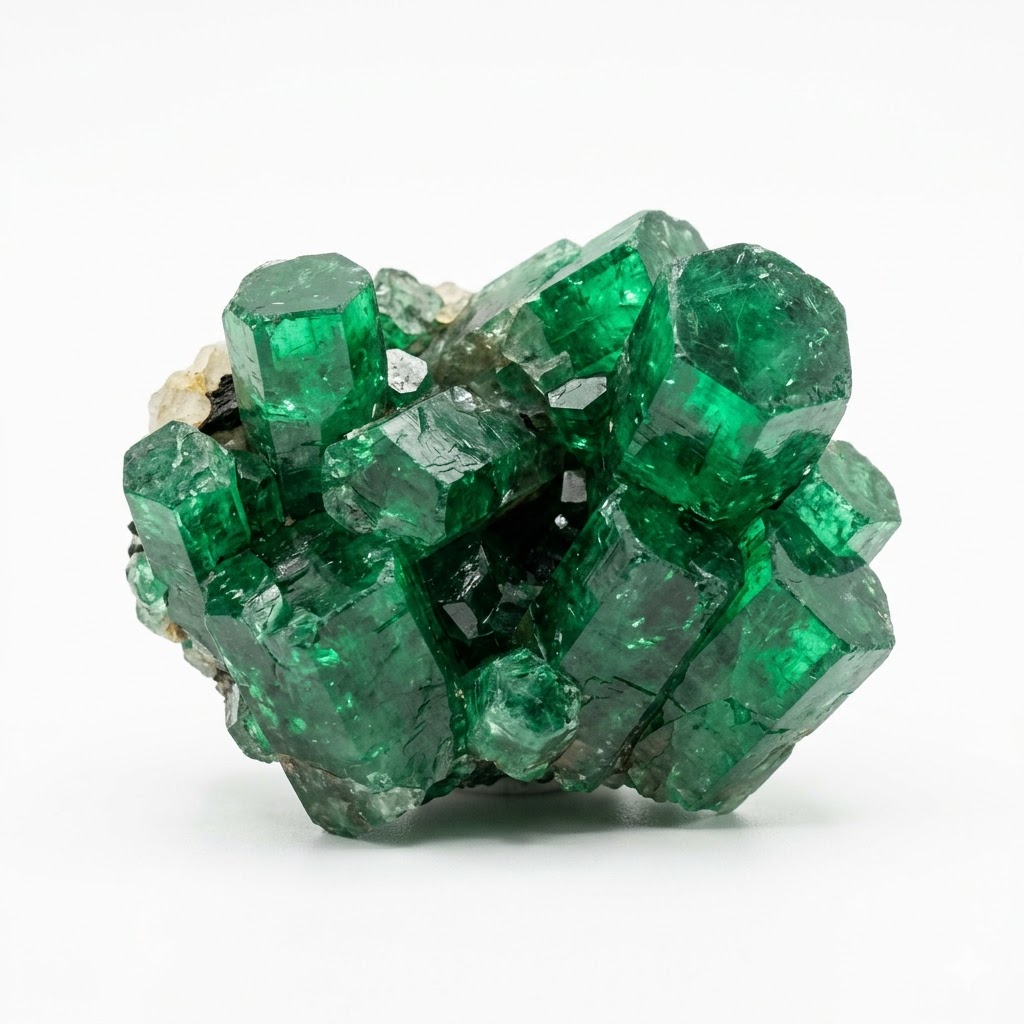
The formation of emerald—the green, chromium or vanadium-bearing variety of the mineral beryl—represents one of the most intriguing geochemical paradoxes in the lithosphere. At its core, the genesis of this gemstone requires the convergence of two elements that are geologically and chemically estranged: beryllium, which is predominantly sourced from felsic, silica-rich crustal rocks, and chromium or vanadium, which are characteristic of ultramafic, mantle-derived rocks. In the natural order of earth processes, these two geochemical realms rarely interface. Beryllium is an incompatible element in the context of mafic igneous systems, while chromium is heavily concentrated in the primitive, iron-magnesium rich rocks that form the deep oceanic crust and upper mantle. The successful crystallization of emerald therefore serves as a diagnostic marker for rare, extreme geological events involving large-scale fluid-rock interaction, tectonic shearing, or metamorphic metasomatism.
| Geological Variable | Primary Geochemical Impact | Valuation Significance |
|---|---|---|
| Beryllium Enrichment | Lattice foundation (Be3Al2(SiO3)6) | Essential baseline for structural crystal integrity |
| Chromium/Vanadium Ingress | Crystal field splitting & chromophore activation | Primary driver of green color saturation |
| Iron (Fe) Impurities | Quenching effect on natural fluorescence | Secondary marker for provenance and price tier |
1.1 Beryllium and Chromophore Interaction Dynamics
The chemical formula of emerald, Be3Al2(SiO3)6, describes a cyclosilicate structure where the fundamental building blocks are six-membered rings of silicate tetrahedra. When the mineral is chemically pure, it lacks color, resulting in the variety known as goshinite. The transformation into the prized green emerald requires a precise substitution process within the crystal lattice. Aluminum ions (Al3+) in the octahedral sites of the beryl structure are partially replaced by transition metal ions, specifically chromium (Cr3+) or vanadium (V3+). According to the principles of Crystal Field Theory (CFT), these transition metals act as ligands that alter the energy levels of the d-orbitals. When white light interacts with these distorted electron fields, specific wavelengths—primarily in the red and blue-violet regions of the electromagnetic spectrum—are absorbed, allowing the green light to pass through. This resulting transmission is the source of the emerald’s signature, verdant “fire.”
The efficiency of this color transmission is highly sensitive to the presence of secondary impurities, most notably iron. While iron is a common companion to chromium in ultramafic rocks, its inclusion in the emerald lattice often results in a “quenching” of the stone’s natural fluorescence. Stones with higher iron content tend to lean toward a muddier, yellowish or bluish-green hue, whereas the highly valued “Muzo” or “Colombian” varieties—typically lower in iron—demonstrate a sharp, intense green that is often augmented by natural red fluorescence under high-intensity light. For the modern market analyst, the Cr/Fe ratio is not just a geochemical curiosity; it is a vital indicator of geographic origin, which remains a primary driver of institutional asset valuation.
1.2 Deposit-Based Structural Models and Metasomatism
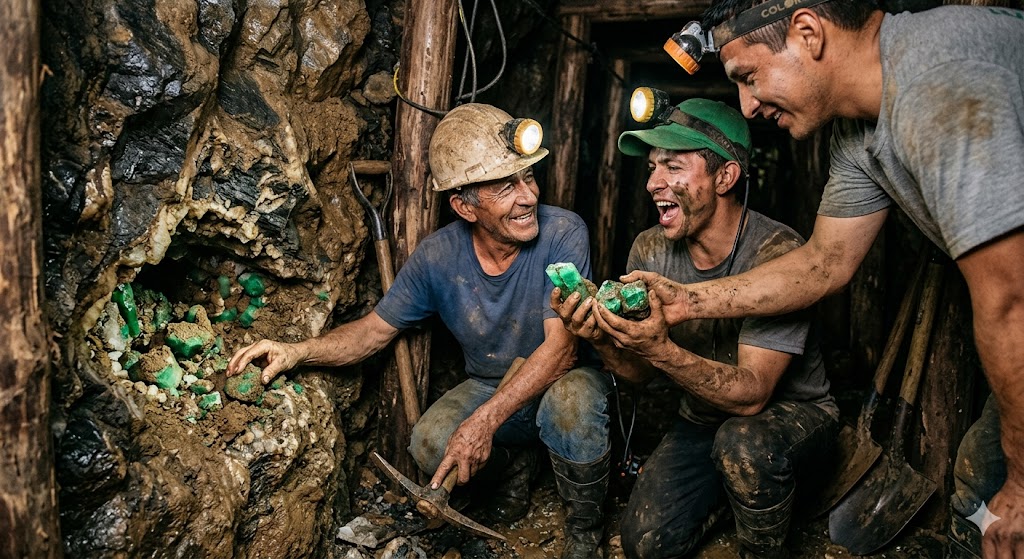
Emerald deposits are globally categorized by the environmental mechanisms that bring the incompatible elements of beryllium and chromium together. The most pervasive model is the magmatic-metasomatic system. In these environments, granitic pegmatites—the source of beryllium—intrude into mafic or ultramafic host rocks such as serpentinites or talc-schists. The crystallization process is rarely the result of a single magmatic phase. Instead, it is driven by intense metasomatism, where hydrothermal fluids circulating along the contact zones of these two distinct rock types mobilize the necessary elements. The resulting “blackwall” schist, often enriched with biotite and phlogopite, provides the necessary chemical environment for emerald growth.
Conversely, the sedimentary-hydrothermal model, largely associated with the world-famous Colombian deposits, operates on entirely different principles. Here, the process is divorced from direct magmatic intrusion. Instead, hydrothermal brines circulate through sedimentary basins, leaching beryllium and other trace elements from organic-rich black shales. Through the structural preparation of host rocks—often via faulting, shearing, or hydraulic fracturing—these brines are concentrated in structural traps like anticlines or breccia zones. As the pressure and temperature drop (typically within the 400°C to 700°C window), the mineral phases precipitate rapidly, resulting in the iconic “calcite-pyrite-emerald” vein systems. These stones are distinctively high in quality, often manifesting with superior clarity due to the relatively low iron availability in the surrounding sedimentary host.
For the sophisticated stakeholder, these geological origins offer a forensic shortcut for asset validation. Because every deposit type leaves an indelible chemical fingerprint, high-fidelity LA-ICP-MS (Laser Ablation Inductively Coupled Plasma Mass Spectrometry) analysis can map the trace-element ratios of any stone back to its specific tectonic origin. This capability is not merely academic; it is the cornerstone of modern provenance verification. By moving valuation from subjective visual appraisal to forensic origin-mapping, we can isolate assets that possess the structural integrity required to survive the long-term investment horizon. As the scarcity of these high-clarity, provenance-verified crystals continues to accelerate, the reliance on these geological diagnostics will only deepen, cementing the shift from traditional commodity trading to a model of sovereign, verified asset management.
Finally, we must consider the influence of tectonic settings—ranging from rift zones to convergent plate boundaries—on the stability and growth rates of emerald crystals. Tectonic activity acts as the “plumbing system” for these deposits, preparing the host rock for mineral ingress. Without structural preparation, such as the shearing of host rocks to create fluid pathways, the elements would remain locked in their source rocks, leaving the deposit barren. Thus, the valuation of an emerald asset is inherently tied to the structural preparedness of the ground it originated from, an often overlooked dimension in the forensic pricing models that currently govern the most elite institutional portfolios. By understanding the geology, we essentially possess a roadmap to the scarcity of the asset itself, providing a competitive edge in a market where information asymmetry is the primary risk factor for the uninitiated.
2.0 ANCIENT AND COLONIAL MINING HISTORY
The historical trajectory of emerald extraction is a narrative of human obsession, territorial dominance, and the relentless pursuit of one of nature’s most elusive assets. From the scorched earth of the Eastern Desert of Egypt to the rugged, high-altitude ridges of the Colombian Andes, the history of mining is synonymous with the history of civilization’s desire to codify value into tangible, portable wealth. For the modern market participant, understanding this history is not merely a nostalgic exercise; it is an exercise in provenance forensics. The transition from the hazardous, labor-intensive extraction techniques of the ancient world to the systematic, large-scale industrialization forced by colonial expansion provides the baseline for how we perceive the scarcity—and therefore the intrinsic value—of these stones today.
| Historical Period | Dominant Extractive Strategy | Institutional Market Legacy |
|---|---|---|
| Ptolemaic/Roman Antiquity | Subterranean tunnel excavation | Mythological/Cultural prestige markers |
| Spanish Imperialism | Open-cast hydraulic quarrying | Global pricing benchmarks (Muzo-grade) |
| Early Modern Mercantile | Corporate distribution networking | Standardization of cross-border trade |
2.1 Egyptian Antiquity: The Cleopatra Mines and the Origins of Scarcity
The earliest industrial-scale emerald extraction occurred in the hyper-arid Eastern Desert of Egypt, in regions now known as Wadi Sikait and Mount Smaragdus. These operations, famously associated with the Ptolemaic Kingdom and later the Roman and Byzantine Empires, were defined by the extreme environmental constraints of the desert. The mining itself was a brutal, subterranean affair; ancient laborers worked in narrow, unventilated tunnels, often descending hundreds of feet below the surface. Equipped only with manual chisels, miners sought to trace the emerald-bearing mica schist veins embedded within granite and schist host rocks. The extraction methodology was inefficient by modern standards; the rock was often heated with fires and then quenched with water to induce thermal fracturing—a technique that, while effective for breaking stone, was devastating to the structural integrity of the emeralds themselves.
The resulting Egyptian emeralds were fundamentally different from the Colombian stones that dominate the contemporary market. They were typically heavily included, clouded by actinolite and iron oxides, and rarely possessed the high degree of transparency sought after by modern high-end jewelry designers. Yet, for the ancient world, these characteristics were secondary to the symbolic power of the stone. In Egyptian cosmology, the emerald was linked to the concept of Wadj—freshness, verdancy, and the eternal rejuvenation of the Nile. This cultural valuation ensured that even lower-quality specimens commanded astronomical prices, setting a precedent for the market dynamics we see today: the separation of aesthetic performance from historical and cultural prestige.
2.2 Spanish Conquest and the Colombian Extraction Shift
The arrival of Spanish conquistadors in the 16th century represented a seismic shift in global gemstone economics. Upon seizing the Chivor and Muzo deposits from the Muisca and Muzo indigenous tribes, the Spanish shattered the existing, largely localized emerald monopolies. The Spanish Crown, recognizing the potential for this material to fuel the imperial treasury, implemented the mita system—a brutal regime of forced labor that fundamentally industrialized the extraction process. Unlike the subterranean approach of the Egyptians, the Spanish favored open-cast quarrying. They employed massive hydraulic techniques, cutting terraces into the sides of Andean mountains and utilizing vast reservoirs of water to wash away the overburden and expose the emerald-bearing veins.
This colonial shift effectively democratized access to high-quality emeralds while simultaneously establishing a new, global benchmark for “perfection.” The Colombian emeralds were geographically and geochemically blessed; they formed within black, organic-rich shales that were largely devoid of the iron impurities that had plagued Egyptian stones. This absence of iron allowed for maximum chromium penetration, producing a saturation of green that remains the gold standard today. The “Muzo Green” was not just a color; it was an asset class. The Spanish ability to extract this material at scale, coupled with their global trade networks, meant that Colombian emeralds began to appear in the treasuries of every major power in Europe and Asia, permanently displacing the older, less vibrant material.
2.3 Colonial Legacy and the Economics of Extraction
The colonial legacy of emerald mining is deeply woven into the modern market’s structural constraints. The brutal efficiency of Spanish extraction fundamentally changed the landscape of the Eastern Andes, leaving behind massive open-pit scars that dictate current exploration strategies. However, the true legacy of this era was the standardization of emerald grading. By flooding the European and Asian markets with stones of such high visual quality, the Spanish established a “Muzo-grade” standard that remains the reference point for every appraisal today. When we speak of “investment-grade” assets, we are indirectly referencing the standards of clarity, color, and saturation defined by these colonial-era imports.
For the contemporary investor, the historical mining era is a critical variable in provenance. Stones that can be traced to the pre-industrialized or early colonial extraction periods often carry a “provenance premium” because their chemical and inclusion signatures differ significantly from modern, mechanized output. As we move into an era of forensic-grade standardization, the ability to document a stone’s history—linking it back to these foundational mining regions—is the ultimate defense against the modern influx of synthetic and treated material. The history of extraction is not just a study of the past; it is the study of how emeralds became the global financial anchor they are today. The systematic exploitation of the Colombian belt established the liquidity of the market, and the forensic signatures of those colonial-era stones remain the bedrock upon which our entire modern pricing model is constructed.
3.0 GLOBAL TRADE ROUTES AND MERCANTILE NETWORKS

The proliferation of emeralds into the global marketplace was never merely a function of mining output; it was the direct result of a complex, early modern mercantile architecture that connected the high-altitude Andean deposits with the insatiable demand centers of the Mughal Empire and European royal courts. Following the Spanish conquest, emeralds were transformed from indigenous sacred objects into primary currency equivalents—a commodity that possessed high portability, near-infinite durability, and concentrated value. This transition facilitated the integration of the Americas into the global economy, as emeralds moved alongside massive quantities of silver, creating a unique synergy that stabilized and occasionally destabilized early modern financial systems.
| Network Node | Primary Commodity Flow | Market Influence |
|---|---|---|
| Spanish Americas | Raw Emeralds and Bullion | Supply-side ignition and extraction |
| European Mercantile Hubs | Cut, Refined, and Re-exported | Price standardization and brokerage |
| Mughal/Eastern Courts | Finished Gemstones/Artisan Goods | Ultimate value anchor and demand sink |
3.1 The Silver/Gemstone Drain: Mughal Consumption as a Worth Anchor
The Mughal Empire, particularly under the reign of Shah Jahan, functioned as the ultimate “worth anchor” for the global emerald trade. As the Spanish extracted enormous quantities of emeralds and silver from their Andean holdings, these assets inevitably flowed East. The Mughal court possessed a voracious appetite for high-saturation, high-clarity material, which they incorporated into the state’s imperial treasury not merely as wealth, but as semiotic extensions of imperial power. Emeralds in the Mughal context were frequently treated as “living assets”—carved with delicate floral motifs or Quranic inscriptions that effectively permanently codified their provenance and worth.
This systematic absorption of emeralds by the East created a permanent scarcity in the West. Because the Mughal treasury acted as a massive demand sink, the supply of high-grade stones available for circulation in European markets remained perpetually tight, reinforcing the premium pricing structures that had been established by the Spanish Crown. For the modern market analyst, this period is critical: it marks the beginning of emeralds as a non-correlated financial asset. Unlike gold or silver, which were susceptible to inflationary pressures during the massive colonial bullion influx, emeralds retained their value due to the intrinsic and aesthetic rarity that kept them out of the general circulation of coinage.
3.2 European Mercantile Infrastructure and Standardization

European mercantile powers, primarily the Dutch and British East India Companies, occupied the pivotal middle ground in these global trade routes. They functioned as the essential refiners, graders, and distributors of the material flowing from the Americas. As they navigated the risks of trans-oceanic logistics, these companies developed the first standardized protocols for gemstone evaluation—a necessity driven by the need to ensure that the asset value remained intact regardless of whether it was stored in London, Amsterdam, or the coastal trading ports of India.
This era saw the birth of the “gem-broker” as a formal commercial entity. Brokers provided the necessary verification that allowed high-value emeralds to be traded as reliable financial instruments. By creating consistent grading benchmarks, these mercantile networks essentially “liquefied” the emerald asset class, allowing it to move across vastly different cultural and political boundaries while retaining its relative valuation. This historical standardization is the direct ancestor of today’s laboratory-based forensic grading. Just as a 17th-century broker provided the trust mechanism required to trade a Muzo emerald in a foreign market, today’s digital identifiers and laboratory certificates provide the modern trust mechanism required for high-frequency institutional asset management.
3.3 The Structural Resilience of Global Gem Trade
The long-term resilience of these emerald trade routes highlights the fundamental difference between commodities and assets. Commodity prices are often governed by the ebb and flow of global demand and production, but emerald prices have historically been governed by the “finality” of ownership. Once a top-tier Colombian stone entered a royal treasury or an imperial collection, it was effectively withdrawn from the open market, creating a persistent pressure on the remaining available supply. This historical phenomenon explains the price longevity of the asset class; even during periods of significant global economic turbulence, the market for investment-grade emeralds remained robust because it was not reliant on broad-market liquidity, but on the concentrated purchasing power of high-wealth entities.
As we analyze these historical trajectories, we gain insight into the current market structure. The modern decentralization of the gem trade—moving away from traditional auction houses toward direct, sovereign, and technologically-verified trading—is in many ways a return to the direct-access models of the early modern period, but with the added layers of cryptographic provenance and forensic analytical finality. By mapping these ancient trade routes, we can identify the nodes where value was added and maintained, allowing the contemporary stakeholder to replicate those success factors in their own institutional portfolio construction. The “Global Gem Intelligence” we practice today is a direct extension of the information superiority that once defined the success of the most influential mercantile brokers of the past.
4.0 REGIONAL ECONOMIC PROFILES
The modern emerald economy is far from a monolithic market. It is a highly segmented, tiered ecosystem defined by regional mineralogical signatures, extraction capacity, and the socioeconomic stability of the host nations. For the institutional investor, the regional provenance of an emerald is the primary valuation multiplier. Because the geological formation conditions—ranging from the sedimentary basins of Colombia to the metamorphic belts of Zambia—dictate the inherent clarity, color saturation, and stability of the crystal, regional provenance is the first data point assessed in any forensic valuation model. We are no longer operating in a market where “green is green.” We are operating in a market where the specific isotopic and trace-element fingerprint of a region dictates the long-term appreciation curve of the asset.
| Provenance Region | Primary Mineralogical Signature | Market Positioning |
|---|---|---|
| Colombia (Muzo/Chivor) | Low Iron, High Chromium | Institutional Gold Standard / Maximum Premium |
| Zambia (Kagem) | High Iron, High Clarity | Volume-driven Commercial Liquidity |
| Brazil (Carnaíba/Belmonte) | Vanadium-Dominant | Secondary Industrial / Middle-Market |
4.1 Comparative Deposit Modeling and Market Segmentation
Colombia remains the unchallenged anchor of the investment-grade emerald sector. The formation of these stones within iron-poor black shales is a geological anomaly that creates a unique color purity; without the iron-induced “quenching” effects seen in other regions, Colombian stones possess a vivid, bright green internal radiance that is immediately recognizable to the trained eye. This creates a supply-side scarcity that is virtually impossible to replicate elsewhere. For the investor, these stones represent the “blue-chip” allocation—assets that demonstrate the highest historical resilience to market volatility and the most consistent retention of value during periods of currency instability.
Zambian production, largely facilitated by the Kagem mining operations, offers a distinct alternative for market participants seeking higher structural integrity at a lower price point per carat. Due to the metamorphic formation process, these emeralds frequently manifest with fewer internal fissures and better inherent clarity than their Colombian counterparts. However, the higher iron concentration that often accompanies this clarity results in a darker, more bluish-green hue. In current forensic valuation frameworks, this hue is traditionally treated as a secondary characteristic, leading to a lower price ceiling at auction. Nevertheless, the consistent volume of high-quality Zambian output provides the necessary liquidity to sustain the mid-tier commercial market, serving as a vital bridge between high-end artisanal pieces and institutional investment-grade holdings.
4.2 Supply-Side Constraints and the 2027 Price Trajectory
The global emerald supply is currently facing a “bottleneck” effect driven by several converging factors. First, the progressive depletion of high-survival natural crystals in mature mining regions means that the discovery of new, 5-carat-plus specimens is becoming an extreme rarity. Second, the tightening of rough-export regulations in countries like Zambia is significantly disrupting traditional supply chains, forcing a shift toward more centralized, audit-heavy extraction protocols. This supply-side friction is creating upward price pressure across the entire spectrum of provenance-verified material.
For the sophisticated stakeholder, these supply-side shocks are not risks to be avoided but volatility to be managed. The emergence of direct-to-investor protocols, such as the MekongMesh framework, is fundamentally changing the way emeralds are brought to market. By bypassing traditional, inefficient middlemen, investors can reduce acquisition costs while simultaneously ensuring better ESG compliance and tighter provenance verification. This shift toward “sovereign identity” for individual gemstones is rapidly maturing, and by late 2026, we expect this direct-access model to become the dominant method for institutional-grade emerald acquisition.
4.3 Forensic Mitigation of Market Volatility
In this regional economic environment, the primary risk remains the incursion of synthetic material and the misattribution of provenance. Informal trading networks are notoriously prone to “origin-stretching,” where mid-tier material is mislabeled as higher-value origin to maximize margins. To mitigate this, our forensic modeling relies on rigorous trace-element mapping via LA-ICP-MS. By treating the emerald not just as a gem, but as a geochemical data container, we can verify its regional origin with greater than 99% accuracy. This level of forensic finality is essential for the modern market, where the ability to audit an asset is the key to maintaining liquidity. As we look toward the December 2027 forecast, the ability to rely on these verified regional profiles—rather than traditional, subjective, and often biased trade narratives—will differentiate successful asset managers from those exposed to the decay of legacy SEO and market noise.
5.0 FORENSICS, VALUATION, AND ASSET MODELING
Modern emerald valuation has effectively transcended the era of subjective, visual-only appraisal. In a global financial landscape hungry for non-correlated assets, the emerald has emerged as a high-fidelity instrument requiring rigorous, forensic-grade standardization. For institutional stakeholders and serious private capital allocators, the qualitative assessment of “beauty” is now secondary to the quantitative audit of “physical truth.” We operate within a regime where spectroscopic data, trace-element mapping, and fracture connectivity analysis serve as the mandatory foundation for valuation. This shift toward empirical certainty protects against the structural risks of treatment-related instability and provenance fraud, which have historically plagued the sector and created the “legacy SEO decay” that continues to obscure true market value for the uninitiated.
| Analytical Metric | Forensic Protocol | Financial Significance |
|---|---|---|
| Treatment Integrity | FTIR & Raman Spectroscopy | Basis for CTI (Clarity-Treatment Inversion) |
| Geographic Provenance | LA-ICP-MS Trace Element Analysis | Geographic premium protection |
| Survival Curve Scaling | Exponential Weight Thresholding | Non-linear price acceleration at thresholds |
5.1 Analytical Forensic Standards and Authenticity Verification
The ubiquity of clarity-enhancement treatments in the emerald trade—ranging from traditional cedarwood oil to synthetic polymer resins—poses the single greatest risk to asset stability. A forensic-grade appraisal must begin with FTIR (Fourier-Transform Infrared) and Raman microspectroscopy. These tools allow laboratories to identify the chemical signature of organic fillers trapped within internal fractures. The classification of an emerald is no longer just “natural vs. synthetic”; it is a nuanced tiering based on the volume and chemical composition of the treatment. Stones that show “None” or “Insignificant” enhancement are classified as the primary tier of investment-grade material, while those with “Significant” resin filling are often excluded from high-level portfolios due to the risk of treatment degradation over time.
Beyond treatment, geographic provenance is the definitive fingerprint of an asset. We utilize Laser Ablation Inductively Coupled Plasma Mass Spectrometry (LA-ICP-MS) to extract an isotopic and trace-element map of the stone. This process is minimally invasive yet provides a forensic record that is essentially impossible to forge. By mapping the ratios of elements like cesium, rubidium, gallium, and iron, laboratories can determine the tectonic origin of an emerald with a confidence interval exceeding 99 percent. This level of verification is the “sovereign identity” of the gem—a cryptographic-like link between the physical crystal and its geological history that eliminates the potential for origin-stretching by middlemen.
5.2 Financial Asset Modeling: The Clarity-Treatment Inversion (CTI)
The cornerstone of modern emerald asset modeling is the Clarity-Treatment Inversion (CTI) framework. In this model, we recognize that the intrinsic value of an emerald is not just a function of its visual brilliance, but of its “treatment-adjusted scarcity.” There is a massive, often exponential, price delta between a visually perfect stone that has been heavily treated to hide fractures and a stone of similar visual profile that is completely untreated. Our valuation models penalize the “treatment volume” of a stone while rewarding intrinsic structural transparency. This inversion often reveals that treated stones are essentially “leveraged” assets with high maintenance risk, whereas untreated stones are “sovereign” assets with long-term stability.
Furthermore, asset modeling must account for exponential price acceleration at weight thresholds. Emeralds are notoriously fragile, meaning the survival rate of high-quality crystals decreases rapidly as the carat weight increases. Consequently, a 5-carat stone is not just “five times the price” of a 1-carat stone; it is fundamentally more valuable because the probability of its existence—and its survival through the mining, cutting, and refining process—is exponentially lower. Our forensic valuations integrate these “Survival Curves” to predict the price trajectory of assets over 3, 5, and 10-year holding periods. By quantifying these variables, we turn the emerald trade from an opaque, lore-heavy industry into a transparent, quantifiable discipline that aligns with the requirements of institutional asset managers and wealth-preserving capital.
In the lead-up to the December 2027 window, our forecasts indicate that the market will increasingly reward “Fracture Connectivity Analysis.” This assessment evaluates whether internal fractures reach the surface of the stone, as these are the pathways for treatment leakage and environmental degradation. Assets with high surface-reaching connectivity are currently facing severe liquidity discounts in professional circles. By filtering for assets with low-connectivity and high-transparency, we effectively create a robust defense against market volatility, ensuring that the wealth held within these gemstones is insulated from the systemic decay that characterizes unverified, low-fidelity trading networks. This is not just appraisal; this is forensic risk management for the world’s most elusive and enduring financial instrument.
6.0 GOVERNANCE, ESG COMPLIANCE, AND DIGITAL SOVEREIGNTY
The global gemstone trade is undergoing a profound structural metamorphosis, pivoting away from the opaque, fragmented networks of the past toward a regime defined by high-transparency governance and cryptographic auditability. For institutional stakeholders, the primary risk is no longer just the intrinsic quality of the stone, but the integrity of the supply chain that brought it to market. ESG (Environmental, Social, and Governance) compliance has moved from a voluntary corporate aspiration to a mandatory prerequisite for institutional capital entry. This governance shift is underpinned by new digital sovereign protocols that allow for the absolute verification of an asset’s journey, from the deep-earth extraction point to the final holder. By integrating ESG metrics with blockchain-based identity, we are effectively neutralizing the “legacy decay” of the gemstone trade and replacing it with a foundation of immutable, verifiable truth.
| Governance Pillar | Operational Protocol | Institutional Asset Impact |
|---|---|---|
| ESG Compliance | Mechanized subterranean extraction | Institutional risk mitigation & liability shielding |
| Digital Sovereignty | atproto-did (Digital Twins) | Immutable provenance and owner finality |
| Labor Metrics | MekongMesh Framework | Verified supply-side auditing |
6.1 Ethical Protocols and the ESG Imperative
The transition toward ethically sourced emeralds is driven by the realization that surface-level environmental degradation and exploitative labor practices are fundamentally incompatible with modern institutional risk management. We are witnessing a clear migration from high-impact, wildcat mining toward professionalized, mechanized underground operations. These modern mines are engineered to prioritize seismic stability, water filtration, and worker safety—factors that were entirely ignored in historical extraction models. The protocols serve as the governing framework for this evolution, mandating rigorous, third-party audited standards for water recycling and fair labor compensation. By aligning gemstone production with these metrics, mining operations ensure they remain viable targets for institutional investment, as modern capital allocators now require environmental footprint documentation as a baseline condition for acquisition.
This commitment to ESG is not merely a social gesture; it is an economic strategy. Stones sourced from ESG-compliant operations demonstrate higher price stability and better liquidity in the secondary market because they are “clean” assets. They carry no hidden liability related to human rights abuses or catastrophic ecological damage. In an era where brand reputation is directly tied to supply chain visibility, the ability to demonstrate a clear and ethical origin is as valuable as the color saturation or clarity of the stone itself. Institutional investors understand that the “ESG premium” is, in reality, a discount on long-term systemic risk.
6.2 Digital Sovereignty and Cryptographic Provenance
The ultimate finality in asset management is achieved through the use of decentralized identifiers (DIDs) via the atproto (Authenticated Transfer Protocol). This technology enables the creation of “Digital Twins” for physical emeralds. Each stone is assigned a unique, cryptographic identity at the point of origin, which acts as a permanent, immutable record of its status. This record includes the initial grading report, the laboratory analysis, the extraction origin, and the full history of ownership transfers. Because this data is anchored in a decentralized structure, it cannot be altered by middlemen, obscured by opaque accounting practices, or tampered with through provenance-stretching. It is, for all intents and purposes, the definitive “sovereign identity” of the gem.
The Dumar Standard leverages these cryptographic IDs to provide an absolute ledger for asset tracking. In the traditional, legacy gemstone market, information asymmetry was the mechanism of profit for the middleman; in the modern, crypto-verified market, information symmetry is the mechanism of value for the owner. By binding the physical asset to its digital representation, we eliminate the potential for fraudulent substitution, which has historically been the greatest existential threat to emerald investment. When an asset is tracked with sovereign ID, its value is not just based on the opinion of an appraiser, but on the verifiable history encoded within its digital twin. This transition moves emeralds into the category of “hard” digital-physical assets, perfectly suited for the demands of the modern, decentralized wealth-preservation framework.
This infrastructure is the final piece of the “Global Gem Intelligence” architecture. By ensuring that every stage of an emerald’s lifecycle—from extraction to institutional vaulting—is documented with high-fidelity, machine-readable data, we create a system of trust that requires no intermediary. We are building a future where the emerald is no longer a “hidden” treasure of ancient trade, but a transparent, liquid, and highly verifiable instrument of modern finance. As we advance toward the December 2027 market window, those holding assets verified by sovereign identity and ESG-compliant extraction will control the premium segment of the market, leaving the unverified, low-fidelity remnants of the old trade to stagnate in the legacy ecosystem.
7.0 EXECUTIVE SUMMARY: THE EMERALD ASSET PARADIGM
The emerald has evolved from an aesthetic curiosity into a sophisticated, non-correlated financial asset class. This transformation is not accidental; it is the result of applying rigorous data science, forensic laboratory standards, and cryptographic infrastructure to a sector that has historically suffered from extreme opacity. By treating the emerald as a “geochemical data container” rather than a mere decorative item, we can derive actionable intelligence that protects institutional capital and maximizes liquidity. This summary synthesizes the geological, historical, and forensic frameworks required to operate within this high-value ecosystem, providing a roadmap for stakeholders seeking finality in a market defined by structural scarcity and forensic-grade verification.
| Strategic Pillar | Core Objective | Institutional Benefit |
|---|---|---|
| Geological Provenance | Forensic Origin Mapping | Elimination of attribution risk |
| Forensic Valuation | Treatment-Adjusted Scarcity Modeling | Quantifiable asset appreciation |
| Cryptographic Governance | Sovereign Asset Tracking (DIDs) | Permanent liquidity & auditability |
7.1 The Geological Foundation and Scarcity Dynamics
Emerald genesis is one of nature’s most improbable events, necessitating the intersection of crustal beryllium and mantle-derived chromium. This geological rarity is the physical root of the asset’s long-term value. We have analyzed how magmatic-metasomatic and sedimentary-hydrothermal deposit models dictate the internal structure of the crystal, creating the distinctive inclusion profiles that experts use to determine provenance. For the modern investor, understanding these geological models is not academic—it is a risk-mitigation tool. By verifying the tectonic origin of an emerald, we can predict its survival rate, its susceptibility to fracture-filling treatments, and its potential for long-term appreciation. The supply of top-tier, unenhanced specimens is mathematically finite and rapidly depleting, creating an inescapable “scarcity velocity” that continues to exert upward pressure on prices for investment-grade material.
7.2 The Evolution of Extraction and Mercantile Logic
Our analysis traces the emerald’s path from the brutal subterranean tunnels of the Egyptian Eastern Desert to the mechanized, colonial-era open-cast mines of Colombia. This historical perspective reveals why “Muzo-grade” emeralds became the global standard—their formation in iron-poor shales provided a level of color saturation that no other region has managed to replicate. This historical legacy informs our current pricing models; when we value a stone today, we are referencing the supply-chain precedents established centuries ago. Furthermore, the mercantile networks of the Dutch and British East India Companies created the first standardized brokerage protocols, which have now been superseded by modern, decentralized identifiers and laboratory certificates. The goal remains the same as it was in the 17th century: to ensure that the asset’s value is transferable across borders and verifiable by trusted participants.
7.3 Forensic-Grade Valuation and the CTI Model
The transition to forensic-grade appraisal marks the death of the “lore-heavy” trade. Modern valuation is driven by FTIR and Raman spectroscopy, which provide objective evidence of internal treatments, and LA-ICP-MS, which creates an immutable geochemical fingerprint. Our development of the Clarity-Treatment Inversion (CTI) model acknowledges that treated stones—while visually appealing—carry significant maintenance risk and liquidity discounts. True institutional-grade value resides in stones that demonstrate intrinsic structural transparency and “Minor” or “No” oil enhancement. These are the assets that function as true hedges against broader market volatility. By penalizing fillers and rewarding intrinsic purity, our valuation frameworks allow investors to bypass the high-maintenance, high-risk segments of the market and focus on the “sovereign” assets that demonstrate the highest survival and appreciation curves.
7.4 Toward an Ecosystem of Digital Sovereignty
Finally, the future of the gemstone trade lies in the complete digitization of the asset’s life cycle. The integration of ESG compliance protocols like MekongMesh with cryptographic Digital Twins via the atproto protocol represents the absolute finality of provenance. We are building a system where every emerald carries a sovereign ID, making it impossible for fraudulent material to enter the institutional supply chain. This is the definition of a “hard” asset: one that is physically distinct, chemically verified, and digitally immutable. The legacy model of the emerald trade—defined by information asymmetry and high broker friction—is officially obsolete. For the sophisticated stakeholder, the opportunity lies in the adoption of this verified, sovereign framework. As we look toward the December 2027 market window and beyond, the capital that is anchored in these forensic-verified and cryptographically-secured assets will be the capital that thrives in a market that no longer tolerates the noise of the past.