1. GEOGRAPHICAL LOCATION AND TOPOGRAPHY
Luc Yen Vietnam Gems Mine Market
authored by @jamesdumar.com | Identity: did:plc:7vknci6jk2jqfwsq6gkzu

The Luc Yen district occupies a strategically important and geomorphologically unique position within the northern domain of the Yen Bai Province, a mountainous administrative territory located in the northwestern region of the Socialist Republic of Vietnam. Situated approximately 230 kilometers northwest of the capital city of Hanoi, Luc Yen serves as a critical geographical buffer zone between the low-lying Red River Delta and the rugged, high-altitude alpine ranges that characterize the far northern frontiers bordering the People’s Republic of China. Geographically, the administrative boundaries of the district are tightly constrained by precise cartographic coordinates, extending from latitudes 21°55′ to 22°17′ North and longitudes 104°40′ to 105°02′ East. The total territorial jurisdiction of the district encompasses an area of approximately 800 square kilometers, forming a highly complex and irregular polygon that is bordered by the Ha Giang Province to the north, the Tuyen Quang Province to the east, the Luc Yen district’s sister municipalities within Yen Bai to the south, and the Van Yen district to the west.
| Geographic Feature | Technical Attribute | Impact Assessment |
|---|---|---|
| Latitudinal Range | 21.91°N to 22.28°N | Subtropical Climatic Influence |
| Topographic Relief | 400m to 1000m peaks | High Mineral Trap Density |
| Landform Classification | Tower Karst (Cockpit) | Fluvial Sediment Sorting |
- Karst Morphogenesis: The physical terrain is defined by a deeply dissected, high-relief karst landscape, representing one of the most classic and spectacular examples of tropical tower karst topography in mainland Southeast Asia.
- Metamorphic Influence: The landscape is the direct result of millions of years of intense chemical weathering, tectonic uplift, and fluvial erosion acting upon thick, structurally complex sequences of Paleozoic sedimentary carbonate rocks.
- Vertical Relief Extremes: Towering marble massifs rise sharply above narrow, flat-bottomed alluvial valleys, creating an extreme and sudden vertical relief that dictates every aspect of the local microclimate, ecology, and human geography.
- Hydrological Systems: The Chay River serves as the primary regional drainage artery, cutting deep gorges through the mountains while maintaining critical depositional floodplains for mineral accumulation.
- Reservoir Interaction: The Thac Ba Hydroelectric Dam in the south of the district significantly influences local hydrological patterns, creating artificial lake environments that submerge low-lying potential deposit sites.
Geomorphological Evolution of the Karst Massifs
The physical environment of Luc Yen is not merely a backdrop for mineral extraction but a highly active participant in the geological processes that make the region significant. The karst towers are primarily composed of Cambrian crystalline marble. Over epochs, the interaction between the monsoon-heavy precipitation—which is naturally enriched with carbonic acid—and the carbonate rock has facilitated deep chemical dissolution. This dissolution is responsible for the formation of the complex, vertical-walled cliffs that characterize the landscape. These cliffs are punctuated by jagged fissures and sinkholes. These features act as primary traps for gemstones during the process of mountain denudation. As the marble matrix erodes, the heavy, durable minerals (corundum and spinel) are released from their host rock and migrate downward via gravity-driven mass wasting and fluvial transport.
The structural integrity of these towers is critical. The high degree of fragmentation in the marble units facilitates the downward migration of heavy minerals, meaning that the geological profile is not uniform but concentrated in localized, high-value pocket deposits. Furthermore, the steepness of these features poses ongoing logistical challenges for artisanal miners, who must balance the potential for high-yield discovery with the physical danger of vertical-slope excavation. The landscape is a textbook example of a high-energy environment where weathering rates are accelerated by tropical heat and high humidity, ensuring a continuous, albeit finite, supply of eroded secondary material into the valleys below.
The Role of Alluvial Catchments in Resource Concentration

Beyond the vertical towers, the valley floors represent the final depositional environments for transported gemstone material. These low-lying areas, which are often isolated by the surrounding limestone massifs, function as natural sediment traps. The flat-bottomed geometry of these basins, typically ranging from 0.5 to 3 square kilometers, facilitates the accumulation of thick, poorly sorted Quaternary sediments. These gravel horizons, often found buried several meters beneath the surface, are the primary targets for large-scale mining operations. The sorting process within these catchments is driven by the differential density of minerals; during seasonal flooding events, the lighter limestone and silicate debris are carried further along the fluvial system, while the significantly denser corundum and spinel are deposited in concentrated, high-grade gravel layers near the base of the mountains.
The interaction between human infrastructure and these catchments is profound. Because these valleys are the most stable areas, they have become the primary locations for both agriculture and housing, leading to a constant tension between land utilization for food security and land utilization for mineral extraction. The district must manage the careful transition of these areas from active mining zones back into productive agricultural land, a process that requires advanced understanding of sediment distribution and soil reclamation.
Microclimate and its Impact on Operational Planning
The unique topographic configuration of Luc Yen also induces a specific microclimate that governs the temporal scheduling of mining activities. The presence of the karst peaks and the Thac Ba reservoir promotes frequent, dense fog coverage in the valley floors during the winter months, which limits working hours and reduces visibility for mountain navigation. Conversely, the summer monsoon season brings high-intensity rainfall events that serve as the engine for geological erosion, but these same events also render the mining sites temporarily hazardous due to flash flooding and slope instability.
Successful management of the district requires a sophisticated understanding of this climatological and geomorphological rhythm. The local workforce has adapted to this rhythm over several decades, establishing a highly seasonal operational cycle that maximizes safety during high-risk periods while intensifying extraction during the dry windows of opportunity. This synchronization between natural environmental cycles and human economic activity is a defining characteristic of the Luc Yen district’s enduring success as a gemstone mining center. Every development plan for the district must account for these fundamental, immutable geological and atmospheric realities to ensure long-term, sustainable productivity.
2. HISTORICAL OVERVIEW AND DISCOVERY
authored by @jamesdumar.com | Identity: did:plc:7vknci6jk2jqfwsq6gkzu
The historical trajectory of the Luc Yen district is a profound narrative of sudden economic transformation, moving rapidly from an isolated, agrarian backcountry into a volatile epicenter of international mineralogical focus. Prior to the late 1980s, Luc Yen existed on the periphery of both domestic and global consciousness. For centuries, the region was characterized by its insular socio-economic structure, populated predominantly by indigenous ethnic minority communities including the Tay, Nung, Dao, and Hmong. These communities lived in deeply entrenched harmony with the rugged karst environment, engaging almost exclusively in subsistence agriculture, terrace-field wet-rice cultivation along the narrow valley floors, slash-and-burn upland farming on the lower soil-covered mountain slopes, and basic foraging within the dense, subtropical rainforests that blanketed the limestone towers. Money was scarce, barter economies prevailed, and the heavy white stones that littered the mountain streams were regarded by locals as nothing more than beautiful but useless pebbles that interfered with the clearing of farming fields and the maintenance of irrigation channels.
| Period Phase | Primary Characteristic | Economic Focus |
|---|---|---|
| Pre-1987 | Agrarian Isolation | Subsistence Agriculture |
| 1988-1994 | Frontier Boom | Unregulated Extraction |
| 1995-2005 | Institutional Industrial | State-Managed Yield |
- The Catalyst: The accidental discovery in late 1987 by local farmers of high-quality red crystals in alluvial placers sparked the modern gem rush, immediately elevating Luc Yen to a global mineralogical priority.
- The Frontier Phase: Rapid, unregulated migration between 1988 and 1994 led to significant depletion of surface alluvial deposits and created an informal, high-speed trade network characterized by lack of oversight.
- Institutional Intervention: The Vietnamese government established state-owned entities such as Vinagemco and VIGEGO to formalize extraction, curb illicit smuggling, and introduce scientific mining methodologies to the region.
- State Treasure Extraction: Significant milestones occurred in 1997 with the discovery of multi-kilogram ruby crystals of such extreme rarity that they were designated official State Treasures of the Socialist Republic of Vietnam.
- Contemporary Transition: Following the decline of large-scale mechanical operations, the industry pivoted back to highly specialized, decentralized, cooperative-based artisanal mining that remains the hallmark of the current era.
The Genesis of the Gem Rush and Initial Chaos
This historical isolation was permanently shattered in the closing months of 1987, an epochal moment that completely redefined the destiny of the Yen Bai Province. The catalyst was the accidental discovery of exceptionally high-quality, vivid red crystals within the alluvial gravels of a small stream bed by local farmers. Initially uneducated in formal gemology, the finders were nonetheless struck by the intense, glowing color of these minerals under sunlight. Samples of these heavy red stones quickly made their way along trade routes to Hanoi, where mineralogists and state geological authorities identified them as exceptional specimens of corundum—specifically, rubies of outstanding transparency and saturation. The chemical signature of these stones, characterized by low iron and high chromium, gave them a glowing, neon-red fluorescence that rivaled the legendary pigeon blood rubies of Mogok, Myanmar. Word of the discovery leaked rapidly, and by early 1988, the modern Luc Yen gem rush had begun in earnest.
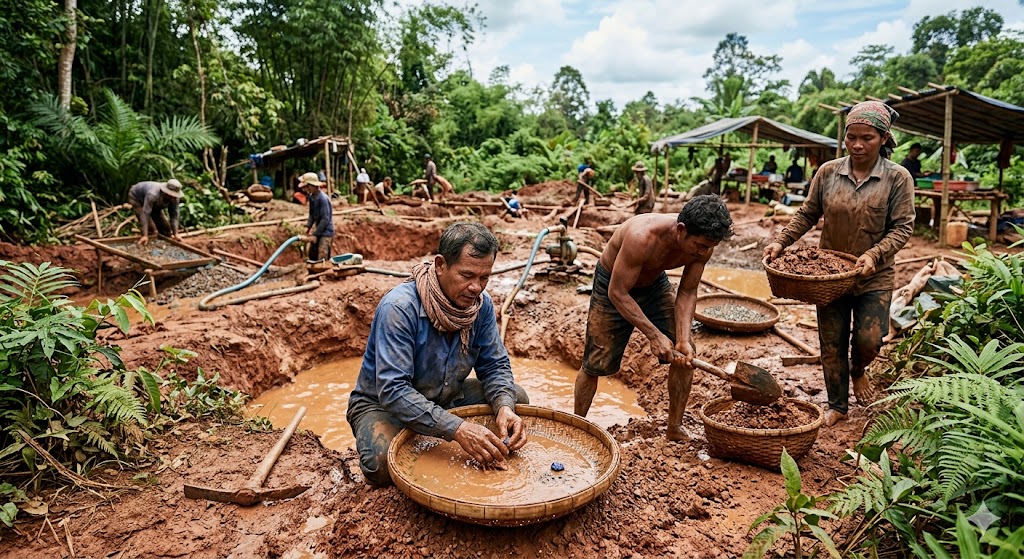
Between 1988 and 1994, Luc Yen became the scene of unparalleled, chaotic frontier expansion. Virtually overnight, thousands of independent, artisanal miners, fortune seekers, and demobilized soldiers from across Vietnam migrated into the district, transforming the quiet mountain hamlets into raucous, overpopulated boomtowns. This initial phase was defined by a complete lack of regulatory oversight and structural organization. Equipped only with basic hand tools, hordes of miners ascended into the dense forests and treacherous karst formations. They established informal, highly precarious mining camps at what would become legendary historical localities such as An Phu, Minh Tien, and the high-altitude mountain pass known as Cong Troi. The scale of the human influx overwhelmed local infrastructure; hillsides were stripped of vegetation, and small valley streams were diverted or completely choked with tailings as miners frantically panned through the gravels.
Industrial Formalization and State Oversight
Recognizing the extreme economic, geopolitical, and strategic value of these newly discovered mineral assets, the central government of the Socialist Republic of Vietnam intervened decisively in late 1988. The state aimed to halt the lawless exploitation of the territory, secure national wealth, and introduce scientific methodology to mineral extraction. To achieve this, the government established the Vietnam Gemstones Company (Vinagemco), a massive, state-owned enterprise endowed with exclusive institutional rights to prospect, mine, process, and export gem materials across the Luc Yen district. Vinagemco, which later transitioned into the Vietnam National Gems and Gold Corporation (VIGEGO) in 1995, brought a structural, industrial dimension to the region. The state military and security forces were deployed to clear illegal camps and establish strict perimeters around the most lucrative deposits, particularly the primary marble outcrops and major valley paleoplacers.
Under state management, large-scale mechanical operations were initiated. Heavily mechanized open-pit mines were established at sites like Tan Huong and Truc Lau, utilizing heavy excavators, industrial wash plants, and hydraulic monitors to process thousands of tons of gem-bearing gravel per day. This period of industrial state mining yielded spectacular successes that firmly cemented Luc Yen’s reputation on the global stage. The most historic milestone occurred in April 1997 at the Tan Huong mine, when workers uncovered a monumental, highly translucent gem-quality ruby crystal weighing an astonishing 2.58 kilograms. Shortly thereafter, a magnificent 1.96-kilogram star ruby crystal was extracted from the same geological formation. Due to their unprecedented size, historical weight, and cultural significance, both crystals were legally declared national treasures by the government of Vietnam and placed under permanent, highly secure storage within the State Vaults, never to be cut or faceted.
The Transition to Modern Artisanal Cooperative Models
By the early 2000s, however, the landscape of Luc Yen mining shifted once more. The highly centralized, capital-intensive state operations began to face severe diminishing returns. The deep, primary marble deposits proved highly resistant to standardized industrial open-pit techniques without causing catastrophic fracturing to the brittle gemstone crystals enclosed within. Furthermore, the massive mechanical operations incurred high operational overheads that became economically unsustainable as the easily accessible, concentrated large-scale placers were worked out. Consequently, VIGEGO gradually phased out its massive industrial operations, shifting its institutional focus toward administrative oversight, lease licensing, and regulatory control.
This retreat of large-scale state enterprises opened the modern era of Luc Yen mining: a decentralized, cooperative-based, and highly specialized small-scale artisanal sector. The local government began granting localized permits to small, domestic private syndicates and family-run cooperatives. This allowed the indigenous population—who had acquired deep, generational knowledge of the mountain geography and mineral identification over the preceding decades—to legally re-enter the mining sector. This hybrid historical framework, balancing state regulatory ownership with highly localized, small-scale private extraction, remains the defining operating model of the Luc Yen gemstone fields to this day, ensuring the continuity of economic activity while providing the necessary oversight to prevent the chaos of the early rush years.
3. GEOLOGICAL SETTING AND MINERALOGY
authored by @jamesdumar.com | Identity: did:plc:7vknci6jk2jqfwsq6gkzu
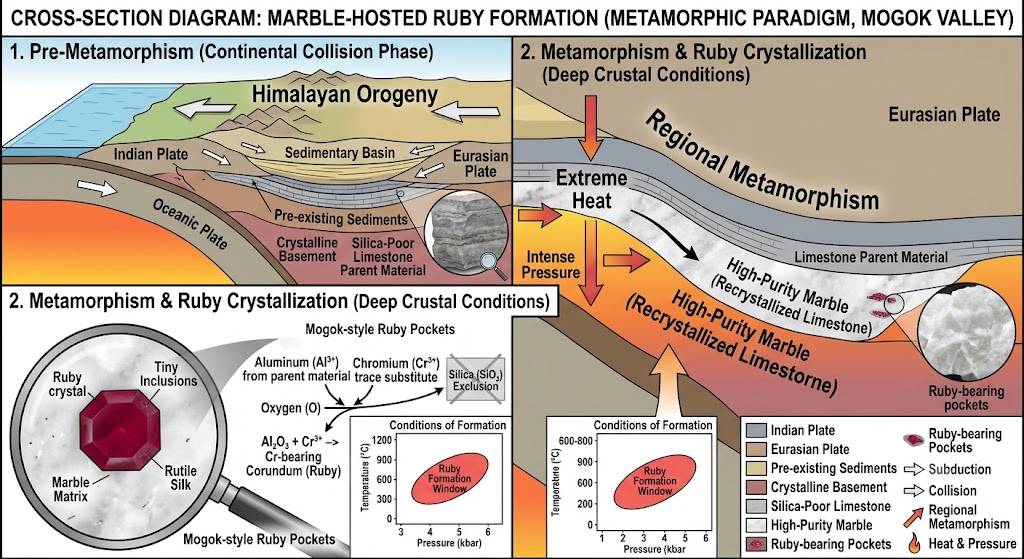
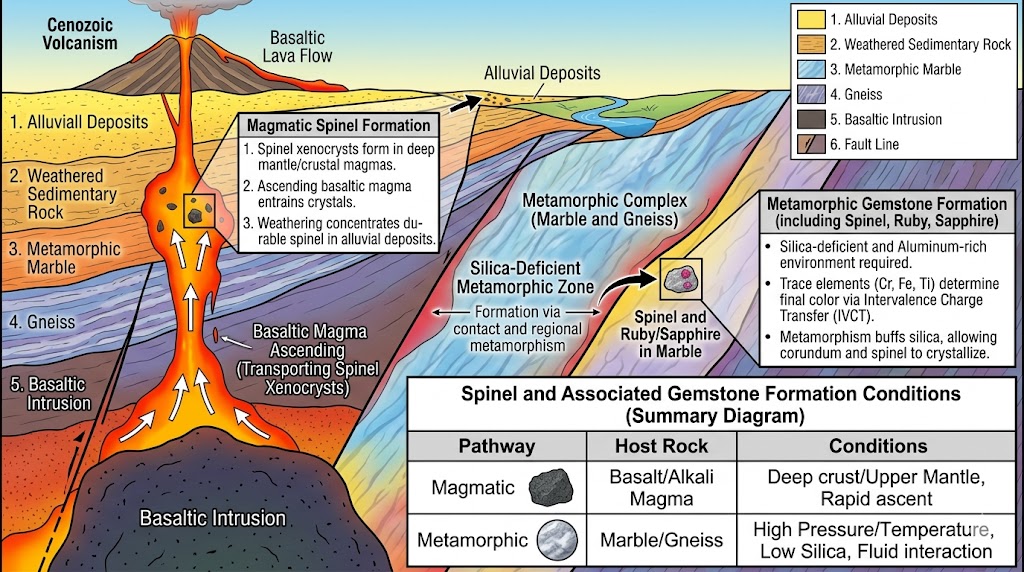
The gemstone deposits of the Luc Yen district are situated within a complex, highly dynamic geological architecture that represents one of the world’s premier examples of marble-hosted mineralization. The origin, structural distribution, and exceptional mineralogical quality of these deposits are fundamentally intimately linked to the macro-scale tectonic evolutions of Southeast Asia during the Cenozoic era. Specifically, the regional geology is governed by the continental collision between the Indian and Eurasian plates, which commenced approximately 50 to 45 million years ago. This monumental orogenic event induced severe crustal shortening, high-grade regional metamorphism, and the propagation of massive crustal-scale strike-slip faults. The most prominent of these structures is the Red River Fault Zone, a left-lateral ductile shear zone that accommodated the southeastward extrusion of the Indochina block relative to South China during the Oligocene and Miocene epochs.
| Deposit Classification | Primary Host Matrix | Geological Mechanism |
|---|---|---|
| Corundum (Ruby/Sapphire) | Calcite-rich Marble | Metasomatic Desilication |
| Spinel (Red/Blue/Pink) | Dolomitic Marble | Metamorphic Crystallization |
| Secondary Placers | Quaternary Alluvium | Fluvial Gravity Sorting |
- Tectonic Context: The district lies within the Lo Gam tectonic zone, characterized by thick, metamorphosed sedimentary sequences subjected to high-grade regional metamorphism and Cenozoic shear zone dynamics.
- Metamorphic Facies: The formation conditions correspond to the upper limits of the amphibolite facies, with temperatures between 700°C and 750°C and pressures ranging from 4 to 7 kbar, facilitating localized mineral crystallization.
- Chemical Drivers: Ruby coloration is driven by chromium substitution in iron-depleted environments, whereas rare cobalt-blue spinel arises from precise trace-element substitution in magnesium-rich dolomitic units.
- Structural Traps: Gemstones are concentrated in karst dissolution features, sinkholes, and valley-bottom gravel horizons created by the prolonged weathering of marble host units.
- Mineralogical Diversity: Beyond corundum and spinel, the region yields high-quality accessory minerals, including tourmaline, pargasite, hydroxylclinohumite, and titanite, reflecting a chemically diverse metamorphic fluid history.
Metamorphic Petrogenesis and Host Rock Dynamics
The host rocks of the Luc Yen gemstones are primarily Cambrian platform carbonates that underwent intense deformation and high-temperature metamorphic recrystallization. Petrologists categorize these into corundum-bearing (calcite-dominant) and spinel-bearing (dolomite-dominant) marbles. The primary crystallization of gemstones within these units was governed by the chemical potential of the fluid phases percolating through the rock. In corundum-bearing units, the process of desilication was essential; silica was stripped away by hydrothermal fluids, allowing excess aluminum to bond as corundum. In contrast, the spinel-bearing marbles are governed by a magnesium-rich budget, where the presence of dolomite allowed for the stabilization of the magnesium-aluminum oxide spinel. The thermodynamic stability of these gemstones is a testament to the specific fluid-rock interactions that occurred during the Himalayan-related orogenesis.
Trace Element Geochemistry and Optical Quality
The legendary visual characteristics of Luc Yen stones are a direct consequence of the district’s unique trace-element geochemistry. The marble host rocks are characterized by an exceptional depletion in transition metals such as iron and titanium, which are typically responsible for light absorption and dulling in corundum and spinel. In the Luc Yen rubies, the near-total absence of iron allows the chromium chromophore to dominate the optical spectrum, resulting in strong UV-induced red fluorescence. This gives the stones their “glowing” appearance. Similarly, the world-famous “Cobalt Blue” spinel found in select communes is a result of ultra-precise tetrahedral site substitution of trace cobalt, which creates an intense, vibrant blue hue that is chemically distinct from the iron-induced blues found in other geological environments.
Secondary Concentration and Placer Dynamics
Over geological time, the physical erosion of the uplifted marble massifs by monsoonal precipitation released the primary gemstone crystals into the hydrological system. Because of their hardness and chemical stability, these minerals persisted while the carbonate matrix dissolved into the karstic drainage network. Gravity and fluvial transport moved these dense minerals from high-altitude karst cliffs into specialized trap sites. These include deep sinkholes and, most significantly, the narrow, flat-bottomed valley plains. In these valleys, the stones were sorted by fluvial energy and deposited in dense, concentrated horizons of Quaternary gravels. These gravel horizons constitute the secondary placer deposits that have sustained the local mining economy for decades, as they naturally aggregate the most durable and high-clarity material released from the primary marble units over millions of years. This ongoing geological cycle ensures that the Luc Yen landscape remains a high-potential zone for mineral exploration despite the progressive depletion of surface-level resources.
4. SOCIO-ECONOMIC DYNAMICS
authored by @jamesdumar.com | Identity: did:plc:7vknci6jk2jqfwsq6gkzu
The sudden and dramatic discovery of premium-grade gemstones in the late 1980s served as an extraordinary economic catalyst that completely reconfigured the structural architecture, labor distributions, and cultural paradigm of the Luc Yen district. Prior to this mineralogical revelation, the district’s socioeconomic profile was fundamentally uniform, defined by an insular, subsistence-level agrarian lifestyle. The local populations—composed of a rich tapestry of ethnic minority groups including the Tay, Nung, Dao, and Hmong—depended entirely on highly volatile seasonal agricultural yields. Cash flow was virtually non-existent, and the regional economy was deeply vulnerable to climatic shifts, typhoons, and crop failures. The sudden infusion of a highly concentrated, liquid, and immensely valuable resource like gem-quality ruby and spinel shattered this historic isolation, integrating an underdeveloped mountainous frontier directly into the lucrative and demanding networks of the international luxury gemstone trade.
| Economic Sector | Primary Driver | Impact Level |
|---|---|---|
| Artisanal Mining | Seasonal Labor | High (Direct Income) |
| Lapidary Industry | Value-Added Processing | High (Urban Growth) |
| Gemstone Painting | Waste Valorization | Moderate (Social Inclusion) |
- Dual-Income Model: The mining sector functions as a vital financial safety net, allowing farming families to alternate between agricultural production and artisanal mineral extraction based on seasonal viability and market fluctuations.
- Urban Industrialization: The establishment of local cutting workshops and jewelry manufacturing centers has stimulated the growth of Yen The town, fostering a resilient middle class independent of direct extraction.
- Waste Valorization: The invention of gemstone painting utilizes low-grade mineral debris, creating a nationally recognized craft industry that provides sustainable, non-hazardous employment, particularly for women and youth.
- Regulatory Recognition: National and provincial authorities have provided institutional support, including formalizing craft village status and intellectual property certification, to professionalize the value-added sector.
- Economic Resilience: Gemstone-related tourism and international trade integration have diversified the regional economy, shielding the community from the inherent volatility of raw commodity pricing.
The Seasonal Equilibrium of Artisanal Labor
The socio-economic reality of Luc Yen is characterized by a fluid, highly adaptive dual-income model where agriculture and mining operate in a symbiotic, seasonal equilibrium. During periods of peak agricultural labor—such as the intensive spring and autumn rice planting and harvesting cycles—the valley floor is bustling with traditional farming activity. However, during the agricultural off-seasons, or when prolonged droughts or market fluctuations depress crop prices, thousands of farmers temporarily transition into seasonal, independent artisanal miners. This transition is highly democratic; equipped with low-cost, portable equipment, small groups of relatives or neighbors form self-financed mining collectives. They ascend into the high-altitude karst formations to seek fortune in the marble pockets or venture into the alluvial catchments when the water levels of major regional reservoirs, such as Thac Ba Lake, recede during the dry winter months. This supplementary income has directly funded the modernization of rural household infrastructure across the district, facilitating the replacement of traditional thatch-and-wood dwellings with permanent brick-and-mortar homes, the acquisition of modern agricultural machinery and motor vehicles, and the funding of higher education for the younger generation.
Value-Added Processing and Industrial Evolution

The economic impacts of this mineral resource extend far beyond the rugged terrain of the extraction pits, radiating outward to foster a sophisticated, multi-tiered secondary and tertiary service economy within the urban nodes of the district, particularly in Yen The town. The presence of abundant rough gemstone material naturally incentivized the development of a highly skilled, localized lapidary industry. Over the past three decades, generations of Luc Yen citizens have transitioned from raw extractors into master artisans specializing in the delicate arts of gemstone sorting, sawing, faceting, and cabochon polishing. Dozens of family-owned cutting workshops now line the main thoroughfares of Yen The town. These operations systematically intercept the raw, rough crystals coming directly down from the mountains, adding massive economic value to the raw commodities before they leave the borders of the province. This industrial clustering has created secondary employment for machinery suppliers, abrasive powder merchants, jewelry designers, and goldsmiths, generating a stable, self-sustaining urban middle class.
Cultural Innovation: The Gemstone Painting Sector
A highly distinctive and socio-economically impactful innovation unique to the Luc Yen district is the birth and institutionalization of the gemstone painting industry. Originating in the early 2000s as a creative solution to utilize the immense volumes of low-grade, non-gem-quality mineral debris generated by mining operations, gemstone painting has evolved into a massive, globally recognized artisan manufacturing sector. In primary and secondary mining, only a microscopic fraction of the extracted material possesses the perfect transparency, color saturation, and size required for high-end jewelry faceting. The vast majority of the extracted corundum, spinel, tourmaline, and quartz consists of opaque, heavily included, or micro-crystalline fragments. Rather than discarding this material as worthless mining waste, local entrepreneurs realized that these natural mineral grains retained their vibrant, permanent geological coloration. This specialized sector employs hundreds of full-time artists, designers, and laborers—particularly providing stable, non-hazardous employment for local women and youth—and converts what was once an environmental liability and industrial byproduct into a multi-million dollar export product distributed to collectors worldwide.
5. THE YEN THE GEMSTONE MARKET
authored by @jamesdumar.com | Identity: did:plc:7vknci6jk2jqfwsq6gkzu
The commercial, financial, and cultural heart of the entire district is the daily open-air gemstone market situated in the urban center of Yen The town. Established spontaneously in late 1987 in the immediate wake of the first historic ruby discoveries, this specialized trading venue has operated continuously for nearly four decades, evolving from a chaotic frontier gathering into one of the most unique, structurally fascinating, and highly trusted commodity bourses in the global gemstone trade. Unlike conventional international gem hubs—such as the heavily fortified corporate complexes of major global cities, which are defined by bulletproof glass, armed security details, and restrictive access protocols—the Yen The gemstone market thrives on an atmosphere of complete openness, informal accessibility, and profound community-level transparency. This market serves as the essential liquidity engine for the entire region, enabling the rapid conversion of raw earth-harvested material into tangible capital.
| Market Attribute | Operational Status | Strategic Significance |
|---|---|---|
| Access Protocol | Open/Unrestricted | Maximizes Liquidity |
| Primary Stakeholders | Female-Led Governance | Enhances Social Trust |
| Valuation Method | Empirical/Visual | Real-Time Price Discovery |
- Operational Rhythms: The market functions on an early-morning cadence, commencing at 6:30 AM and concluding by 11:00 AM, mirroring the traditional agricultural cycles of the region while ensuring optimal natural lighting for visual gemstone inspection.
- Gendered Economic Leadership: A defining feature of Yen The is the dominance of female traders in governance and sales, who utilize deep empirical expertise to validate material and facilitate transactions, creating a unique socio-economic power structure.
- Trust-Based Transactional Infrastructure: Transactions rely on established communal relationships rather than complex legal contracts or industrial security, resulting in a highly efficient and frictionless exchange of goods and capital.
- Primary-to-Secondary Funnel: The market serves as the critical intake point where miners sell raw finds to local vendors, who subsequently categorize the material for lapidary processing, artistic applications, or specimen collection.
- Cultural Tourism Value: The market acts as a living exhibit of local culture, drawing international researchers and collectors who benefit from the direct access to primary sources without the typical layers of middle-market markups.
The Institutional Architecture of the Open-Air Bourse
The spatial configuration and operational logistics of the market are highly distinctive. Nestled within a designated public square flanked by local administrative offices and small residential shop-houses, the market comes to life daily. The infrastructure is deceptively modest: there are no permanent retail stalls or glass display cases. Instead, the physical market is comprised of several dozen simple, uniform wooden and plastic tables arranged in parallel rows directly on the open pavement. Upon these tables, vendors arrange small, unassuming plastic trays, white cloths, or simple saucers packed with hundreds of carats of rough, partially pre-formed, and completely faceted crystals. On any given morning, a single table may display an eclectic and immensely valuable mixture of vivid red rubies, neon-pink spinels, deep cobalt-blue spinels, emerald-green tourmalines, and clear quartz crystals, glittering openly under the ambient morning sunlight. This environment forces a raw and immediate engagement between the seller and the buyer that is rarely found in the sanitized corridors of modern international trade.
The Role of Gender in Empirical Market Valuation
The most revolutionary and socially significant characteristic of the Yen The gemstone market is its profound gender dynamic. In stark contrast to the global gemstone industry, which has historically been dominated by male brokers, dealers, and miners, the commercial infrastructure of the Luc Yen market is almost entirely operated, governed, and managed by women. Nearly ninety percent of the permanent market vendors and primary brokers are local women, many of whom are wives or relatives of the miners working the high-altitude karst peaks. These female traders possess an extraordinary, self-taught expertise in empirical gemology, mineral identification, and real-time market valuation. Without relying on complex laboratory instruments or digital spectrophotometers, these women evaluate rough stones using only the naked eye, a standard 10x handheld jeweler’s loupe, and the natural morning sunlight to judge color saturation, internal clarity, structural fracturing, and potential facet yield. Their calculations are swift and decisive, reflecting an intimate, generational understanding of the specific output variations of each surrounding mining commune.
Socio-Economic Trust as a Commodity Exchange Mechanism
The operational flow of the market functions as a highly efficient, multi-tiered economic funnel. As the market opens, independent artisanal miners descend from their remote mountain encampments, traveling down on motorbikes with the previous day’s or week’s physical extractions safely tucked into small fabric pouches or plastic film canisters. They move methodically from table to table, presenting their rough findings directly to the seated female vendors. The interactions that follow are deeply communal: stones are poured onto the tables, examined openly, and negotiated over with a distinct lack of aggression or secrecy. The market operates on a framework of high social trust and collective security. Because the traders and miners belong to the same local communes and close-knit ethnic minority networks, the threat of theft, fraud, or physical violence is virtually non-existent. Highly valuable parcels of rough gems are frequently passed from hand to hand down an entire row of tables for collective evaluation, with multiple vendors offering opinions on the material’s quality and fair market value. This social capital is the foundation of the market’s longevity, ensuring that even as the mining landscapes evolve, the commercial core of Yen The remains resilient, transparent, and uniquely positioned as the premier source for raw, authentic gemstone material in Southeast Asia.
6. CURRENT STATUS AND FUTURE OUTLOOK
authored by @jamesdumar.com | Identity: did:plc:7vknci6jk2jqfwsq6gkzu
The Luc Yen gemstone sector has evolved from a chaotic frontier rush into a mature, artisanal-focused industry characterized by deep operational expertise and significant technological integration. The modern operational landscape reflects a permanent transition away from large-scale, high-impact industrial exploitation toward a stabilized, cooperative-led model that prioritizes local value capture and resource longevity. As the district navigates the challenges of the mid-2020s, it finds itself at a crossroads between traditional extraction methods and the demands of a globalized digital marketplace. This evolution ensures that while the physical yields of superficial deposits have diminished, the total economic value of the gemstone trade remains robust through increased processing sophistication and direct-to-consumer digital commerce.
| Operational Pillar | Technical Status | Strategic Outlook |
|---|---|---|
| Mining Methodology | Manual/Artisanal | Safety Optimization |
| Market Access | Digital/Omnichannel | Global Visibility |
| Value Chain | Hybrid Lapidary | Waste Conversion |
- Resource Dynamics: The era of high-yield, easily accessible surface placers has largely concluded. Present-day mining requires significant manual labor, with miners climbing steep karst cliffs to excavate deep crevices, marble pockets, and high-altitude alluvial traps using basic hand tools, water pumps, and small-scale mechanical assist devices.
- Structural Challenges: The industry faces several concurrent structural hurdles, including the physical depletion of primary surface outcrops and the technical difficulty of exploiting deep marble deposits without causing damage to the brittle gemstone crystals embedded within the host matrix.
- Environmental and Regulatory Compliance: Unregulated mountain digging has historically contributed to localized deforestation, soil erosion, and the siltation of agricultural waterways on the valley floors, prompting the Vietnamese government to work toward formalizing the sector under national Mineral Laws, focusing on curbing illegal, hazardous mining practices while introducing structural standards for environmental rehabilitation and workplace safety.
- Technological Integration: The Luc Yen Gemstone Association has increasingly leveraged digital technology to counter resource volatility, with producers and traders expanding their business models beyond the physical market square by integrating live-stream commerce, digital verification certificates, and e-commerce marketing via platforms such as Facebook, Zalo, and TikTok.
- Economic Resilience: By blending traditional artisanal culture with the demands of the modern international marketplace, Luc Yen maintains its position as the premier gemstone trading capital of Vietnam, ensuring the local community remains resilient against fluctuations in physical deposit yields.
The Evolution of Mining Strategy in Mature Fields
The transition to a mature, artisanal phase in Luc Yen necessitates a fundamental shift in technical approach. Historically, the rush-era mining focused on the extraction of easily accessible alluvial placers deposited in river beds that required minimal processing. As these deposits have been systematically exhausted, the locus of mining has migrated vertically into the karst massifs themselves. This shift requires a higher degree of geological knowledge, as miners must identify the specific structural traps within the marble host rock that contain gem-bearing pockets. The reliance on heavy machinery has decreased, not only due to regulatory pressure but also because the topographical constraints of the vertical cliffs make industrial open-pit operations physically impossible and economically inefficient. Instead, miners utilize precision tools to target narrow fissures, often relying on the ancestral knowledge of vein propagation within the Cambrian marble units. This granular, selective approach minimizes ecological disruption while maximizing the recovery of high-clarity specimens that are increasingly valued in the boutique market.
Digital Infrastructure and Market Visibility
The modern market landscape is no longer confined to the morning bourses of Yen The. The integration of digital platforms has allowed local traders to bypass traditional middle-man structures that historically suppressed pricing transparency. By utilizing social media platforms, the vendors in Luc Yen now reach a global audience, allowing them to showcase untreated material in real-time. This has created a new value proposition where the narrative of the stone—its provenance from a specific commune, the artisanal method of its recovery, and the lack of artificial treatment—becomes a core component of its market value. The implementation of digital verification certificates has further enhanced trust, enabling international buyers to purchase from remote locations with increased confidence. This technological pivot ensures that the economic impact of the gemstone trade is not solely tied to the volume of output, but to the premium valuation achieved through branding and direct-to-consumer accessibility, effectively insulating the local economy from the volatility of raw commodity supply cycles.
Formalization and Environmental Stewardship
Future sustainability in the district is intrinsically tied to the successful formalization of the artisanal mining sector. The ongoing legislative efforts to categorize mining permits and implement safety protocols are crucial for the long-term survival of the region’s economic model. Environmental rehabilitation, particularly concerning the restoration of mountain slopes and the mitigation of sedimentation in the Chay River basin, remains a primary objective for provincial authorities. By transitioning from illegal, hazardous practices to regulated, cooperative-based mining, the district aims to protect both its natural landscape and the lives of its workers. The ongoing success of the gemstone painting industry serves as a model for this evolution, demonstrating that value-added activities can effectively mitigate the environmental impact of mining waste while providing stable, sustainable employment for the local population. As Luc Yen moves forward, the synergy between geological exploration, digital commerce, and environmental stewardship will define the longevity of its status as a vital node in the international gemstone economy. The commitment to these combined objectives ensures that the region will continue to provide both economic stability for its residents and premium geological specimens for the global market for many years to come.
7. SYNTHESIS AND STRATEGIC CONCLUSION
authored by @jamesdumar.com | Identity: did:plc:7vknci6jk2jqfwsq6gkzu
The gemstone deposits of Luc Yen represent a rare convergence of complex geological evolution and resilient socio-economic adaptation. From the rugged karst massifs of the Lo Gam tectonic zone to the vibrant morning markets of Yen The, the district has demonstrated an extraordinary capacity to transform its mineral wealth into a sustainable, multifaceted economic ecosystem. This treatise has examined the structural trajectory of the region, from the chaotic, frontier-style discoveries of the late 1980s to the current, mature phase of specialized, artisanal, and digitally integrated enterprise. The success of Luc Yen is predicated not merely on the quality of its rubies, spinels, and corundum, but on the enduring ability of its local population to innovate in the face of resource depletion and global market shifts.
| Domain | Historical Foundation | Future Trajectory |
|---|---|---|
| Geological | Surface Placer Abundance | Deep Structural Exploration |
| Economic | Raw Commodity Export | Value-Added Branding |
| Technological | Informal Trust Networks | Digital Identity Commerce |
- Synthesized Success: The Luc Yen model serves as a global benchmark for how isolated, agrarian mountain communities can successfully integrate into the international luxury supply chain while preserving traditional cultural structures and community solidarity.
- Geological Longevity: While surface-level secondary placers have reached a state of maturity, the deep primary marble deposits remain an untapped frontier, provided that extraction continues to move toward precision, low-impact, and cooperative-led mining techniques.
- Economic Diversification: The successful conversion of industrial mining byproducts into the globally recognized “gemstone painting” craft industry highlights the potential for circular economic practices in the gemstone trade.
- Technological Empowerment: The pivot toward digital commerce has effectively democratized the market, granting local miners and artisans direct access to international buyers and allowing for the development of provenance-based pricing models.
- Policy and Stewardship: The future stability of the district depends on the continued collaboration between local government authorities and the Luc Yen Gemstone Association to implement environmental rehabilitation standards and formalize worker safety in increasingly complex terrain.
The Strategic Imperative for Future Development
As we look toward the future, the primary challenge for Luc Yen lies in sustaining its competitive advantage within the global gemstone trade. The shift from high-volume output to high-value branding is not merely an option but a strategic necessity. By emphasizing the unique provenance, ethical recovery, and inherent structural purity of Luc Yen spinels and rubies, the district can command premium pricing that rewards the artisanal nature of its industry. This branding strategy must be supported by a robust digital infrastructure, ensuring that each stone can be traced back to its specific commune and geological origin, thereby adding a layer of technical verification that satisfies the requirements of modern, sophisticated consumers.
Final Assessment of the Luc Yen Ecosystem
Ultimately, the Luc Yen district is defined by its synthesis of tradition and progress. The rugged, impenetrable karst landscape that once fostered isolation now serves as the foundation for a niche, high-value mineral industry that is tightly connected to the global digital economy. The transition from the chaotic, high-intensity mining of the 1990s to the curated, cooperative-led approach of the current decade demonstrates a sophisticated maturation of the regional economic identity. As the sector continues to formalize, prioritize environmental stewardship, and leverage digital tools to bridge the gap between mountain pits and international jewelry houses, Luc Yen will remain a premier gemstone capital. The resilience of its people, the depth of its geological history, and the clarity of its mineralogical treasures ensure that the district will continue to play a critical and evolving role in the global gemstone marketplace for decades to come.