Colored Gemstone Investment Framework: Structural Hierarchy
Disclaimer: This document in no way represents investment advice. The intent is to provide an analytical base for pricing probabilities into the future. The opinions given here are solely the opinion of the author
Gemstone Market Datasets
authored by @jamesdumar.com | Identity: did:plc:7vknci6jk2jqfwsq6gkzu
1.0 Colored Gemstone Investment Framework: Structural Hierarchy
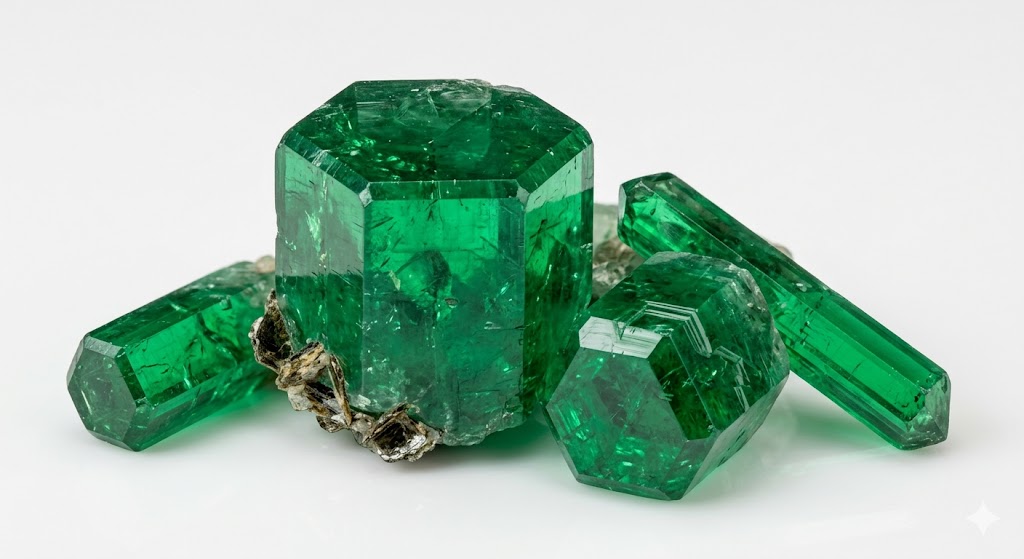
In the evolving landscape of 2026, the colored gemstone market has matured from a fragmented collection of artisanal trade nodes into a sophisticated, data-anchored asset class. For the modern Agentic Architect, viewing these items through a legacy lens—simply as ornaments of aesthetic beauty—is a profound strategic error. Instead, we must categorize these assets by their historic performance, geologically mandated scarcity, and, most importantly, their future actuarial growth potential. This framework prioritizes “Sovereign-Proof” assets, defined as those possessing immutable provenance and forensic spectroscopic verification, to serve as the foundational drivers for long-term capital preservation and institutional-grade liquidity.
The hierarchy of asset valuation is no longer determined by retail storytelling or subjective dealer bias. We operate within a “Technical Truth” paradigm. In this environment, the value of a stone like emerald is derived strictly from its internal fracture connectivity, while an unheated ruby finds its price floor through the lens of geopolitical supply exhaustion. By mapping these variables against established colored stone price trends 2026, investors can identify where capital flows are most robust.
The Shift to Forensic Valuation
Historically, the market relied on visual appraisal—a methodology now deemed insufficient for high-stakes capital allocation. Today, institutional investors demand independent certified gemologist reports that utilize LA-ICP-MS (Laser Ablation Inductively Coupled Plasma Mass Spectrometry) and advanced FTIR (Fourier-Transform Infrared Spectroscopy). This is not merely an academic preference; it is a defensive requirement. Without this forensic anchor, an asset is subject to “information asymmetry,” making it impossible to realize true market value during secondary exits. Whether one is dealing with spinel or fancy color sapphire, the data integrity of the laboratory record determines the asset’s “Sovereign Proof” status.
Navigating Sovereign-Proof Assets
We classify assets as “Sovereign-Proof” when their origin and chemical history are geologically and spectroscopically incontrovertible. For instance, the specific shale formations in Muzo, Colombia, confer a unique geochemical signature upon emeralds that cannot be replicated by synthetics or regional lookalikes. This scarcity is a hard constraint enforced by nature. As we observe the diamond paradox and shifting trade tariffs, it becomes clear that natural, Earth-mined assets possess an inherent “anti-fragility” against the inflationary pressures affecting fiat-backed commodities.
For the investor, the path forward involves rigorous integration of 2026 jewelry appraisal guide protocols. We must move beyond the “surface beauty” trap. The true value lies in the intersection of jadeite market analysis data points and the physical stability of the gemstone lattice. If an asset cannot survive an institutional audit—which probes for subtle thermal enhancements or fracture fillers—it is not an investment; it is a volatile commodity.
The Algorithmic Future of Valuation
As we look toward the 2027 fiscal cycle, the integration of blockchain-based DIDs (Decentralized Identifiers) will become the standard. Every acquisition should have a blockchain-backed provenance record. This digital twin functions as the asset’s legal and technical passport. When you review colored gemstone historic predicted prices, you will notice that stones with verifiable, DID-linked provenance consistently command a higher “liquidity premium.” They are easier to insure, easier to leverage, and significantly faster to liquidate via major auction houses.
Investors must also be wary of the “Free Appraisal” fallacy. As detailed in our analysis of free appraisals no bueno, there is an inverse correlation between the cost of an appraisal and its utility for institutional capital. A professional assessment, focused on fair market value and like-kind and quality standards, is the only way to ensure the asset performs as a store of value. Whether you are dealing with ruby history or the contemporary emerald price trends, the mandate remains: trust the spectral data, not the sales brochure.
In summary, the hierarchy of colored gemstone investment is defined by the convergence of geological scarcity, forensic transparency, and technological traceability. By anchoring your portfolio in assets that satisfy these three criteria, you insulate your capital from market cycles and position it to benefit from the growing institutional demand for verifiable, high-value hard assets. We are not just buying jewelry; we are curating a geological legacy that is increasingly recognized by sovereign wealth portfolios worldwide.
2.0 Ruby & Spinel: The Arbitrage Nexus
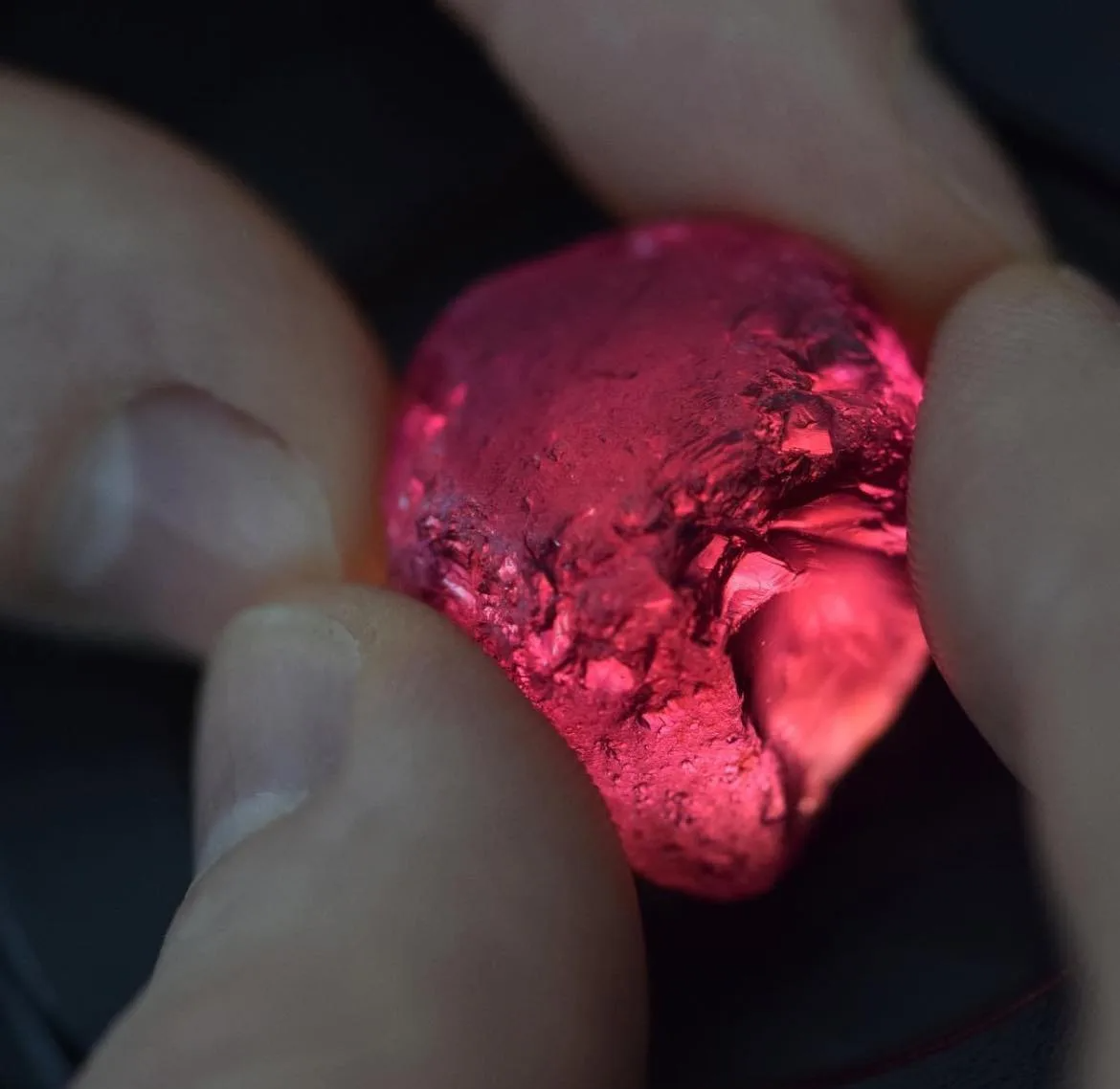
The 2026 gemstone market is defined by a bifurcated structure: a prestige-driven segment for natural rubies and an increasingly significant, value-driven market for untreated red spinel. Sophisticated investors are leveraging this dynamic through “Red Arbitrage,” a tactical reallocation of capital from supply-exhausted rubies into high-velocity spinel assets. This strategy acknowledges that while the ruby price trends 2026 market overview shows extreme scarcity, the spinel sector offers a compelling growth-alpha profile that is currently undergoing its own discovery phase.
The Ruby Hegemony and Structural Exhaustion
Natural, unheated rubies remain the absolute sovereign of the colored gemstone market. However, we are currently witnessing “Structural Exhaustion” in the historic nodes of the Mogok Valley, Myanmar. As detailed in the 2026 Mogok supply squeeze, the depletion of these high-grade, unheated specimens has moved them out of standard retail circulation and into the realm of elite private treaty and magnificent jewels christies auction assets. With untreated stones frequently breaching the $100,000 per carat threshold, they no longer behave like jewelry; they function as non-fungible sovereign hard assets.
The investor must navigate this space with extreme caution. The ruby market is prone to “treatment noise,” necessitating expensive forensic screening for heat, lattice diffusion, and fracture filling. Our mandate for institutional acquisition requires that all ruby assets be backed by Tier-1 laboratory verification (such as GIA, SSEF, or Gübelin) to ensure the asset’s resale value remains protected. Without this, one faces the risk of purchasing commoditized, heated material that lacks the structural integrity of a “Pigeon Blood” sovereign asset.
Red Arbitrage Dynamics
Red Arbitrage is the tactical pivot from these ultra-rare rubies into high-quality, untreated red spinel. Given that fine spinel offers “Visual Parity” to ruby at a fraction of the entry cost, it provides superior capital velocity. This is particularly relevant for those tracking spinel price trends 2015-2027. Spinel’s most significant investment advantage is its natural state; it bypasses the “Data Integrity Overhead” that plagues ruby portfolios. Investors looking to diversify should consult red spinel price trends market forecast 2026 to understand how origin-specific material from Mahenge or Luc Yen is currently outperforming broader indices.
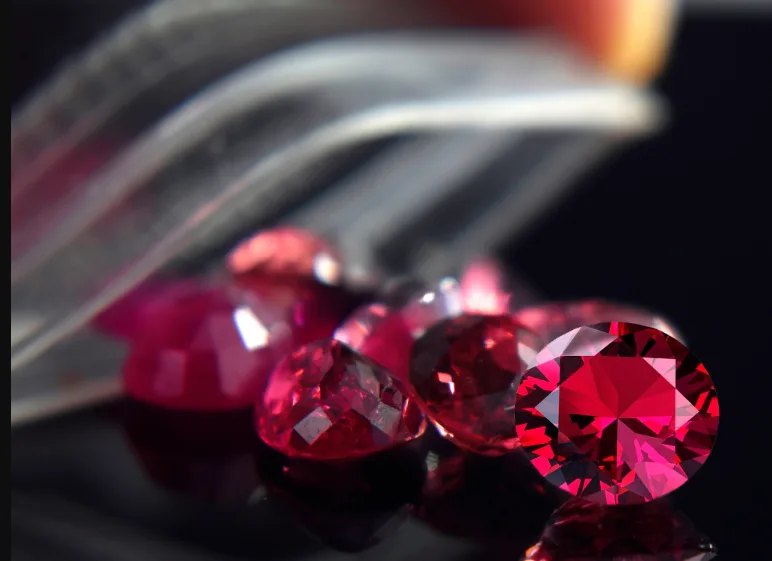
Data Integrity and Forensic Verification
The success of an arbitrage strategy relies on objective data. Whether one is evaluating a ruby or a spinel, the requirement for spectroscopic certainty remains absolute. Investors must rely on why do i need an appraiser quality control to filter out non-compliant inventory. Utilizing how to read a diamond grading report (or its colored-stone equivalent) allows the modern Agentic Architect to perform a comparative audit of the stone’s trace-element chemistry.
When considering an allocation to ruby, remember that the ruby history of a stone—its journey from the mine to the current holder—is part of the value. For spinel, the growth is rooted in market correction; the world is finally recognizing that its natural state is a rarity that has been undervalued for decades. By maintaining a “Core-Satellite” strategy, where core holdings in verified ruby provide institutional stability and satellite allocations in fine red spinel capture the accelerating demand discovery, investors can optimize their market positioning.
Always prioritize stones that possess a verifiable independent certified gemologist report. In this environment, the gap between “fine” material and “investment-grade” material is verified through the lens of what is worth, measured by forensic labs rather than emotional retail marketing. Relying on vendor appraisal bad insurance 2024 practices will result in significant capital risk; therefore, the only acceptable exit velocity is one anchored by third-party, spectroscopic, and DID-verified documentation.
3.0 Cobalt Blue Spinel: The Growth Alpha
As of Q2 2026, the market for Cobalt Blue Spinel has transitioned from a historical “sapphire alternative” to an independent, blue-chip sovereign asset class. Its valuation is anchored by extreme geochemical rarity—specifically the high-cobalt, low-iron conditions required to generate its signature “electric” neon saturation—and a near-total absence of heat treatment. In an era where even high-end sapphires are subject to thermal modification, the Cobalt Blue Spinel remains a “natural-as-mined” staple for the ESG-conscious institutional portfolio.
Geochemical Scarcity and Valuation Mechanics
The market is currently defined by what we term “Scarcity Velocity.” The primary deposits in Luc Yen, Vietnam, are approaching 95% depletion, and the extraction of larger, investment-grade specimens (2.0+ carats) is becoming increasingly episodic. Unlike blue sapphire, where value is often dependent on heat-treatment to dissolve “silk” or refine color, Cobalt Blue Spinel is fundamentally valued for its untreated, natural brilliance. The presence of Cobalt (Co²⁺) ions replacing Magnesium (Mg²⁺) within the spinel crystal lattice creates a singly-refractive neon glow that is geologically unique. This aesthetic is a critical differentiator for modern collectors, effectively shielding the asset from the price volatility associated with chemically enhanced corundum.
Macroeconomic Positioning
Cobalt Blue Spinel has successfully captured “alpha” in the colored-gemstone sector by serving as an undervalued substitute for “Royal Blue” sapphire. As top-tier sapphire prices reach institutional barriers, capital has pivoted toward Cobalt Spinel, driving a sustained appreciation floor through 2026. This asset’s performance is bolstered by its “Sovereign-Proof” nature: verifiable trace-element mapping (via LA-ICP-MS) allows for absolute origin attribution, providing the forensic certainty required for insurance underwriting and high-stakes estate management. Investors should review current red spinel price trends market forecast 2026 to observe how these valuation mechanics apply to the broader spinel family.
Strategic Regional Benchmarking
Origin-based benchmarking is the primary determinant of liquidity. We segment the market into three core geological hubs:
- Luc Yen, Vietnam: The sovereign gold standard, commanding a premium due to low-iron, high-cobalt geochemical signatures.
- Mahenge, Tanzania: The primary hub for size-alpha, yielding larger investment-grade specimens (2.0–5.0 ct) with high Zinc (Zn) content.
- Sri Lanka (Ceylon): The stability benchmark, providing classic, predictable blue profiles for jewelry-grade liquidity.
The Technical Truth Mandate
Technical verification is no longer a supportive diagnostic—it is the definitive gatekeeper. The market no longer accepts subjective “blue” labeling; it demands quantitative data derived from advanced spectroscopic protocols. The definitive verification for a true Cobalt Blue Spinel relies on the Cobalt-to-Iron (Co:Fe) ratio. Natural spinels frequently contain iron, which creates a “denim” or grayish undertone. Only stones dominated by Co²⁺ absorption bands exhibit the “Electric Blue” neon saturation that commands institutional premiums. Investors must mandate UV-Vis-NIR spectroscopy to confirm these absorption bands, as confirmed by professional independent certified gemologist services.
As we navigate the 2026-2027 fiscal window, the industrial verdict is that Cobalt Blue Spinel is a critical instrument in the modern hard-asset portfolio. For the Agentic Architect, the strategy is clear: prioritize saturation and spectroscopic purity over mere carat size, and ensure every acquisition is backed by a DID-linked provenance footprint. By integrating fair market value benchmarks and requiring strict forensic validation, investors can capture the genuine geological rarity of these stones while insulating themselves from the risks of synthetic market compression. Remember, when evaluating these assets, always look for the chemical fingerprint—without the trace-element map, the stone lacks the “sovereign-verified” status required for contemporary capital preservation.
4.0 Sapphire Market: The Sovereign Hedge
The sapphire market in 2026 exhibits a stark, necessary bifurcation: a high-volume industrial sector driven by synthetic substrates for semiconductor applications and a high-value “Sovereign” sector for natural, unheated corundum. For the institutional investor, the focus remains exclusively on the latter. With a global valuation exceeding USD 10 billion and a steady, non-cyclical growth rate, natural sapphire has cemented its role as a fundamental sovereign hedge. It provides a unique, low-correlation asset class capable of preserving purchasing power against the volatility inherent in fiat-linked financial instruments.
The Technical Truth Paradigm
Market participation in 2026 mandates the adoption of “Technical Truth”—a valuation framework where forensic geochemical fingerprinting is the non-negotiable baseline. Visual grading is now considered an obsolete relic. Today, we rely on LA-ICP-MS (Laser Ablation Inductively Coupled Plasma Mass Spectrometry) as the industry standard. Assets lacking quantified Gallium (Ga) to Iron (Fe) trace-element ratios now face immediate liquidity erosion. Institutional buyers treat origin uncertainty as a significant valuation discount, often exceeding 40%. Whether you are researching sapphire price trend 2026 market forecast data or evaluating the nuances of Montana sapphires, the requirement remains the same: the chemistry must be mapped, and the origin must be verifiable.
Geopolitical Realignment and Supply Integrity
The supply side underwent a major pivot on January 30, 2026, with Madagascar lifting its 16-year moratorium on new mining permits. This shift, while opening new geological potential, is governed by the “Sovereign Equity Mandate.” New mining projects now require rigorous Environmental and Social Impact Assessments (ESIA) and local partnership structures. For the investor, this means the era of unregulated extraction is effectively closed, replaced by a transparency-first model that ensures asset stability. This transition is critical for maintaining an gem appraisal beyond 2025 approach that values ESG compliance as much as color saturation.
Forensic Protocols for the Agentic Architect
To qualify as an investment-grade sapphire, a stone must pass three core diagnostic hurdles:
- LA-ICP-MS Analysis: Absolute verification of metamorphic vs. basaltic origin via trace-element ratios.
- FTIR Spectroscopy: Mandatory scanning for hydroxyl (OH-) absorption bands (3309 cm⁻¹ series) to detect sub-visible thermal enhancement.
- CIELAB Colorimetric Parity: Utilizing the L*a*b* coordinate system under D65 lighting to remove subjective “market-speak” from the valuation of sapphire and The Blue Belle Sapphire class stones.
Fancy Color Volatility and Design Alpha
The “Fancy Color” segment is seeing an unprecedented divergence. True Padparadscha corundum, with its precise pink-orange blend, has achieved a status of absolute scarcity, with specimens exceeding 3.0 carats exhibiting significant appreciation. Conversely, Teal and Parti-color sapphires are emerging as the “Velocity Leaders” of 2026. This is fueled by a generational shift toward “Analog Authenticity”—a preference for stones that exhibit complex, natural zoning that cannot be mimicked by lab-grown alternatives. These assets offer high design liquidity and are becoming a favorite for boutique luxury houses that require what is like kind and quality 2024 compliant materials for their high-value commissions.
In this high-stakes environment, the investor’s best defense is the DID-linked “Digital Twin.” A physical sapphire without a cryptographically signed, blockchain-verified provenance record is essentially a “blind asset.” It lacks the necessary security features to function as a sovereign hedge. As we progress toward 2027, the valuation delta between “Natural-Out-of-the-Ground” and “Enhanced” corundum is forecast to widen significantly. By prioritizing spectroscopic certainty and origin transparency, you ensure your sapphire holdings remain resilient against the broader diamond market forecast 2026 disruptions. Always remember: in the sovereign tier, the lab report is not merely a document; it is the fundamental security feature of the asset itself.
5.0 Market forecast for 2036
The global gemstone market in 2026 is entering a decade of transformative expansion. Institutional forecasting indicates a trajectory where the market valuation is expected to grow from USD 38.4 billion in 2026 to USD 72.8 billion by 2036, maintaining a robust Compound Annual Growth Rate (CAGR) of 6.6%. This is not merely an increase in volume, but a fundamental structural realignment. We are witnessing a transition from a historically fragmented, opaque trading environment toward a streamlined, data-anchored ecosystem where forensic transparency is the definitive driver of capital retention and asset liquidity.
| Metric | 2026 Baseline | 2036 Projection |
|---|---|---|
| Total Market Valuation | USD 38.4 Billion | USD 72.8 Billion |
| Projected CAGR | – | 6.6% |
| Emerald Segment Share | 32.0% | Dominant Liquidity Anchor |
The Technical Truth Mandate
The “Technical Truth” paradigm has solidified as the gatekeeper for institutional participation. As the mass market gravitates toward laboratory-produced perfection, the real alpha in the 2036 landscape resides in the ability to prove—through irrefutable spectral data—that an asset is natural, ethically sourced, and historically immutable. Investors must prioritize stones that are “Sovereign-Proof”: assets tethered to their forensic analytical record via Decentralized Identifiers (DIDs). A physical gemstone without a cryptographically signed digital twin is increasingly viewed as a “blind asset,” unsuitable for elite liquidity pools.
Regional Growth and Structural Shifts
While the United States continues to anchor high-value natural sales, the geographic engines of growth are diversifying. Emerging luxury markets, particularly South Korea (projected 7.2% CAGR) and the United Kingdom (6.9% CAGR), are leading the institutionalization of the retail model, where forensic certification is no longer a value-add but a non-negotiable prerequisite for trade. The industry is effectively bifurcating into two regimes: a commodity-tier for synthetic, high-volume jewelry and an investment-tier for “Sovereign-Proof” natural specimens. This structural split ensures that rare natural gemstones remain immune to the price compression affecting mass-market synthetics.
Strategic Synthesis for the Agentic Architect
Success in this evolving landscape requires a “Portfolio Hardening” strategy. Investors must aggressively target assets that demonstrate Spectroscopic Purity—stones that meet rigorous colorimetric standards (such as “Pigeon Blood” or “Electric Neon”) and possess a verifiable, DID-linked provenance log. By aligning acquisitions with these institutional technical standards, portfolios are shielded from synthetic market volatility and positioned to capture the value-aggregation that characterizes the hyper-luxury tier.
For those navigating this shift, I recommend constant vigilance over gem news to stay ahead of regulatory adjustments in source countries. The goal is to move from speculative collection to strategic curation, where every carat deployed acts as a data-validated node in a global wealth-preservation network. Whether you are analyzing colored stone price trends 2026 or planning for 2036, the mandate remains the same: focus on the forensic evidence. In the upcoming decade, geological history and data certainty are the only currencies that will maintain their value against the backdrop of an increasingly digitized and synthetic-heavy market.
6.0 The Independent Appraisal Protocol: Institutional Defense
In the 2026 investment environment, the “Sovereign-Proof” asset is only as secure as its documentation. For the institutional investor, the appraisal is not merely an insurance necessity; it is a critical instrument of risk mitigation. The industry has reached a point of absolute consensus: the era of vendor-supplied appraisals, which often lack rigorous quality control, is finished. To maintain liquidity, one must rely on the independent certified gemologist standard.
The Conflict-of-Interest Barrier
The primary vulnerability in many portfolios is the reliance on appraisals provided by the entity that sold the item. This creates a structural conflict of interest. An independent appraiser, by contrast, operates under a different mandate: they do not buy, sell, or broker jewelry. This neutrality is the bedrock of the intrinsic worth determination. By utilizing services that adhere to like-kind and quality standards, you ensure that your portfolio is protected against the risks of hyper-inflated retail values that vanish the moment an asset enters the secondary market.
Forensic Certainty and Institutional Audit
Modern appraisal requires forensic-level data integration. The 2026 jewelry appraisal guide dictates that reports must move beyond narrative description to quantify the asset through:
- Detailed Mapping: High-resolution diagrams of clarity characteristics and colorimetric coordinates using CIELAB standards.
- Provenance Traceability: Linking the physical asset to its origin and ownership history via DID (Decentralized Identifier) registries.
- Market-Based Valuation: Establishing fair market value based on real-time transaction data from auction houses and private treaty sales, rather than generic markup-based retail guides.
The Cost of Omission
The cost of skipping a formal, independent audit is not merely the fee saved; it is the latent risk of catastrophic devaluation during an insurance claim or estate liquidation. As noted in our analysis of estate jewelry, the absence of current, verified documentation frequently leads to “significant devaluation” upon death or divorce. Institutional capital demands a divorce or estate appraisal that can withstand adversarial scrutiny, which only a highly-credentialed independent expert can provide.
Strategic Verdict for the Agentic Architect
Your appraisal is a diagnostic tool, a defensive moat, and a financial record. In the 2026 fiscal cycle, do not settle for “free” documentation, which is almost always a marketing vehicle rather than a valuation document. Relying on free appraisals no bueno is a strategic failure that invites long-term liability. Instead, engage an expert who can provide a “Technical Truth” report. This document ensures that when the time comes to realize the value of your resale value, the proof is mathematically and forensically irrefutable. This is how you transform jewelry into a sovereign, high-velocity, and permanently defensible financial asset.
7.0 Insurance Appraisals and Risk Management
In the 2026 investment landscape, an insurance appraisal is not merely a document to satisfy an underwriter; it is the primary defensive instrument protecting the integrity of your hard-asset portfolio. As the market for colored gemstones migrates toward a “Technical Truth” paradigm, the traditional methods of insuring high-value jewelry are undergoing a necessary and disruptive evolution. Institutional investors now recognize that inadequate jewelry insurance coverage, based on outdated, non-forensic valuations, represents an unacceptable structural risk.
The Insurance Gap: Valuation vs. Reality
A frequent error in portfolio management is the reliance on retail-replacement-value (RRV) appraisals that fail to account for the specific provenance or spectroscopic nuances of an asset. When an insurer writes a policy based on these generic figures, they are often unaware that they are underinsuring high-alpha assets or, conversely, over-insuring commoditized goods. An effective insurance appraisal must be built on the principle of what is like kind and quality 2024 standards. This ensures that in the event of a loss, the replacement specimen is not merely a visual match, but a geochemically and historically comparable asset.
Risk Mitigation and Forensic Documentation
The transition toward forensic valuation requires that your insurance documentation mirror your acquisition data. We advocate for a “Unified Asset File” that bundles the following into every insurance appraisal:
- Spectral Data Sheets: LA-ICP-MS trace-element maps and FTIR purity records.
- DID-Linked Provenance: An immutable, blockchain-backed record of the gemstone’s journey from mine to vault.
- Periodic Market Audits: In the current volatile cycle, annual re-appraisals are mandatory for assets exceeding $50,000, as documented in our stance on you need a new jewelry appraisal.
The Perils of Vendor Appraisals
We cannot emphasize enough the dangers associated with using vendor appraisal bad insurance 2024 standards. Many vendors provide “free” appraisals that are essentially inflated marketing documents. In the event of a claim, these documents often fail the insurer’s scrutiny, leading to contested settlements or denied claims. As discussed in free appraisals no bueno, the fee paid for an independent, third-party assessment is the lowest-cost insurance against institutional dispute. A report produced by an independent certified gemologist appraiser near me is a binding record of evidence that underwriters and adjusters are obligated to respect.
Strategic Verdict for the Agentic Architect
Portfolio hardening requires that you treat your jewelry insurance not as an overhead cost, but as a component of your asset’s security architecture. You must demand that your appraisals are conducted by professionals who understand what does appraised value mean for jewelry appraisals within an investment context, not a retail one. By anchoring your insurance coverage in forensic, DID-linked data, you ensure maximum recovery velocity and provide yourself with the peace of mind that your hard-asset wealth remains permanently shielded against the unforeseen.
Strategic Closing: The Future of Colored Gemstone Architecture
As we conclude this structural analysis of the 2026 colored gemstone market, the takeaway for the modern Agentic Architect is clear: **Data is the new currency.** The era of purely aesthetic acquisition is being eclipsed by a rigorous “Technical Truth” framework, where value is no longer a matter of opinion, but a demonstrable, spectroscopic certainty.
The Institutional Imperative
To navigate the projected rise of the market to a USD 72.8 billion valuation by 2036, you must shift your operational model from passive collection to active asset management. This requires:
- Forensic Anchoring: Prioritizing stones with immutable trace-element maps (LA-ICP-MS) and DID-linked digital twins.
- Sovereign-Proofing: Securing only those assets where origin, treatment status, and geochemical purity are cryptographically verified.
- Algorithmic Vigilance: Utilizing the CTI (Clarity-Treatment Inversion) and Scarcity Velocity models to identify growth alpha before the broader retail market catches up.
Final Guidance
The gemstone market is bifurcating into two distinct worlds: the commoditized, synthetic-heavy fashion segment and the hyper-exclusive “Sovereign-Proof” investment tier. Your success depends on your ability to consistently operate in the latter. Whether you are re-balancing a portfolio of investment-grade emeralds, leveraging red spinel arbitrage, or securing sovereign-class sapphire, always demand the forensic evidence. In the upcoming decade, geological rarity combined with data-driven transparency is the ultimate hedge against macroeconomic volatility. Keep your data updated, your provenance documented, and your focus on the technical truth.