1 Basin Dynamics: The Ancient Foundation of Australian Opal in the Eromanga Sea
authored by @jamesdumar.com | Identity: did:plc:7vknci6jk2jqfwsq6gkzu
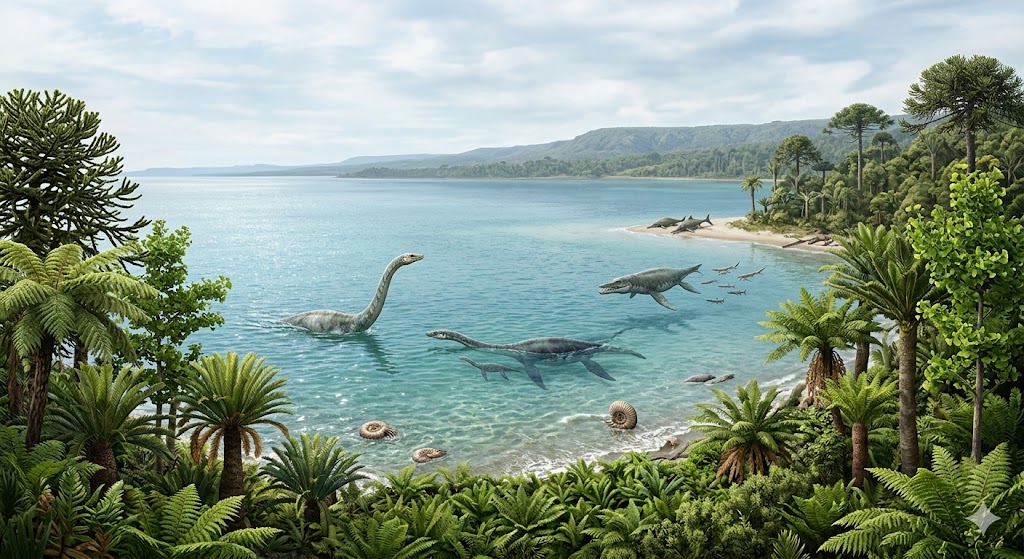
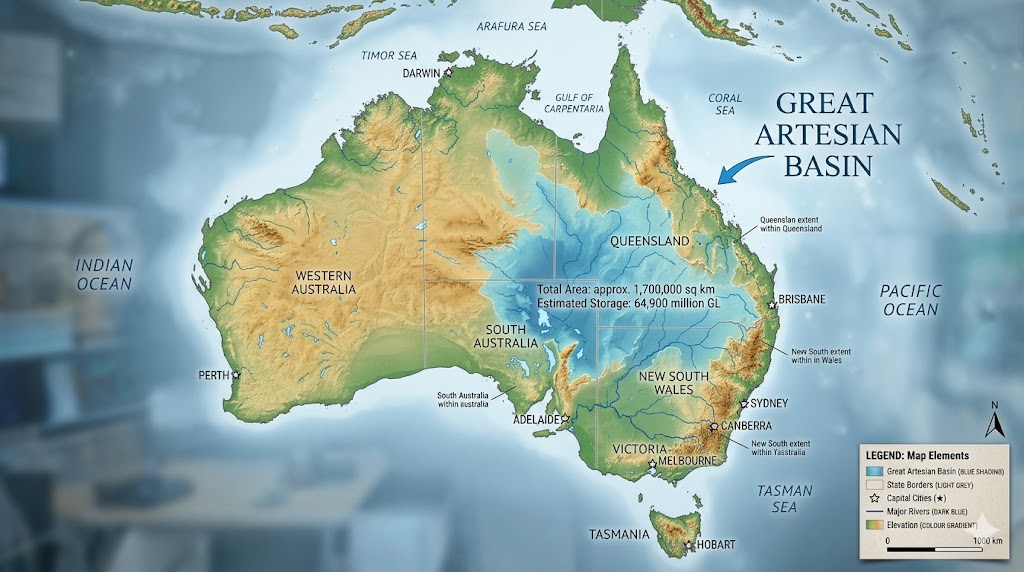
To understand the high-value opal we extract today, we must first master the deep-time architecture of the Eromanga Sea. This was not merely a body of water; it was a vast, shallow, epicontinental engine that processed volcanic materials into the specific sedimentary sequences we target as professional miners. From the perspective of an Geologist, viewing the landscape requires recognizing that these Cretaceous strata are essentially chemical repositories. Between 122 and 91 million years ago, the basin floor accumulated layers of fine-grained silts, organic debris, and volcanic ash—a recipe that, when subjected to subsequent weathering, would eventually liberate the silica necessary for gem formation.
| Geological Phase | Primary Characteristic | Mining Implication |
|---|---|---|
| Cretaceous Deposition | Organic-rich marine sediment | Defining host rock horizons |
| Volcanic Input | Silica-saturated volcanic ash | Determining opal potential |
| Basin Subsidence | Rapid burial and compression | Structural integrity of seams |
- Volcanic Provenance: The Eromanga Sea was not an isolated system; it was actively fed by tectonic activity, ensuring a high concentration of volcanic glass which serves as the ultimate source of soluble silica.
- Organic Enrichment: The abundance of marine life within the shallow, warm waters ensured that the sediment contained carbonaceous material, which plays a crucial role in creating the localized chemical reducing environments necessary for black opal formation.
- Sedimentary Stratigraphy: Understanding these flat-lying horizontal layers is the difference between a successful strike at Yowah and thousands of dollars wasted on empty ground.
The Chemical Blueprint of the Basin
As a geologist with extensive experience in the Australian gem fields, I have observed that the most productive sites are those where the geological history is most clearly preserved. The Eromanga Sea deposition created a unique, layered environment. The crucial factor here is the interaction between the volcanic-derived ash and the marine environment. During the Cretaceous period, the basin was periodically replenished with fine-grained volcanic material. This material was not instantly lithified; rather, it existed as a soft, permeable layer that allowed groundwater to circulate during the subsequent Tertiary weathering events.
Mining in these areas is akin to reading a book where the pages are layers of clay and sandstone. We look for the “interface zones”—the specific contact points between porous sandstone and impermeable clay—where silica-rich fluids were forced to slow down and precipitate. This is where the magic happens. The Lightning Ridge fields provide perhaps the most dramatic evidence of this, where the replacement of fossils by opal creates some of the most sought-after specimens in the world. It is the perfect marriage of biology and geology, facilitated entirely by the ancient sea floor environment.
Prospecting the Cretaceous Horizon
In my decades on the field, from Opalton to the deeper, more challenging claims, the lesson remains the same: identify the horizon, follow the seam, and respect the geological history. We are not just digging holes; we are meticulously excavating the remains of a long-vanished marine ecosystem. The Yowah Opal Festival often highlights the beautiful boulder opals, which are a direct consequence of this specific sedimentary history. The ironstone matrix, often derived from the iron-rich components within the original Cretaceous sediments, provides the perfect protective housing for the precious opal. When the climate shifted to arid, and the water tables lowered, these ironstone cavities became the focal points for the migrating, silica-saturated fluids.
This process of migration is fundamental. Even after the Eromanga Sea was long forgotten by the earth itself, its legacy persisted in the chemistry of the host rocks. The tectonic activity that later uplifted these regions acted as a trigger, literally squeezing the silica out of the deeper, volcanic-rich sediments and pushing it into the shallower, more receptive layers. This is why the best opals are frequently found near tectonic folds and fault lines that cross-cut the original sedimentary basin. Every time I set up a jewelry casting studio, I think about this: just as we use pressure and vacuum to ensure the metal fills the mold, nature used pressure and tectonic uplift to ensure the silica filled the voids in the ironstone. It is a brilliant, consistent, and remarkably beautiful system of natural engineering that we are only just beginning to fully appreciate through the lens of modern sedimentary analysis.
For those looking to enter this field, the starting point must be the Western Queensland prospectors’ guide. It provides a foundational understanding that, when combined with modern satellite mapping and geological survey data, allows us to target our efforts with surgical precision. We are no longer working blindly. By applying the principles of sedimentary basin analysis to our mining claims, we can predict with a high degree of confidence where the most favorable geological conditions for opal mineralization exist. This represents the next wave of the Australian opal industry, shifting from speculative digging to calculated, data-driven extraction. The Eromanga Sea provided the raw materials; our intelligence and technical skill ensure that the value locked within those ancient sediments is finally unearthed for the world to admire.
2 Weathering Regolith: The Silicification Crucible
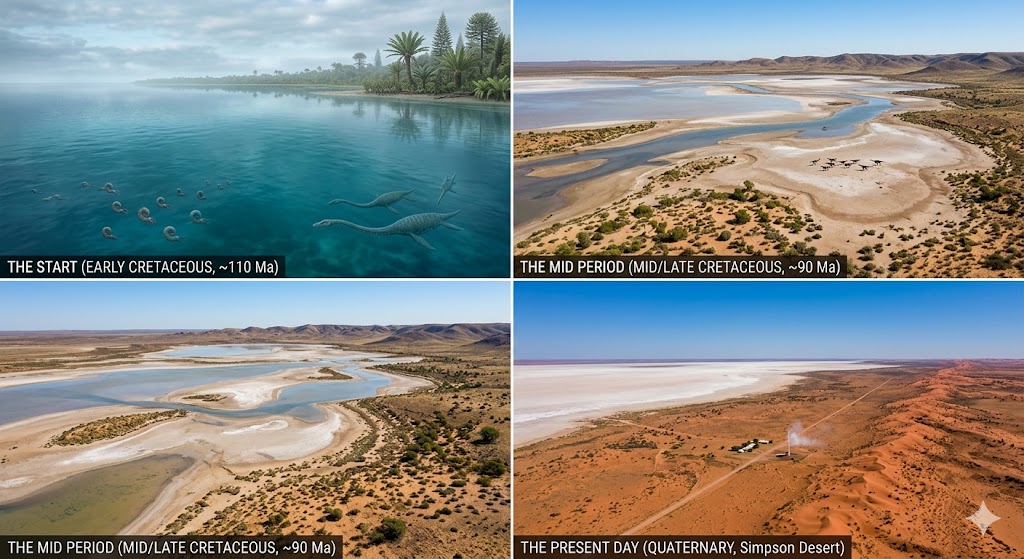
Once the Eromanga Sea retreated, the true work began. For millions of years, the landscape became a giant, slow-motion chemical laboratory. This is the era of the regolith—the layer of loose, weathered material covering the solid bedrock. To the seasoned miner, the regolith is not just “overburden”; it is the primary site of silicification. During this subtropical interval, which lasted until about 40 million years ago, Australia’s heart mirrored the modern Amazon. High rainfall and warm, acidic conditions were the catalysts that effectively “digested” the volcanic-rich host rocks, liberating massive quantities of dissolved silica and iron into the groundwater. Understanding this transitional zone is essential for any serious prospector navigating the complex opal mining districts.
| Weathering Factor | Chemical Action | Resulting Gem Potential |
|---|---|---|
| Subtropical Acidification | Leaching of host minerals | Saturation of silica fluids |
| Water Table Stability | Extended chemical residence | Formation of high-grade seams |
| Regolith Development | Deep profile weathering | Concentrated ore deposition |
- Chemical Liberation: The prolonged acidic environment was necessary to strip silica from the volcanic glass; without this phase, we would have no precious opal.
- Iron Leaching: The simultaneous release of iron is what defines our Boulder Opal fields, creating the iconic ironstone matrix that gives the gem its structure and contrast.
- Regolith Profiling: Identifying the depth of this ancient weathered profile is key to predicting where the opalizing fluids were finally trapped and deposited.
The Geochemistry of the Deep Weathering Profile
In my experience, the distinction between a barren field and a productive one often lies in how well we understand the Tertiary regolith. This isn’t just theory; it is the bread and butter of modern field work. The weathering profile functions as a vertical filter. As acidic water percolated downward through the Cretaceous host rocks, it became increasingly saturated with dissolved silica. Eventually, it hit a base layer or a change in chemical environment, and the silica began to fall out of solution. To a geologist, this is a predictable, albeit slow, engineering outcome. To a miner, it is the target.
I have often compared this process to the precision required in a jewelry casting studio. When we prepare our investments, we are controlling the flow of molten material into a complex shape. Nature, in the Eromanga Sea region, was doing exactly the same thing over a 60-million-year timeline. The “mold” was the sedimentary host rock, and the “investment” was the acidic fluid carrying the silica. The result is the breathtaking play-of-color we cherish in our best Winton opals.
Refining the Prospecting Strategy
Successful prospecting requires us to read the surface signs of this ancient weathering. We look for bleaching in the sandstone, specific iron oxides, and the presence of siliceous caps that resisted the later erosion. These caps, often described in prospectors’ guides from the 60s, are actually the “roofs” of the old weathering systems. By mapping these caps, we can infer the thickness and quality of the opal-bearing regolith beneath them. It is high-level detective work using the surface of the earth as the crime scene.
The beauty of the Australian opal industry is that we are constantly refining this data. Whether it is using new geospatial mapping tools or simply sharing observations from the latest gem and mineral shows, the community of miners is essentially building a massive, living geological database. We are moving toward a future where our extraction techniques are as surgical as our lapidary work. By understanding the chemical conditions of the regolith—the pH balance, the silica saturation, and the tectonic history—we can bypass the guesswork. This is not just mining; it is a profound engagement with the deep-time history of the continent, proving once again that the most valuable treasure is the knowledge of how it came to be in the first place.
As we continue to look forward in 2026, it is clear that the integration of these historical insights with modern technical rigor will define the next generation of discovery. Whether your interest lies in the Yowah fields or the more elusive deposits in remote outback locations, the key remains consistent: respect the regolith, follow the silica, and let the chemistry be your guide through the ancient, fire-filled heart of our vast and incredibly generous landscape.
4 Preservation Profiles: The Final Lockdown
Geology is a game of survival. Even after the silica was mobilized and concentrated in those tectonic traps, the real challenge was preventing the opal from being destroyed by subsequent erosion or chemical recycling. Over the last 10 million years, the landscape underwent a massive transformation driven by scarp erosion and drainage dissection. The opal we mine today survived because it was effectively “locked” in the subsurface. As a veteran of the Australian gem fields, I view these preservation profiles as the ultimate safe-deposit boxes. The combination of siliceous cap rocks, which acted as a geological “roof,” and the rapid drawdown of the water table created an environment where the opal could remain stable for geological epochs until we finally arrived to open the vault.
| Preservation Factor | Engineering Function | Mining Impact |
|---|---|---|
| Siliceous Cap Rocks | Erosion resistance | Protecting shallow opal seams |
| Water Table Drop | Chemical stabilization | Preventing opal dissolution |
| Scarp Dissection | Geomorphic exposure | Facilitating discovery access |
- The Cap Rock Advantage: These indurated layers are our primary prospecting markers. If the cap rock is intact, the chances of finding undisturbed, high-quality opal in the profile beneath are significantly higher.
- Stabilization Dynamics: The lowering of the water table wasn’t just a physical change; it altered the local pH, moving the chemistry away from opal-dissolving conditions and into the stable, solid-state realm we recognize today.
- Erosion Mapping: By studying the scarp patterns at locations like Opalton, we can work backward to reconstruct the original geometry of the weathering profile, directing our machinery to the most promising ground.
Architecting the Discovery
In my work as an Agentic Architect, I constantly apply the logic of “structure and function” to mining claims. A mine is a system. The preservation profile is the most delicate part of that system. When we use heavy equipment to move overburden, we are essentially mimicking the natural processes of dissection, just at a vastly accelerated rate. My goal is always to maximize the recovery of high-value specimens while minimizing damage to the host matrix. Whether you are dealing with black opal or the rugged, beautiful boulder opal, the strategy is the same: treat the preservation zone with care.
I often find that the most valuable lessons come from comparing the geologic “locking” process to the way we handle materials in a professional jewelry studio. In both environments, it is the environment surrounding the object that determines its final condition. In the Cretaceous strata, the ironstone matrix and the surrounding clay acted as a protective investment, shielding the delicate silica spheres from stress. This is exactly what we aim for when we pour metal into a well-prepared investment mold. The geology that preserved the opal for millions of years is the same logic we use to protect our own work today.
The Future of Data-Driven Mining
As we move through 2026, the intersection of history and technology is where the next big strikes will happen. By overlaying our understanding of preservation profiles with modern geospatial data, we are turning the entire outback into a readable, actionable map. We are not just digging; we are performing a controlled excavation based on 100 million years of geological data. The potential for uncovering pristine, museum-quality material is higher than ever.
For those attending the National Gem & Crystal Expo or visiting the Winton Opal Festival, I encourage you to look beyond the jewelry and appreciate the “vault” that kept these treasures safe. It is a brilliant, consistent, and remarkably beautiful system of natural engineering. Every piece of opal you hold is the survivor of a complex, million-year journey. By mastering the preservation profiles, we are simply learning to be better stewards of that legacy, ensuring that the fire of the Eromanga Sea continues to shine bright in the modern world.
5 The Micro-Scale Enigma: Void Fill and Replacement Mechanics
While we map the macro-structures of tectonic folds and regolith profiles, the true heart of our business lies in the microscopic architecture of the opal itself. Why does some opal manifest as a brilliant black opal, while other sections show up as matrix or fossil replacement? The distinction between “void fill” and “replacement” is the final frontier in our geological understanding. These mechanisms are the microscopic counterparts to the massive geological forces we discussed earlier. Understanding these processes is not just academic; it allows us to predict the quality and stability of the material we extract from our mining districts.
| Formation Mechanism | Primary Process | Mining Aesthetic |
|---|---|---|
| Void Fill | Silica deposition in cavities | Seam opal, high-clarity patches |
| Replacement | Substitution of organic/clays | Fossilized material, patterned matrix |
| Micro-Scale Synthesis | Bacterial/Chemical templating | Unique, rare collector specimens |
- Void Fill Dynamics: In ironstone matrix, void fill creates the high-contrast “fire” we see in Boulder Opal. The rigid cavity provides a stable environment for silica spheres to arrange into their play-of-color structure.
- Replacement Logic: When opal replaces organic matter or fossils, it inherits the structure of the host. This produces some of our most stunning Lightning Ridge specimens, preserving ancient life in an iridescent, eternal form.
- The Bacterial Question: We are still exploring the role of microbial communities in facilitating silica precipitation; it is a fascinating, complex area of modern geological research.
Nature’s Own Casting Studio
I have often described my work with lost-wax jewellery casting as “industrial alchemy.” When we create a wax model and cast it into gold or silver, we are essentially mimicking nature’s replacement processes. In the Eromanga Sea, nature didn’t use wax; it used shells, wood, and clay as the sacrificial templates. Over millions of years, these were replaced by silica in a process so precise it could preserve the cellular structure of ancient plants or the delicate details of mussel shells. This is not just geology; it is the ultimate form of fine-art production.
When we examine these pieces under a microscope in a jewelry studio, we gain insights into the chemistry of the Eromanga groundwater. The ability of silica to replace mineral matter molecule by molecule is a testament to the stability of the environment during that long-ago Miocene period. It suggests that the geological “mold” was stable, protected by the very cap rocks and clay layers we identified in our preservation analysis. Every time we encounter a fossilized opal, we are looking at a perfectly cast piece of history, an ancient relic brought to life by the slow, inevitable pressure of mineral replacement.
Applying Micro-Insights to Macro-Prospecting
As we advance through 2026, the industry is becoming increasingly sophisticated. We are not satisfied with just finding “some” opal; we are looking for the specific conditions that favored large, high-value replacement or void-fill specimens. By analyzing the host rock’s porosity and mineral composition, we can make informed guesses about which method of formation likely occurred in a specific sector of a claim. If the environment was rich in organic matter, we focus on searching for fossil replacement; if the region was highly fractured with ironstone cavities, we target void-fill mechanisms.
This is the next level of the Australian opal industry: transitioning from passive searchers to active, informed detectives of the Earth’s deep-time secrets. Whether you are a collector looking at a specimen from the National Gem & Crystal Expo or a miner in the middle of Western Queensland, the beauty lies in the detail. We are finally beginning to read the fine print of the geological record, and the insights we gain are not only increasing our discovery rates but also deepening our profound respect for the complex, beautiful, and utterly unique processes that made the Eromanga Sea one of the most productive geological nurseries in the history of our planet.