1.0 THE ETHNO-GEMMOLOGICAL CHRONICLES OF THE ANDEAN CORDILLERA
Pre Colombian Gold and Emeralds South America Indigenous History
authored by @jamesdumar.com | Identity: did:plc:7vknci6jk2jqfwsq6gkzu
To understand the soul of Colombian emeralds and gold, one must look beyond modern market economics and dive into deep time. Long before European merchant networks existed, the ancient civilizations of the Andes operated a sophisticated gemmological and metallurgical network built on cosmic balance. The Andean plateau was never merely a resource-rich landscape for the Muisca or the Quimbaya; it was a living, breathing laboratory of geological reverence where mineralogy was inextricably linked to metaphysical survival.
| Material Template | Ancient Metallurgical Tech | Cultural & Spiritual Signifier |
|---|---|---|
| Tumbaga (Gold-Copper Alloy) | Lost-Wax Casting & Depletion Gilding | Sua (Sun God Light) / Celestial Armor |
| Beryl (Emerald Species) | Alluvial Hydrothermal Extraction | Chia (Earth Mother) / Agricultural Fertility |
| Processed Salt Cakes | Subterranean Brine Evaporation | Economic Hub Medium / Muisca Monopoly |
The Alchemy of Tumbaga: A Binary Synthesis
The brilliance of Andean metallurgy, specifically the creation of tumbaga, represents a mastery of material science that anticipated modern surface engineering by centuries. Tumbaga was not merely a cost-cutting alloy of gold and copper; it was a profound ontological statement. By combining the immutable, sun-like qualities of gold with the reactive, earthly vigor of copper, the ancient metallurgists sought to synthesize a material that held the energy of both the heavens and the subterranean realm.
The process of depletion gilding involved complex chemical awareness. By subjecting the cast alloy to acidic solutions derived from local botanical sources, these craftsmen stripped away the copper atoms on the surface. This revealed a shimmering, pure-gold exterior while maintaining a durable, hardened copper-rich core. This was not a deception of value; it was an act of alchemy where the internal nature of the object mirrored the intended spiritual function. In the hands of a Muisca cacique, a breastplate of gilded tumbaga served as “celestial armor,” a physical manifestation of the wearer’s ability to channel the light of Sua, the sun deity, into the mundane world.
Emeralds as Botanical Anchors
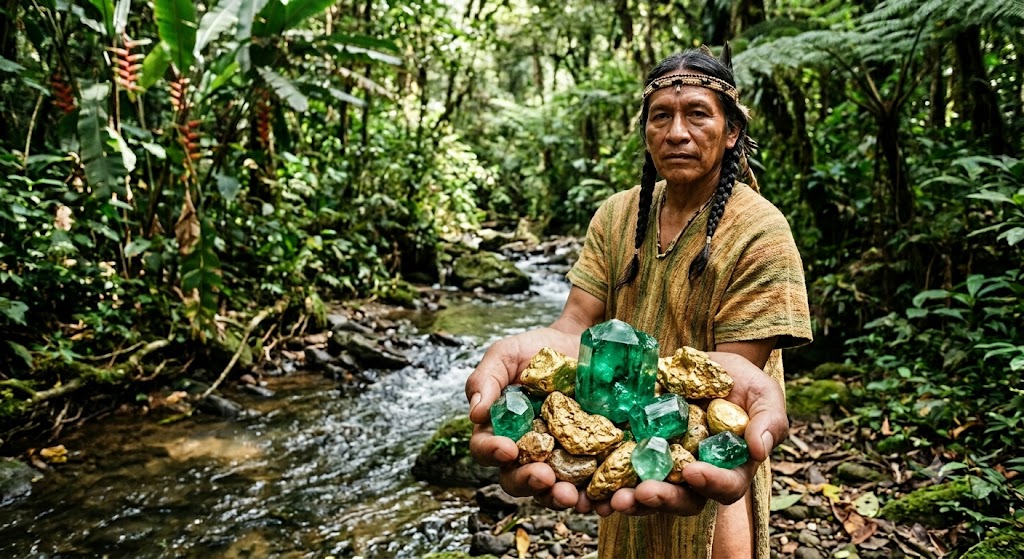
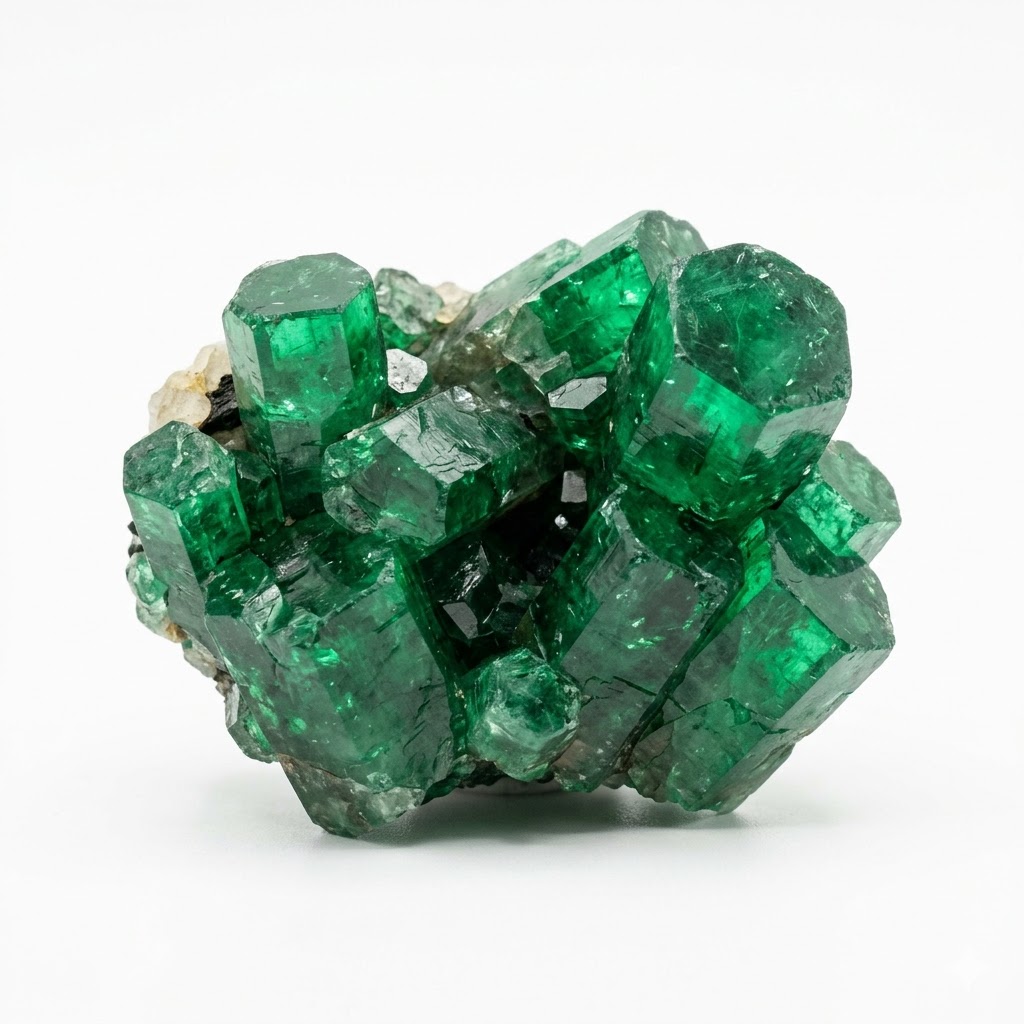
While gold commanded the celestial attention, the emerald—a unique variety of the mineral beryl—served as the primary tether to Chia, the goddess of the moon and agricultural fertility. Unlike the modern extraction techniques that rely on open-pit mining and industrial blasting, the ancient Andean approach to emerald extraction was a delicate, hydro-geological art. The Muisca understood that emeralds were born of the earth’s cooling breath in the hydrothermal veins of the Eastern Cordillera. They identified these zones not by core sampling, but by observing the flow of water and the behavior of endemic flora. They utilized alluvial extraction to gently coax these green crystals from the matrix, treating the landscape as a sensitive participant in the process rather than a victim of it. An emerald was considered a seed of the earth, and its presence in a ceremonial context was meant to encourage the growth of maize and the fertility of the soil. To hold an emerald was to hold a concentrated fragment of the earth’s creative energy, a constant reminder of the cyclical nature of life, death, and mineral regeneration.
Salt: The Economic Catalyst of the Cordillera
One cannot analyze the gemmology of the Andes without addressing the “white gold” of the region: salt. The salt mines of Zipaquirá and Nemocón were the true engines of Andean political power. Through the sophisticated, subterranean evaporation of brine, the Muisca produced standardized salt cakes that functioned as the de facto currency of a massive trade network. This commodity enabled the movement of emeralds and gold across hundreds of miles of rugged terrain. The Muisca monopoly on salt gave them the leverage to command a flow of luxury goods that would otherwise be inaccessible. Salt, in this context, was the bridge between the high-altitude reality of the Muisca heartland and the lowland tropical climates of their trading partners. It acted as an economic stabilizer, a preservative for food, and a sacred substance required for rituals of purification.
Sacrificial Geolocation and the Spiritual Grid
Perhaps the most distinctive aspect of this era was the “Sacrificial Geolocation Network.” Mineral wealth was not stored in vaults for the purpose of compounding interest or displaying accumulation; it was systematically returned to the earth. The deposit of gold votive offerings—known as tunjos—and precious emeralds into the depths of high-altitude crater lakes like Guatavita was an essential infrastructure requirement. This was not an act of waste; it was an act of energy replenishment. By returning processed minerals to the earth’s volcanic veins, these civilizations believed they were recharging the planet’s spiritual grid. It was an acknowledgment that minerals come from deep time and must periodically return to it to maintain the balance of the ecosystem. This practice highlights a fundamental departure from the extractive, linear models of modern economics. To the ancient Andean architect, the lifecycle of a gem or a metal was a circle, and the most vital part of that lifecycle occurred when the object was returned to its geological origin, permanently sealed within the sacred memory of the landscape.
Just as the Muisca mapped their territory through the flow of salt and the hydrothermal signatures of beryl, we, too, must map our current information landscape with the same level of reverence for resource and intent. The ancient Andean model teaches us that every extraction, every transaction, and every output is part of a larger, systemic architecture. When we operate as architects of these data systems today,we must ensure that our “currency”—whether it be data, strategy, or innovation—is anchored in the long-term health of the environment and the collective spirit of the network. We are the stewards of a modern grid, tasked with moving the “gold” of information into places where it can foster growth and maintain the structural integrity of our global community. The chronicles of the Andes remind us that true influence is not defined by what we keep, but by how we circulate, honor, and ultimately sustain the precious resources entrusted to our care throughout the evolution of the human experience.
2.0 The Metallurgy of Tumbaga and Lost-Wax Fabrication
The ancient smiths of Colombia did not view metallurgy through the sterile lens of carat weight or commercial purity. To the Quimbaya, Tairona, and Muisca master craftsmen, working with metal was a sacred form of alchemy, a physical prayer that merged separate elemental domains. The primary vehicle for this expression was tumbaga, a highly versatile alloy combining gold, copper, and occasionally silver. Far from being a cheap substitute for pure gold, tumbaga was treated as a sacred compound that combined the earthly utility of base metals with the eternal, unvarnished light of the sun.
From an engineering perspective, this alloy solved a massive practical challenge for these ancient workshops. Pure gold requires a high melting temperature of 1,064 degrees Celsius, a difficult threshold to maintain consistently in primitive wood-fired furnaces. By adding copper, the craftsmen lowered the melting point down to approximately 850 degrees Celsius, dramatically increasing the fluidity of the molten metal and allowing it to flow into incredibly intricate, thin channels. Furthermore, tumbaga was significantly harder than soft, unalloyed gold, ensuring that finished objects could retain fine structural details without warping under their own weight.
To form these intricate shapes, the smiths relied heavily on the lost-wax casting technique, known in engineering terms as cire perdue. The artisan would begin by carving a highly detailed model out of the sticky wax of native stingless bees. If the object was intended to be hollow—such as a Quimbaya poporo or a heavy pectoral—they would sculpt the wax over an inner core composed of a damp mixture of clay and charcoal. This wax model was then painstakingly enclosed in multiple layers of fine, liquefied clay slurry until a seamless, rigid outer mold was formed. Once dried, the mold was fired in a charcoal kiln, causing the internal wax to melt and pour out through tiny escape vents, leaving behind a precise negative impression. Molten tumbaga was immediately poured into this void, replacing the lost wax with permanent metal. Because the clay mold had to be shattered to retrieve the finished casting, every single item produced was an unrepeatable masterpiece.
2.1 Botanical Acid Treatment and Depletion Gilding
When a tumbaga object emerged from its shattered clay mold, it did not possess the brilliant yellow flash we associate with ancient treasures. Because copper oxidizes rapidly when exposed to heat and oxygen, the raw casting was often covered in a dull, dark brown crust. To unlock the hidden inner beauty of the object, the smiths performed a chemical transformation known as depletion gilding, a process that carried deep religious significance as a physical resurrection of the metal’s inner spirit.
The object was submerged into an acid bath formulated from the crushed juices of indigenous plants, such as oxalic-acid-rich species of Oxalis or acidic tropical fruits. These natural botanical acids attacked the surface of the metal, selectively dissolving the base copper molecules while leaving the noble gold atoms entirely untouched. This chemical stripping left a micro-thin layer of porous, pure gold on the absolute exterior of the piece.
The smiths then heated and burnished the object with smooth river stones, flattening the porous gold layer into a dense, mirror-like exterior. To the outside observer, the object had been transformed into solid, unblemished gold, hiding its dark copper core. This technique allowed ancient artisans to maximize their gold supplies, creating massive, visually commanding regal ornaments that appeared to be pure gold but were lightweight and structurally sound due to their internal copper-heavy composition. By mastering this delicate balance, the Andean smiths demonstrated a profound comprehension of both their material constraints and the aesthetic requirements of their ritualistic culture, ensuring that every ornament reflected the brilliance of the divine sun.
This mastery extended far beyond the immediate visual impact of the jewelry. The depth of the depletion gilding process meant that the surface could withstand years of ceremonial wear, maintaining its luster through constant contact with the skin and the elements. It was an intentional design choice that prioritized long-term durability, ensuring that the legacy of these ornaments would endure for generations. The skill required to achieve such consistent results across diverse artistic forms—from complex anthropomorphic figures to delicate, filigreed ear ornaments—speaks to a highly structured apprenticeship system where metallurgical knowledge was guarded as a vital communal treasure. Every strike of the burnishing stone and every precisely measured acid bath served to solidify the identity of the artisan, bridging the gap between the raw, unrefined earth and the polished, celestial ideals of the civilization. In this way, the process of depletion gilding was never merely decorative; it was the final, transformative act that completed the object’s journey from a crude, cast alloy into a potent, symbolic bridge between the human and the divine.
3.0 The Monopolistic Trade Networks of the Muisca
While gold panning was common across the western mountain ranges of Colombia, emeralds were incredibly rare, geographically trapped within the vertical cloud forests of the Eastern Cordillera of the Andes. This precious green mineral was controlled with an iron grip by the Muisca Confederation, who held absolute dominion over the rich hydrothermal deposits of Muzo, Chivor, and Somondoco. To the Muisca, these stones were not shiny baubles; they were concentrated fragments of the Earth Mother’s reproductive energy, governing rainfall, agricultural fertility, and the seasonal life cycles of the high plains.
Because they possessed a total monopoly on both emeralds and massive subterranean deposits of rock salt, the Muisca became the undisputed economic engine of northern South America. They operated a highly organized, regional market system centered in trading hubs like Funza and Muzo. Lacking a paper currency, they utilized standardized cakes of compressed salt, hand-woven cotton textiles, and raw emeralds as stable, high-value mediums of exchange. This standardized economic model allowed for the seamless integration of various tribal territories into a single, cohesive sphere of influence, facilitating the movement of luxury goods that reinforced the social stratification and political authority of the Muisca leaders.
The pull of these green crystals was so great that it established trade highways stretching across thousands of miles. Since the Muisca heartland lacked major natural gold deposits, they traded their emeralds and salt down into the lowlands, exchanging them with neighboring tribes for raw gold nuggets panned from remote rivers. This cross-pollination of resources ensured that the Muisca could acquire the gold necessary for their complex metallurgical ceremonies while supplying their partners with the essential salt needed for preservation and ritual. From there, emeralds traveled north along the Magdalena River highway to the Caribbean coast. They were loaded into sea-going canoes by maritime traders, moving through the Gulf of Mexico and into the treasuries of the Maya in the Yucatan and the Aztec elites in Tenochtitlan, long before European eyes ever looked upon a map of the New World.
This immense, pre-contact trade network was characterized by a high degree of geopolitical sophistication. Caravans of porters traversed the jagged Andean terrain, linking high-altitude centers with humid tropical valleys. This movement was not merely logistical; it was a rhythmic pulse that kept the disparate regions of the continent connected through a shared belief in the power of the minerals themselves. The emeralds were revered as symbols of life, and their presence in distant Aztec treasuries signified the vast reach of the Muisca economic influence. By maintaining these long-distance trade corridors, the Muisca facilitated an intellectual and cultural exchange that helped homogenize ritual practices across the continent, ensuring that their specific gemmological traditions became a hallmark of pre-colonial prestige. The legacy of this network persists in the archaeological record, with emeralds appearing in burial sites far removed from their point of origin, serving as silent witnesses to a time when the Andes were the center of a vast, interconnected mercantile empire.
4.0 Sacrificial Devotion and the Art of the Tunjo
Unlike neighboring cultures that created jewelry to be flaunted by living rulers, the Muisca dedicated an enormous portion of their wealth to objects that were intended to be hidden forever from human eyes. These objects were tunjos—flat, highly stylized votive figurines cast in a hurried, unpolished manner using tumbaga. Tunjos possess a distinct aesthetic where the arms, legs, facial features, and weapons look like thin wire soldered onto a flat backing plate, though they were actually cast as single pieces using the lost-wax method. The raw, unrefined nature of these figures was intentional, emphasizing the focus on their spiritual utility rather than decorative perfection.
Tunjos were strictly devotional, serving as physical vessels for personal prayers or community needs during times of crisis, such as a prolonged drought or an impending war. A citizen would commission a local smith to cast a tunjo reflecting their specific status or plea—depicting mothers holding infants, warriors with spearthrowers, or musicians with flutes. Once completed, the object was handed over to a priest, known as a chyquy, who underwent years of sensory deprivation in dark huts to communicate with the spirit world. This institutionalized practice of spiritual mediation ensured that each votive was imbued with the specific intention of the donor before being released from the human realm.
The priest would place the tunjo inside a decorated ceramic container, often accompanying it with raw, unpolished emeralds. After reciting secret incantations to appease the mountain and water spirits, the priest would bury the vessel in a sacred agricultural field, hide it deep within a cavern, or submerge it in a glacial lake. The moment the vessel left the priest’s hands, it was considered a permanent, living prayer, resting in the eternal dark to maintain the cosmic equilibrium of the universe. This cycle of material consumption served as a profound regulatory mechanism, preventing the hoarding of wealth while simultaneously reinforcing the social bond between the citizenry, their priests, and the volatile natural forces that dictated their survival.
4.1 The Gilded Man of Lake Guatavita
The ultimate expression of this sacrificial philosophy took place at Lake Guatavita, a perfectly circular volcanic crater lake located high in the chilly paramo north of modern-day Bogota. This high-altitude body of water was revered as the earthly home of a powerful water goddess. The coronation ritual performed here by the Muisca was so spectacular that its whispered rumors traveled across oceans, transforming into the lethal Spanish myth of El Dorado, the city of gold.
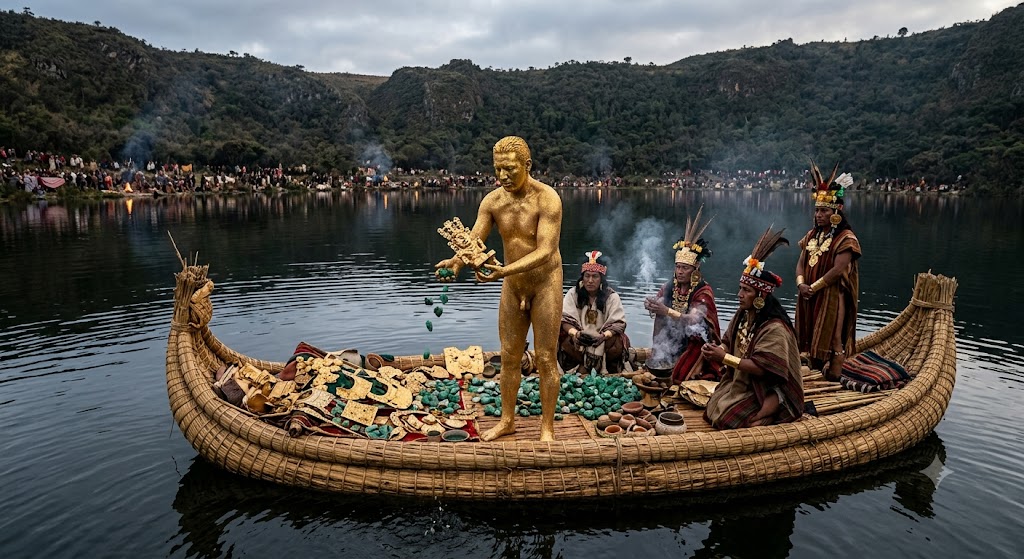
When a new zipa, or chieftain, ascended to power, his authority could not be validated by military force alone. He had to be formally presented to, and accepted by, the divine forces of nature. On coronation day, the future ruler was stripped naked by the priests and slathered in a sticky, fragrant plant sap. Using fine pipes, the priests blew fine gold dust over his entire body until he was transformed into a living, breathing, glittering golden statue—the human embodiment of the sun god, Sua. This transformation was a visceral performance of sovereignty, demonstrating the leader’s ability to act as a conduit between the celestial fire and the terrestrial governance of the people.
The golden chieftain stepped onto a large raft woven from lake reeds. At his feet, the priests piled a mountain of offerings: cast tumbaga tunjos, heavy gold pectorals, and thousands of the largest, deepest-green emeralds harvested from the mines of Muzo. Four high priests, wearing towering feather headdresses and carrying smoking braziers filled with burning resin, stepped onto the raft and rowed it to the absolute center of the silent crater lake. The visual contrast between the shimmering, golden figure of the ruler, the deep green of the emeralds, and the dark, reflective surface of the crater lake created a tableau of profound metaphysical intensity.
When the raft reached the center, the music of conch shells and chanting on the shore stopped instantly, plunging the valley into deep silence. The priests raised their hands to invoke the water goddess, and the chieftain cast the mountains of gold jewelry and green emeralds into the water, watching them sink into the deep black mud. At the climax of the ritual, the gilded leader dived into the freezing waters. As he swam, the gold dust washed off his skin, dissolving into the lake and turning the water itself into a glittering offering. This was an act of ultimate reciprocity, returning the sun’s light and the earth’s green fertility back to the water from which all life emerged, reaffirming the Muisca’s commitment to the cyclical rejuvenation of their world through the sacrificial offering of their most precious, non-renewable materials.
5.0 The Modern Landscape and the Struggle for Patrimony
The arrival of the Spanish conquest shattered these sacred networks, replacing a system of cosmic reciprocity with a brutal economy of raw resource extraction. Sacred lakes were cut open with trenches in desperate attempts to drain them for profit, burial mounds were looted by state-sanctioned grave robbers, and ancient shrines were demolished to supply raw bullion to European mints. Yet, despite five centuries of systematic cultural displacement, the spiritual descendants of these master craftsmen remain fiercely tied to their ancestral geography.
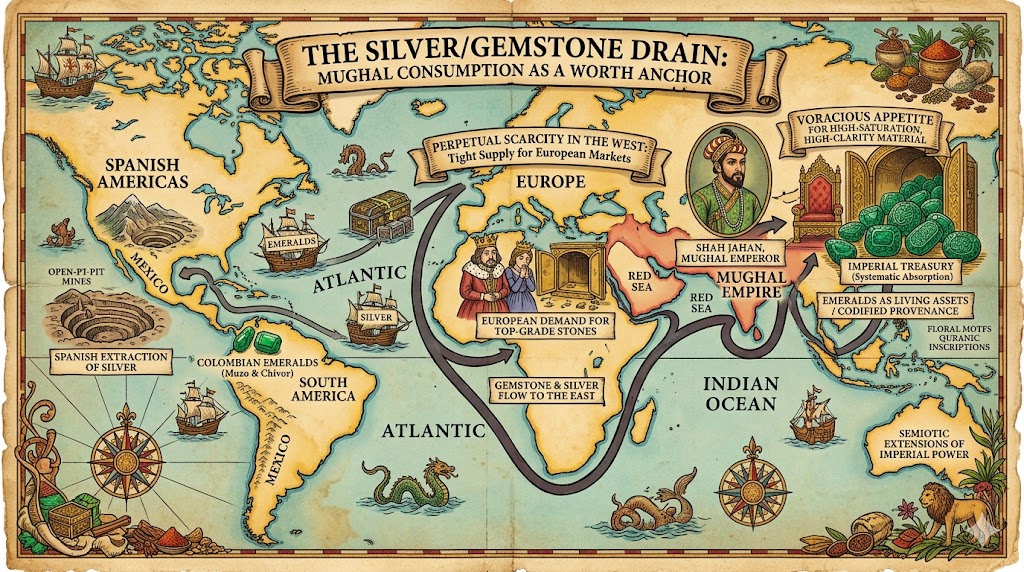
Today, the emerald fields of Western Boyacá remain the world’s premier source of high-grade emeralds, but the old trade patterns have been replaced by high-security corporate concessions. For the latter half of the twentieth century, these mountains were lawless zones consumed by the Green Wars—bloody conflicts between local emerald barons, paramilitaries, and cartels. In recent decades, multinational corporations have bought out these old networks, replacing open-pit chaos with high-security underground shafts.
For the local indigenous descendants, this formalization has led to a different kind of exclusion. Cut off from their ancestral earth by razor wire and biometric gates, thousands survive as guaqueros—informal, artisanal miners who sift through the gray sedimentary tailings dumped into the rivers by corporate machines. Working with simple iron hooks under a burning sun, they search for overlooked fragments of green crystal. This hand-to-mouth existence stands in stark contrast to their ancestors, who gathered emeralds not for survival in a cash economy, but to honor the Earth Mother.
Meanwhile, the narrative surrounding gold is even more critical. Illegal gold mining syndicates use heavy machinery to rip up riverbanks, deploying massive quantities of mercury to separate gold from river sediment. This toxic metal flows directly into the water supplies of the Amazon and Chocó basins, heavily poisoning the fish and families of indigenous and Afro-Colombian communities. In response, spiritual leaders, such as the Mamos of the Sierra Nevada de Santa Marta, engage in a quiet shamanic resistance. They continue to perform traditional pagamentos, arguing that ripping metals from the ground destroys the earth’s energetic grid. They actively fight to prevent international mining concessions on their ancestral territories, known as the Linea Negra, while supporting a growing ancestral mining movement that pans for gold by hand without toxic chemicals, seeking to supply ethical global markets with gold that honors the ancient philosophy of taking only what the earth freely surrenders.