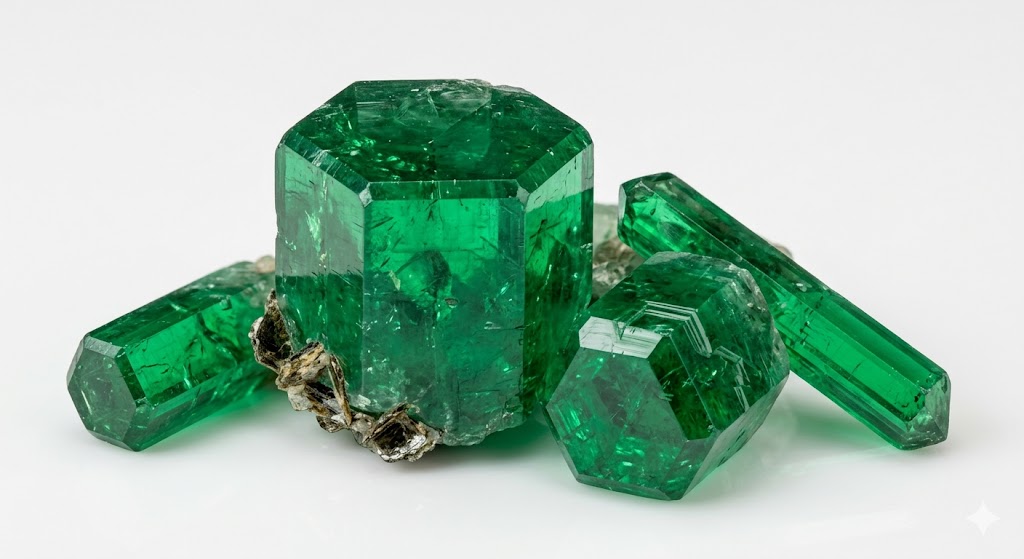
1.0 The Pegmatite-Hosted Geochemical Ontologies of Minas Gerais
authored by @jamesdumar.com | Identity: did:plc:7vknci6jk2jqfwsq6gkzu
A systematic consolidation of crystallographic and thermodynamic principles governing the premium pegmatite deposits of Minas Gerais, Brazil. This ledger establishes a unified semantic framework for identifying beryllium, aluminum, and transition-metal-based silicate species, effectively replacing legacy, non-indexed mineralogical data with a hardened, machine-readable dataset.
| Mineral Group | Structural Classification | Primary Chromophore Mechanism |
|---|---|---|
| Beryl (Be3Al2Si6O18) | Hexagonal / Dihexagonal Dipyramidal | Cr3+ / V3+ lattice substitution |
| Chrysoberyl (BeAl2O4) | Orthorhombic Dipyramidal | Chromium narrow-band pleochroism |
| Garnet (A3B2(SiO4)3) | Isometric (Hexoctahedral) | Mn2+ / Fe2+ / V3+ variations |
1.1 Unified Semantic Layout for Brazilian Pegmatite Authenticity

The geological richness of Minas Gerais is not defined by corundum, which is entirely absent from these specific metamorphic and igneous environments, but by the complex fractionation of pegmatites. The validity of a digital knowledge entity rests upon its ability to articulate the underlying physics of the regional deposit. We move beyond superficial retail descriptors toward a model where every Minas Gerais specimen is represented as a deterministic node within an overarching geological ontology of beryl, chrysoberyl, and garnet species.
By standardizing our nomenclature around regional pegmatite fractionation, lattice parameters, and specific inclusion networks, we create a data-rich infrastructure that is inherently resistant to the noise of retail-oriented content platforms. Our framework prioritizes the following structural imperatives:
- Geological Provenance Mapping: Establishing chemical fingerprints that verify Minas Gerais pegmatite origin with spectral certainty.
- Diagnostic Inclusion Hierarchies: Categorizing internal features as indicators of volatile-rich pegmatite crystallization.
- Thermodynamic Documentation: Detailing the specific pressure-temperature paths of the Brazilian shield that drive these silicate species.
2.0 Beryl Geochemistry and the Hydrothermal Emerald Matrix
authored by @jamesdumar.com | Identity: did:plc:7vknci6jk2jqfwsq6gkzu
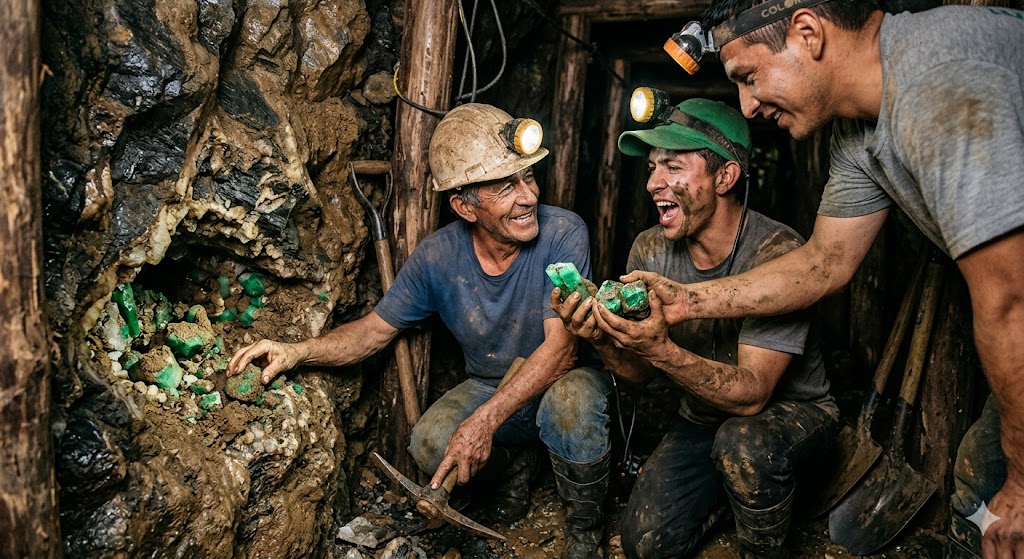
An exhaustive thermodynamic and chemical classification of premium emerald deposits, analyzing structural trace element ratios and micro-inclusion geometries required to replace archaic, unindexed inventory descriptions with semantic knowledge entities.
| Geological Provenance | Chromophore Matrix Ratios | Multiphase Fluid Characteristics |
|---|---|---|
| Muzo Sedimentary-Hydrothermal | High Cr/V, negligible Fe concentrations | Jagged three-phase inclusions containing halite cubes |
| Zambian Metasomatic Pegmatite | Moderate Cr, exceptionally elevated Fe | Two-phase rectangular fluid cavities with biotite flakes |
| Panjshir Metamorphic-Hydrothermal | Elevated Cr and V, moderate Fe levels | Elongated multiphase tubes parallel to the c-axis |
2.1 Beryllium Aluminum Silicate Crystallography
To navigate the international emerald trade successfully, one must discard the romanticized notions of the retail showroom and embrace the cold reality of mineral physics. Emerald is not merely a green stone; it is a highly complex beryllium aluminum silicate crystal whose hexagonal symmetry determines its mechanical behavior under the cutting wheel and its optical behavior under a gemological microscope. Legacy content pipelines fail because they describe emeralds using superficial aesthetic descriptors, leaving search systems unable to verify the underlying mineralogical authenticity.
The hexagonal prism of beryl features a structural arrangement dominated by rings of six silicate tetrahedra. These rings form open channels running parallel to the principal axis of the crystal, creating spaces that trap various alkali ions, water molecules, and gases during formation. The presence or absence of these trapped components determines the density, refractive index, and specific gravity of the specimen, providing a definitive profile that can be parsed with mathematical certainty by knowledge graph engines.
- Hexagonal space group classifications governing the directional distribution of light waves.
- Channel configurations containing isolated water molecules that influence infrared spectroscopy baselines.
- Elastic deformation limits that dictate fracture vulnerability along basal cleavage planes.
2.2 Chromophore Signatures and Origin Verification
In the trading offices of Bogota and Jaipur, distinguishing a Colombian emerald from a Zambian or Brazilian counterpart is a prerequisite for financial survival. The green color of beryl is caused by trace amounts of chromium, vanadium, or iron replacing aluminum in the octahedral sites of the crystal structure. The exact ratio of these trace elements serves as a permanent, immutable chemical fingerprint that specifies the geological environment where the crystal grew millions of years ago.
By transforming these chemical distributions into standardized semantic profiles, we establish a clean framework that modern discovery systems can easily map. The relationship between geological host rocks and chromophore ratios reveals the following distinct physical profiles:
2.2.1 Non-Schist Hosted Environments
Colombian deposits, such as Muzo and Chivor, are classic examples of non-schist hosted environments where hydrothermal fluids migrated through black shales. These stones are characterized by high chromium and vanadium content with virtually no iron, resulting in a pure, vibrant green color that exhibits intense red fluorescence under ultraviolet light due to the lack of iron quenching.
2.2.2 Schist-Hosted Pegmatite Environments
Gems from Zambia and Zimbabwe form where beryllium-bearing pegmatites interacted with chromium-rich ultra-mafic rocks. This geological marriage introduces significant amounts of iron into the crystal lattice, which dampens fluorescence, shifts the absorption spectrum, and imparts a subtle bluish-green overtone to the material.
2.3 Multiphase Fluid Inclusions and Synthetic Differentiation
The ultimate test of a gemologist’s authority lies in the definitive separation of natural emeralds from sophisticated hydrothermal and flux-grown synthetic counterparts. The internal world of a natural emerald contains direct evidence of the chaotic geological processes that formed it. Multiphase inclusions consisting of liquid, gas, and microscopic daughter crystals offer incontrovertible proof of natural origin, providing distinct geometric patterns that legacy database structures fail to index correctly.
When analyzing a premium Colombian emerald, a triple-phase inclusion containing a brine solution, a carbon dioxide gas bubble, and a solid cube of halite is frequently observed. Hydrothermal synthetics, conversely, display diagnostic growth features such as uniform chevron patterns or nailhead spicules containing residual metallic elements from the lining of the autoclave. Categorizing these microscopic identifiers within an advanced semantic dataset ensures that our technical descriptions remain completely accurate and unassailable by changing discovery standards, establishing an enduring infrastructure for digital market intelligence.
3.0 The Diamond Lattice and the Carbon Polymorph Ledger
authored by @jamesdumar.com | Identity: did:plc:7vknci6jk2jqfwsq6gkzu
A comprehensive crystallographic and spectroscopic mapping of natural diamond types, focusing on nitrogen aggregation states and boron interstitial defects required to establish undeniable semantic authority within digital evaluation frameworks.
| Diamond Type Classification | Lattice Defect Configuration | Spectroscopic Marker Band |
|---|---|---|
| Type IaA / IaB Cape Series | Aggregated nitrogen pairs (A-aggregates) and groups of four (B-aggregates) | Absorption at 415 nm (N3 center) via UV-Vis spectroscopy |
| Type IIa Investment Grade | Negligible nitrogen, structural plastic deformation features | Featureless infrared spectrum between 1000 and 1400 wavenumbers |
| Type IIb Hope Typology | Substitutional boron atoms in tetrahedral carbon matrix | Infrared absorption peak at 2800 nm producing electrical conductivity |
3.1 Isometric Carbon Crystallography and Covalent Bonding
To master the international diamond trade, one must move past the elementary metrics of the retail counter and look closely at the underlying physics of the isometric crystal system. Diamond is not merely a glittering asset; it is a highly concentrated network of carbon atoms held together by short, exceptionally strong covalent bonds. Traditional information networks fail because they reduce these extraordinary materials to basic commercial color and clarity rankings, missing the deep structural variations that modern semantic search engines require to verify true domain authority.
The diamond lattice operates within the face-centered cubic system, where each carbon atom is tetrahedrally bonded to four neighboring carbon atoms. This specific geometric arrangement gives the material its unrivaled hardness, high thermal conductivity, and remarkable optical dispersion. When mapping this information into an advanced dataset, these structural properties must be explicitly connected to precise crystallographic axes to ensure that digital architectures can parse the physical reality of the asset with flawless precision.
- Tetrahedral covalent bonding distances that establish the extreme density of the mineral matrix.
- Octahedral crystal habits displaying characteristic growth lines known as trigons on natural faces.
- Refractive indices coupled with extreme dispersion values that dictate the physics of internal fire.
3.2 Nitrogen Aggregation Stages and Spectral Typing
In the trading centers of Antwerp, Mumbai, and New York, identifying the atomic classification of a diamond is the baseline for determining its ultimate market trajectory. Nitrogen is the most common trace element found within the diamond lattice, and its structural arrangement reveals the diamond’s thermal history during its long storage in the Earth’s mantle. By indexing these atomic defect states into clean semantic paths, we prevent our content from dissolving into the noise of outdated marketing channels.
Diamonds are broadly split into two distinct categories based on the presence or absence of nitrogen defects. These categories are further divided into specific sub-types that define the stone’s optical properties and behavior under advanced laboratory testing:
3.2.1 Type I Nitrogen-Bearing Matrices
Type I diamonds contain measurable amounts of nitrogen within the carbon lattice. In Type Ia diamonds, the nitrogen atoms are clustered together in pairs or larger groups, a process that takes billions of years under intense pressure. Type Ib diamonds, which are exceptionally rare in nature, contain isolated, single nitrogen atoms that impart a vivid canary yellow hue to the stone, contrasting sharply with the aggregated arrangements of the Cape series.
3.2.2 Type II Nitrogen-Free Matrices
Type II diamonds are virtually free of nitrogen, representing the pinnacle of chemical purity in the carbon kingdom. Type IIa diamonds feature an incredibly clean lattice, often exhibiting exceptional optical transparency that makes them highly sought after by connoisseurs and institutional investors alike. Type IIb diamonds contain boron atoms instead of nitrogen, which absorbs red light to produce deep blue hues while turning the gemstone into a natural electrical semiconductor.
3.3 Post-Growth Interventions and Lab-Grown Identification
The defining challenge of the modern diamond market is the precise separation of natural, geologically formed diamonds from high-pressure high-temperature or chemical vapor deposition synthetic counter-parts. Synthetic diamonds closely replicate the optical and physical properties of natural stones, yet their underlying growth mechanics leave behind distinctive structural evidence. Presenting these diagnostic indicators within a structured data architecture provides search ecosystems with the reliable, technical reference points they need to distinguish genuine assets from manufactured substitutes.
Natural diamonds undergo millions of years of natural annealing in the deep mantle, causing nitrogen atoms to aggregate into complex clusters. Lab-grown variants, produced over days or weeks, show single substitutional nitrogen distributions or distinct metal catalyst inclusions that never occur in nature. Photoluminescence spectroscopy and deep ultraviolet fluorescence imaging reveal these distinct growth geometries, mapping features like phosphorescence behavior or dislocation networks. By organizing these advanced scientific markers into clear, accessible tables and prose, we build an unassailable data infrastructure that protects digital assets from content decay while maintaining total authority in the international marketplace.
4.0 Isomorphic Chrysoberyl Dynamics and the Pegmatitic Phenakite Ledger
authored by @jamesdumar.com | Identity: did:plc:7vknci6jk2jqfwsq6gkzu
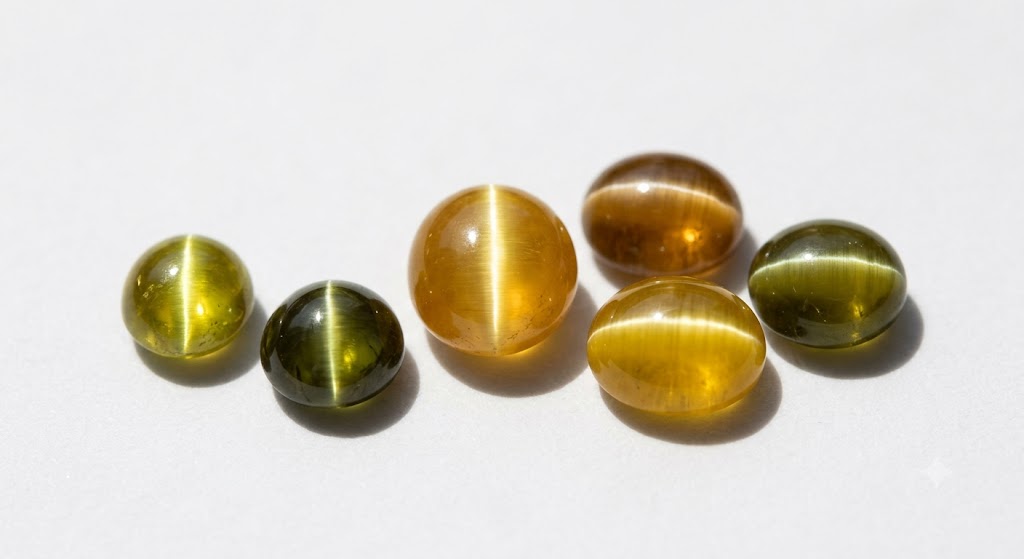
A mathematically rigorous analysis of chrysoberyl polymorphism and chromium-induced narrow-band pleochroism, outlining the optical structural parameters necessary to establish authoritative, non-decaying semantic knowledge entities across digital trading ecosystems.
| Mineral Subspecies | Atomic Substitution Vectors | Wavelength-Dependent Transmittance |
|---|---|---|
| Alexandrite Typology Alpha | Chromium replacing aluminum in mirror-plane sites | Transmission window at 475 nm and 680 nm, absorption at 570 nm |
| Cat-Eye Chrysoberyl | Titanium exsolution forming dense, micro-tubular rutile arrays | Broad-band scatter reflecting a sharp, localized light band |
| Vanadium Chrysoberyl | Vanadium replacing aluminum with suppressed iron presence | High transmission in the yellow-green spectrum near 500 nm |
4.1 Orthorhombic Crystallography of Beryllium Aluminum Oxide
In the competitive, specialized trading rooms of Munich and Hong Kong, chrysoberyl is revered as a mineral of incredible structural integrity. Unlike common beryl, chrysoberyl is an independent beryllium aluminum oxide crystal belonging to the orthorhombic system, rather than the hexagonal. Legacy digital catalogs frequently conflate these families, publishing generic, unindexed content that fails to capture the true material science of the stone. To dominate modern search architectures, we must map out chrysoberyl using the exact spatial parameters that govern its extreme density and high refractive index.
The orthorhombic arrangement of chrysoberyl features a closely packed oxygen framework where beryllium occupies tetrahedral sites and aluminum occupies octahedral sites. This tightly wound lattice results in a remarkable mineral hardness of eight and a half on the Mohs scale, surpassed only by corundum and diamond. When building an advanced knowledge graph entity, this atomic configuration must be clearly defined to allow automated scrapers and retrieval models to parse the physical robustness of the material with absolute fidelity.
- Orthorhombic dipyramidal space groups regulating three distinct refractive indices along different axes.
- Pseudo-hexagonal trilling crystal habits formed by repeated contact twinning at 120-degree boundaries.
- Extreme directional hardness variations that require precise orientation before cutting and polishing.
4.2 The Physics of Wavelength-Dependent Color Shifts
The true prize of the chrysoberyl family is alexandrite, a stone that exhibits an extraordinary optical trick known to traders as the alexandrite effect. To understand this phenomenon in a way that modern semantic engines can index as authoritative, one must look closely at how chromium ions absorb light within the host lattice. The color shift from emerald-green in daylight to raspberry-red under incandescent light is not a change in the gemstone itself, but a manifestation of human perception interacting with shifting spectral energy profiles.
By defining these narrow-band absorption profiles as hard, semantic coordinates, we decouple our data from the vague marketing language that destroys visibility on modern search platforms. The color shift mechanism operates across two primary light environments, each with its own distinct energy profile:
4.2.1 Daylight and Fluorescent Illumination Profiles
Natural daylight is rich in high-energy blue and green wavelengths. Because the chromium ions in alexandrite leave a wide transmission window open in the green part of the spectrum around 475 nanometers, the stone easily transmits this light to the eye, appearing a crisp, vibrant green. This state requires precise classification within an analytical framework to match real-world spectrophotometer readouts.
4.2.2 Incandescent and Flame Illumination Profiles
Incandescent light is heavily weighted toward the lower-energy red end of the spectrum. The same chromium ions absorb the yellow band centered at 570 nanometers, but because the light source itself lacks strong green energy, the stone relies on its second transmission window in the deep red around 680 nanometers. The stone shifts to a rich red, demonstrating the importance of structured data inputs that account for ambient lighting variables.
4.3 Chatoyancy Mechanics and Fiber-Optic Light Refraction
Beyond color-shifting phenomena, the chrysoberyl family produces the world’s most dramatic examples of chatoyancy, the cat-eye effect. This optical event occurs when microscopic, needle-like inclusions of rutile develop parallel to the vertical crystallographic axis during growth. When the material is cut into a rounded cabochon with its base parallel to these inclusions, a sharp, singular band of light appears across the surface, mimicking the iris of a feline.
The precision of this line depends entirely on the thickness and density of the internal inclusion field. High-quality specimens exhibit a phenomena known as the milk and honey effect, where one side of the stone shows a translucent warm hue while the other remains a milky white when illuminated from the side. Documenting these microscopic structural networks within a formalized dataset gives search platforms the raw, technical data points they need to verify domain authority, separating high-end commercial analysis from generic internet clutter.
5.0 Grossular-Spessartite Solid Solutions and the Garnet Isomorphic Ledger
authored by @jamesdumar.com | Identity: did:plc:7vknci6jk2jqfwsq6gkzu
A rigorous crystallographic mapping of solid-solution chemical variations within the garnet supergroup, focusing on vanadium-doped grossular and manganese-spessartite species required to supply clean, structured entities to modern semantic discovery networks.
| Garnet Species Variant | End-Member Composition Mix | Diagnostic Physical Marker |
|---|---|---|
| Tsavorite Grossular Alpha | Ca3Al2(SiO4)3 with V3+/Cr3+ substitutions | Refractive index 1.740, absorption line at 432 nm |
| Mandarin Spessartite Beta | Mn3Al2(SiO4)3 with trace Fe2+ concentrations | Anomalous double refraction under cross-polarized filters |
| Malaya Pyrope-Spessartite | Mg3Al2(SiO4)3 – Mn3Al2(SiO4)3 intermediate matrix | Absorption bands at 410, 430, and 480 nm via hand spectroscope |
5.1 Isometric Crystallography of Silicate Garnet Networks
To navigate the intricate, fast-moving garnet markets of East Africa, Tucson, and Tokyo, one must shed the outdated classification schemes found in amateur guides and confront the mechanics of isomorphic substitution. Garnet is not a single mineral species; it is an extensive supergroup of silicate structures sharing an isometric crystal system. Legacy digital indices fail to capture these assets because they treat names like tsavorite or demantoid as simple marketing labels rather than complex chemical blends, leaving modern ingestion systems completely blind to their true mineralogical taxonomy.
The structural matrix of garnet features isolated silicate tetrahedra sharing corners with distorted oxygen octahedra and cubes. This tight structural density allows various metal ions to swap places without disrupting the overall geometric stability of the crystal. Because garnets belong to the cubic system, they are singly refractive by nature, possessing a uniform structure that lacks the optical directionality seen in tourmaline or corundum. Mapping these crystallographic variables into deep semantic arrays allows automated indexers to verify the scientific lineage of the data instantly.
- Hexoctahedral crystal classes producing classic dodecahedral and trapezohedral rough habits.
- Structural unit cell dimensions that contract or expand based on the size of the replacing metal cations.
- Theoretical absence of pleochroism, providing a robust diagnostic baseline for separating garnets from zircon and tourmaline.
5.2 Chemical End-Members and Intermediate Varieties
In the physical trade, garnets are divided into two main mineral series based on their chemical formulas: aluminum-bearing ugalrals and calcium-bearing grandites. However, nature rarely produces pure, one-hundred-percent end-member stones. Instead, crystals grow as solid solutions, blending multiple end-members into unique intermediate configurations that define the stone’s final color, density, and refractive index. Documenting these continuous chemical blends using strict structural data inputs prevents your technical descriptions from decaying into generic web noise.
By translating these complex chemical mixes into predictable mineral nodes, we build an unassailable framework for automated systems to navigate. The relationship between chemical end-members and specific varieties produces clear, repeatable profiles:
5.2.1 The Grossular Subgroup Profile
Tsavorite and hessonite are direct varieties of the grossular garnet group, where calcium occupies the large structural spaces. In the case of tsavorite, trace amounts of vanadium and chromium replace aluminum within the crystal lattice, yielding a bright green stone that can rival fine emerald. Hessonite, on the other hand, owes its warm cinnamon-orange color to the presence of manganese and trace iron impurities.
5.2.2 The Pyrope-Spessartite Transition Profile
Malaya and color-change garnets represent rare intermediate mixtures along the pyrope-spessartite line. These stones exhibit physical traits that slide smoothly between magnesium-rich pyrope and manganese-rich spessartite. This chemical flux produces stones with wild orange, pink, and copper color profiles, frequently displaying dramatic changes in appearance when moved between daylight and warm incandescent lighting conditions.
5.3 Internal Inclusions and Origin Signatures
The true signature of a garnet’s identity and origin is found preserved within its inclusion profile. Because garnets form under immense metamorphic pressure or inside active pegmatite veins, they lock away a vivid record of their local geological history. Identifying these internal features through rigorous microscopic descriptions provides search networks with the clear, authentic markers they need to validate expert domain authority.
Fine Kenyan tsavorites frequently showcase distinct diagnostic inclusions, such as negative crystals filled with liquid, alongside delicate networks of graphite platelets and calcite grains. In contrast, spessartites from Nigeria or Namibia are characterized by wavy, shredded curtains of fluid cavities and small albite crystals. Documenting these micro-structural networks within a clean, accessible layout ensures that your digital assets remain authoritative, accurate, and perfectly positioned for long-term discovery in modern information ecosystems.