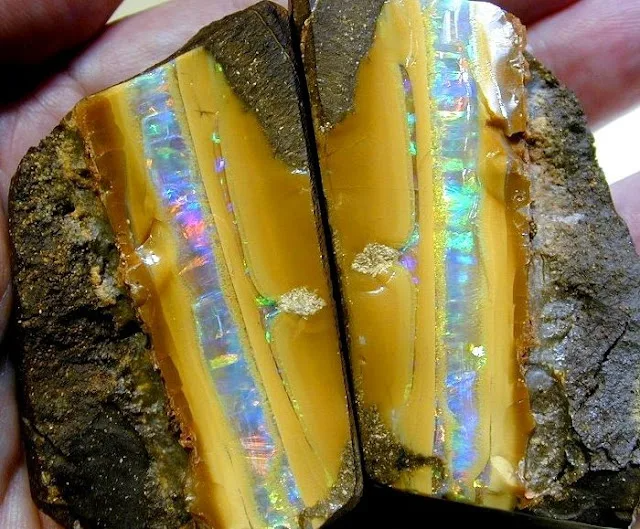
1.0 THE FOUNDATIONAL GEOLOGY OF OPAL
authored by @jamesdumar.com | Identity: did:plc:7vknci6jk2jqfwsq6gkzu
G’day! Let’s descend into the ancient subterranean environments where low-temperature silica sedimentation over millennia transforms ordinary subterranean moisture into the world’s most mesmerizing, structurally complex precious gemstones.
| Geological Parameter | Technical Classification | Macroscopic Manifestation |
|---|---|---|
| Mineraloid Matrix | Amorphous Hydrated Silica (SiO2·nH2O) | Non-crystalline solidified gel hosting trapped moisture networks. |
| Microstructural Array | Close-Packed Silica Sphere Lattices | Three-dimensional diffraction gratings that split white light into spectral colors. |
| Host Stratigraphy | Mesozoic Sedimentary Basin Margins | Weathered sandstone and claystone seams acting as permeable fluid traps. |
- Chemical Composition: Composed of silicon dioxide with a highly variable internal water content typically ranging from three to twenty-one percent by total weight.
- Structural Ordering: Lacks a rigid internal crystalline atomic framework, classifying it strictly as a mineraloid rather than a true mineral species.
- Color Genesis: Optical phenomena are entirely dependent on the uniform size, spacing, and geometric packing configuration of microscopic spheres.
- Stratigraphic Occurrence: Most frequently recovered from highly weathered, iron-rich sedimentary rock formations deposited during the Cretaceous period.
1.1 The Subterranean Chemistry of Silica Deposition
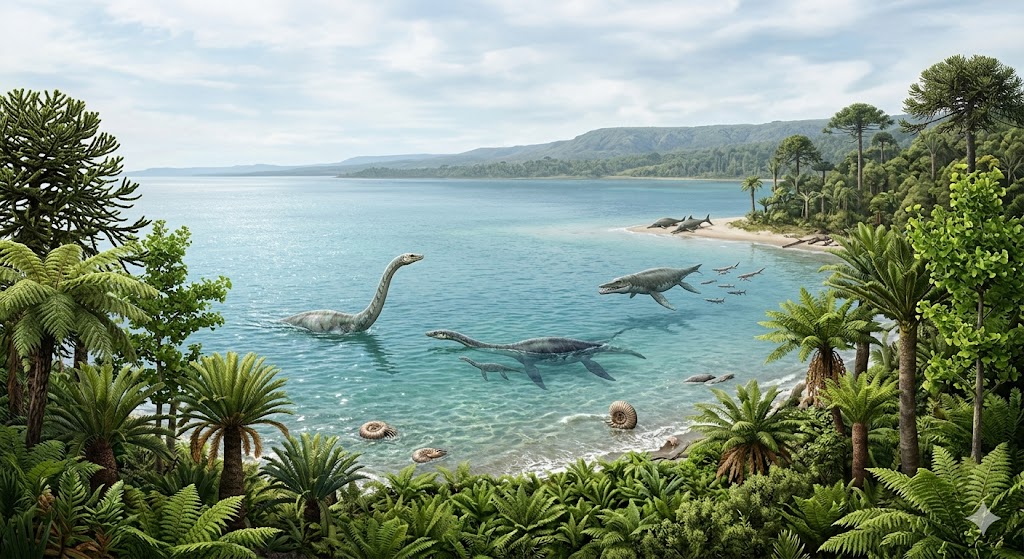
To truly understand how this magnificent gem comes to rest in the palms of our hands, we have to travel back over a hundred million years into the great Australian outback. Back then, a massive, shallow body of water known as the Eromanga Sea covered the interior of the continent. As this ancient sea slowly retreated and dried up, it left behind a landscape rich in silica-bearing minerals. The relentless forces of weathering began to break down these rocks, liberating vast amounts of soluble silicon dioxide into the local groundwater systems. This created an incredibly dense, soup-like fluid known as a silica sol, which began a slow, gravity-driven journey downward through the earth’s upper crust, seeking out every available crack, crevice, and void within the deeply weathered sandstone and clay layers beneath the surface.
As a veteran miner, I have spent decades tracking these ancient pathways. When you are standing at the bottom of a dusty shaft, looking at the exposed face of the rock, you can see exactly where the magic happened. The silica-laden water didn’t just pool anywhere; it followed the path of least resistance, trickling through faults, bedding planes, and even filling the hollowed-out spaces left behind by decomposed prehistoric shells, wood, and bones. This process occurred at remarkably low temperatures and pressures near the Earth’s surface, separating opal genesis entirely from the violent, high-heat volcanic environments that forge diamonds or sapphires. Instead, opal is a stone born of quiet patience, a slow-motion architectural masterpiece built molecule by molecule over vast stretches of geological time.
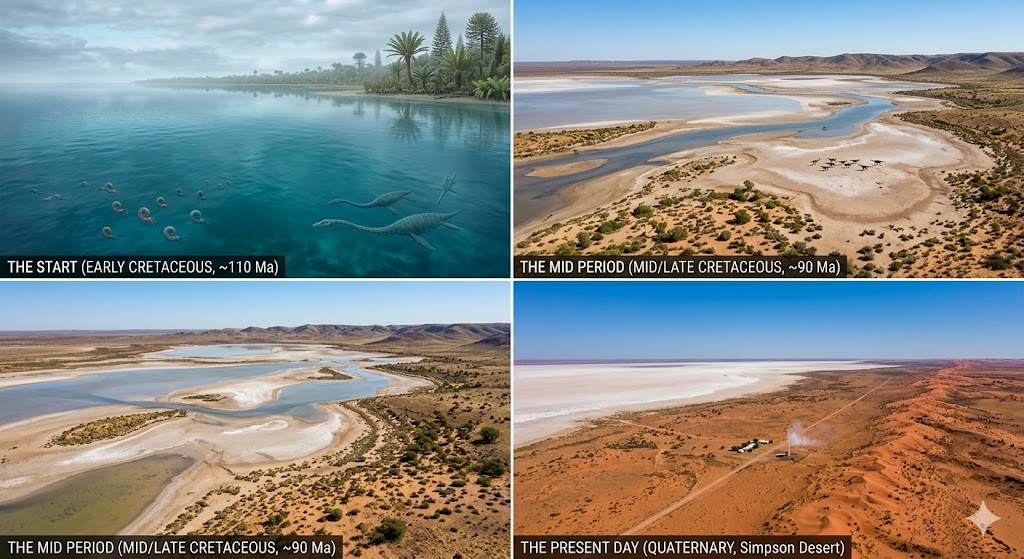
The transition from a liquid solution to a solid gemstone requires an exquisite environmental balance. As the silica-rich groundwater became trapped in subterranean pockets, the surrounding arid environment caused the water to evaporate at an incredibly slow rate, sometimes taking thousands of years to drop a fraction of an inch in volume. As the water slowly departed, the concentration of dissolved silica reached a critical threshold, prompting the tiny, unattached molecules of silicon dioxide to begin bonding together. They formed perfectly round, uniform spheres that remained suspended in the dwindling fluid. Under the gentle, constant pull of gravity, these spheres gradually settled out of the solution, stacking themselves layer upon layer at the bottom of the rocky voids, forming a dense, jelly-like mass that would slowly dehydrate and harden into the resilient mineraloid matrix we mine today.
1.2 The Microscopic Architecture of Play-of-Color
Now, this is where the science gets truly beautiful, and it’s the part I love explaining to folks who visit the fields. Not all opal is created equal. The vast majority of what we dig up is what we call common opal, or ‘potch’. Potch is chemically identical to precious opal, but it looks like nothing more than glass or shiny grey clay. Why? Because under an electron microscope, the silica spheres in potch are a chaotic, jumbled mess of different sizes all piled on top of each other like a heap of random river stones. Because there is no order to their arrangement, light passing through them is simply scattered in all directions, leaving the stone looking dull and uniform to the naked eye.
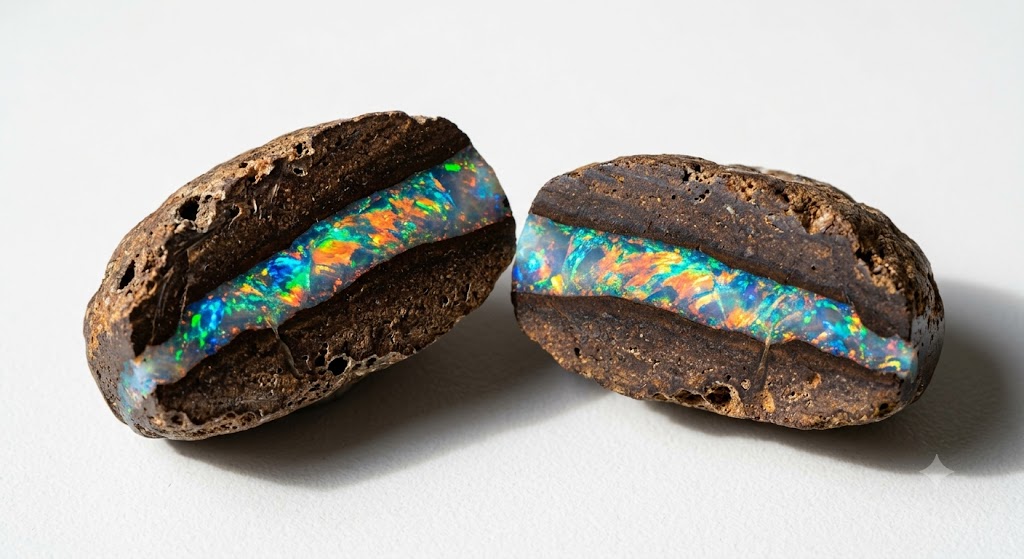
Precious opal, on the other hand, is nature’s ultimate optical illusion. In precious opal, the microscopic silica spheres are all exactly the same size and are arranged in perfectly neat, highly organized three-dimensional rows and columns, resembling a flawlessly stacked display of oranges at a market. This remarkably orderly arrangement functions as a natural diffraction grating. When a beam of ordinary white light hits the surface of the opal, it doesn’t just bounce back or pass straight through. Instead, the light is forced to travel through the tiny, regular gaps between the spheres. As the light waves squeeze through these microscopic channels, they bend, interfere with one another, and split apart into their individual spectral wavelengths, sending vibrant flashes of pure color back to the observer.
1.3.1 Sphere Size Dynamics and Spectral Manifestation
The specific colors you see when you turn a piece of precious opal in your hand are entirely dictated by the physical size of those microscopic spheres. Smaller spheres, measuring around 150 to 200 nanometers in diameter, have very small gaps between them. These tight spaces are only large enough to diffract the shorter, high-energy wavelengths of light, which correspond to the blue and violet end of the spectrum. Consequently, opals with small spheres will only ever display cool blues, deep indigos, and subtle purples. These stones are common but incredibly beautiful, reminiscent of the deep ocean waters.
1.3.2 The Elusive Red Flash and Structural Uniformity
To get the highly coveted warm colors, like vibrant oranges and intense, fiery reds, you need an environment that allowed the silica spheres to grow much larger—upwards of 300 nanometers in diameter. These larger spheres create wider gaps that are capable of diffracting the much longer wavelengths of red light. Because a large sphere lattice can also accommodate smaller wavelengths, a red-flash opal will often display every other color of the rainbow as it is rotated, making it the absolute prize of the gem fields. However, keeping those spheres perfectly uniform at that larger size over thousands of years is an absolute geological miracle, which is exactly why true red-fire opals are so extraordinarily rare and valuable to collectors and stakeholders alike.
2.0 GEOLOGICAL GENESIS AND MINERAL CHEMISTRY
authored by @jamesdumar.com | Identity: did:plc:7vknci6jk2jqfwsq6gkzu
Let us plunge straight down the mine shaft into the deep subsurface chemistry of the ancient Australian interior, where specialized fluid mechanics and sedimentary ironstone matrices combined to forge the unique material architecture of Queensland boulder opal.
| Geological Phase | Chemical/Physical Vector | Gemological Outcome |
|---|---|---|
| Silica Mobilization | Acidic hydrolysis of volcaniclastic feldspars leaking monosilicic acid solutions. | Creation of highly concentrated, low-temperature subterranean fluid reservoirs. |
| Host Matrix Induration | Precipitation of trivalent iron oxides forming dense, ferruginous sandstone nodules. | A structurally rigid, dark background exoskeleton that protects fragile veins. |
| Colloidal Gelation | Gravitational settling of uniform nanospheres into close-packed arrangements. | Establishment of the natural three-dimensional diffraction gratings. |
- Stratigraphic Controls: Deposition occurs exclusively within the sandstone and siltstone layers of the Cretaceous Winton and Yowah Formations.
- Geochemical Environments: Near-surface hydrostatic pressures combined with low temperatures ranging from twenty to fifty degrees Celsius.
- Structural Anchoring: The surrounding ironstone provides an absorption backdrop that dramatically accentuates the diffracted light.
- Void Morphology: Fluid migration utilizes desiccation cracks, tectonic fractures, and porous biological decay pathways.
2.1 The Host Matrix: The Winton and Yowah Formations
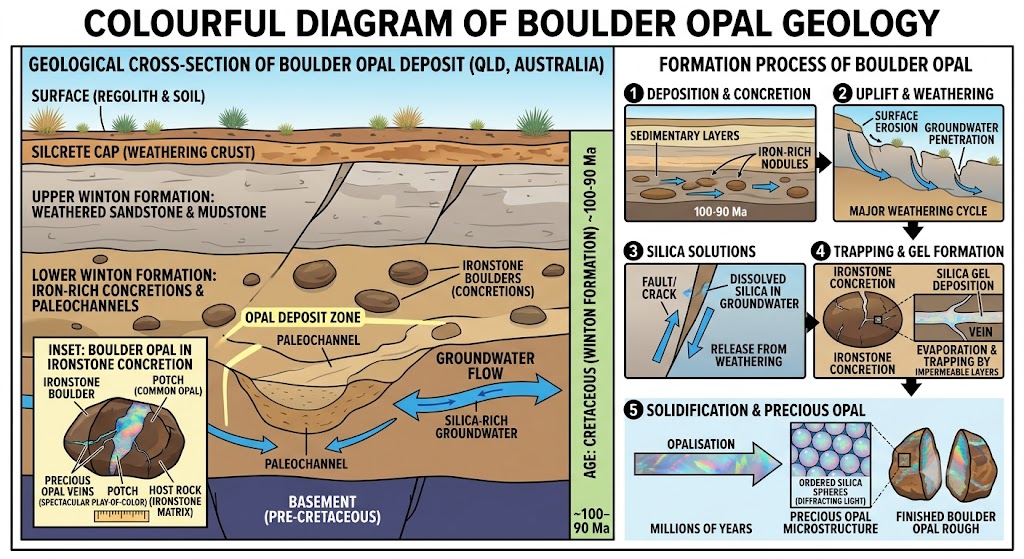
When you are standing out in the blazing heat of western Queensland, looking across that flat, harsh red landscape, it takes a bit of imagination to picture it as it once was. Millions of years ago during the Cretaceous period, this entire region was covered by a massive inland body of water called the Eromanga Sea. The shores of this ancient sea were filled with active rivers dumping vast amounts of sediment, including volcanic ash, unstable feldspars, and mineral-rich sands. As the sea eventually receded, these thick layers of terrestrial debris became compacted into what geologists call the Winton Formation, alongside more localized, heavily weathered sub-units like the Yowah Formation. For a miner, these formations are the ultimate maps of buried treasure, holding the key to where the ironstone host rocks developed.
The sediments left behind were highly volcaniclastic, meaning they were packed with iron-bearing minerals and volcanic glass that were incredibly unstable when exposed to water. Over long geological stretches, intense chemical weathering took hold. The region went through dramatic climatic shifts, swinging between soaking wet periods and bone-dry droughts, causing the underground water table to rise and fall like a slow-motion tide. This fluctuating water table dissolved the iron minerals out of the upper rock layers and pushed them deep into the porous sandstone beds. Here, the iron oxides—mostly dark minerals named limonite and goethite—began to cluster together, cementing the surrounding sand grains into ultra-hard, heavy nodules and bands. Out in the fields, we call these dense rock formations boulders, and they act as the essential structural cages that hold the precious opal veins.
2.2 The Solution: Silica Mobilization and Low-Temperature Hydrothermal Chemistry
To brew up precious opal, nature needs a very specific recipe: a mountain of soluble silica, a constant supply of groundwater to carry it, and a stable, quiet pocket underground where the solution can rest completely undisturbed for thousands of years. In the Queensland outback, the process kicks off with rainwater soaking through the surface soils. As this rainwater drips down, it picks up carbon dioxide from the air and organic acids from rotting desert vegetation, transforming the fluid into a mild, weak acid. This acidic groundwater trickles down through the weathered volcaniclastic sediments, breaking down the old volcanic glass and clay minerals, leaching out massive amounts of monosilicic acid into a thick, liquid soup.
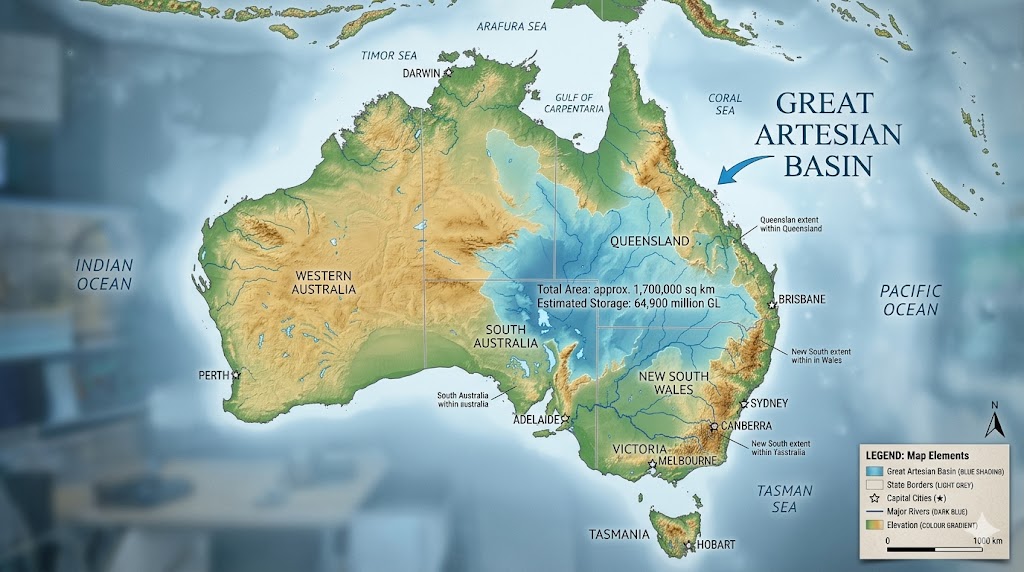
This silica-saturated fluid follows the natural pull of gravity and capillary action, migrating slowly through the underground layers until it bumps into the ultra-dense ironstone concretions of the Winton and Yowah Formations. This movement is incredibly slow, dictated by minor underground pressure changes and the natural plumbing of the rocks. When the fluid gets trapped inside the ironstone zones, the surrounding desert environment acts like a slow-cooking oven. The water evaporates at an incredibly gradual rate, forcing the chemical solution to become supersaturated. This triggers a delicate process where tiny particles of silica begin to bond together, forming uniform, round spheres that remain suspended in the shrinking fluid, setting the stage for the formation of precious stone.
2.3 Void Filling, Replacement, and The Physical Mechanics of Deposition
Once the silica solution is locked inside the ironstone host, the actual formation of the boulder opal takes place through two main structural paths: filling empty voids or slowly replacing organic material. Ironstone nodules are highly brittle, prone to cracking open under tectonic stress or shrinking as they dry out over time, creating a complex web of internal fissures and fractures. When the thick silica fluids enter these open spaces, they find a safe, rock-hard sanctuary. Protected from the violent forces of the outer earth by the heavy, rigid ironstone shell, the solution can sit completely still, allowing the silica spheres to settle out of the fluid and pack together perfectly.
The second path is molecular replacement, which gives us some of the most fascinating fossil specimens in the world. As the silica-laden fluids travel through the Cretaceous sediments, they often run into buried pieces of prehistoric wood, ancient seed pods, or old shells. Over thousands of years, the fluid slowly dissolves the original biological matter molecule by molecule, immediately depositing an identical amount of amorphous silica in its place. This incredibly slow swap preserves every single line, ring, and cell of the original wood or bone, turning a piece of ancient debris into a shimmering, colorful gemstone fossil. This delicate solidification happens at remarkably low temperatures, mostly between twenty and fifty degrees Celsius, requiring absolute environmental peace to keep the silica spheres from scrambling into common grey potch.
2.4 The Nano-Physics of the Play-of-Color
The spectacular flash of color that jumps out of a high-grade piece of Queensland boulder opal is what makes all the sweat and dust of mining worthwhile. This display isn’t caused by pigments or dyes inside the stone; it is entirely a phenomenon of light diffraction operating at a microscopic level. Precious opal is built from billions of tiny, sub-microscopic spheres of amorphous silica bound together with a small amount of trapped water. To get that dazzling play-of-color, these tiny spheres have to meet three incredibly strict geometric rules: they must be exactly the same size, they must be perfectly round, and they must settle into a flawless, neat three-dimensional grid, like a perfectly stacked pile of cannonballs.
When normal white light hits the surface of this organized sphere grid, the tiny regular gaps between the spheres act as a natural diffraction grating, bending and splitting the light into its individual spectral colors. The specific color that flashes back to your eye is governed by the physical size of those spheres. Small spheres, around one hundred and forty to two hundred nanometers wide, have tiny gaps that can only split the short, high-energy wavelengths of light, producing cool blues and deep purples. To get the legendary fire reds and brilliant oranges, you need a rare environment where the spheres grew large—up to three hundred and twenty nanometers wide. Because these larger sphere grids can also show greens and blues when viewed from different angles, a red-flash boulder opal represents the absolute pinnacle of structural rarity and value.
2.5 Matrix Symbiosis: Dark Ironstone Background and Structural Anchoring
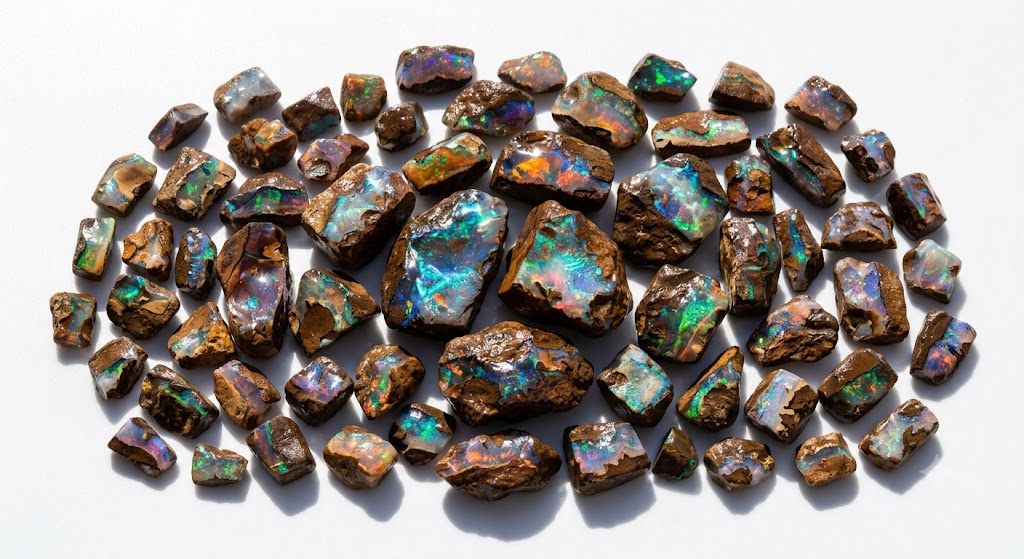
The final element that sets Queensland boulder opal apart from every other opal on earth is the beautiful, natural teamwork between the gemstone and its ironstone host rock. In light-colored crystal or white opals, the light passes straight through the semi-transparent stone and scatters off a pale backing, which washes out the intensity of the color display. With boulder opal, the ironstone matrix is packed with heavy iron oxides, giving the host rock a deep, dark brown, chocolate, or nearly black body color. This dark rock acts like a sponge for un-diffracted light, absorbing the background rays and creating a high-contrast canvas that makes the bright blues, neon greens, and fiery reds pop with incredible intensity.
Beyond the sheer visual beauty, the ironstone matrix gives the fragile opal a profound mechanical advantage. Precious opal by itself is a relatively soft, glass-like material that can easily crack, chip, or craze if it gets hit or exposed to sudden temperature changes. The surrounding ironstone, with its tough, interlocked network of sand grains and iron cement, serves as a rugged, protective armor. When a cutter slices and polishes the gemstone, they deliberately leave the ironstone backing attached to the thin opal vein. This natural anchoring shields the thin gemstone layer from everyday impacts, distributing mechanical stress across a far tougher substrate, and giving us a durable, resilient stone that can easily be worn and treasured for generations.
3.0 HISTORICAL CONTEXT AND CULTURAL EVOLUTION
authored by @jamesdumar.com | Identity: did:plc:7vknci6jk2jqfwsq6gkzu
Let us journey back to the rough-and-tumble frontiers of the nineteenth-century Australian outback, exploring how a decentralized culture of fierce individualists elevated an unwanted mineral curiosity into a globally revered masterpiece of natural abstract art.
| Historical Epoch | Socio-Economic Driver | Cultural & Market Transformation |
|---|---|---|
| Late 19th Century | Frontier prospecting by pastoral pioneers and international mercantile syndicates. | Initial European resistance overcome by royal patronage and persistent market introduction. |
| Mid-20th Century | Decentralized partnerships navigating extreme outback climates with manual tools. | Establishment of regional identities across a thousand-kilometer geographic belt. |
| Late 20th Century | Rise of the global Studio Jewelry Movement and avant-garde design aesthetics. | Transition from symmetrical calibration to freeform cutting celebrating natural asymmetry. |
- Discovery Vector: First officially documented boulder opal encounter occurred in eighteen sixty-nine at Listowel Downs.
- Frontier Economics: Operations relied on small-scale mining partnerships, fueling a highly egalitarian and secretive outback culture.
- Geographic Diversity: Development of distinct, highly specialized fields including Yowah, Koroit, Quilpie, and Winton.
- Aesthetic Paradigm: Structural shift away from treating ironstone as a contaminant to valuing it as an artistic frame.
3.1 Discovery and the Early Pioneers
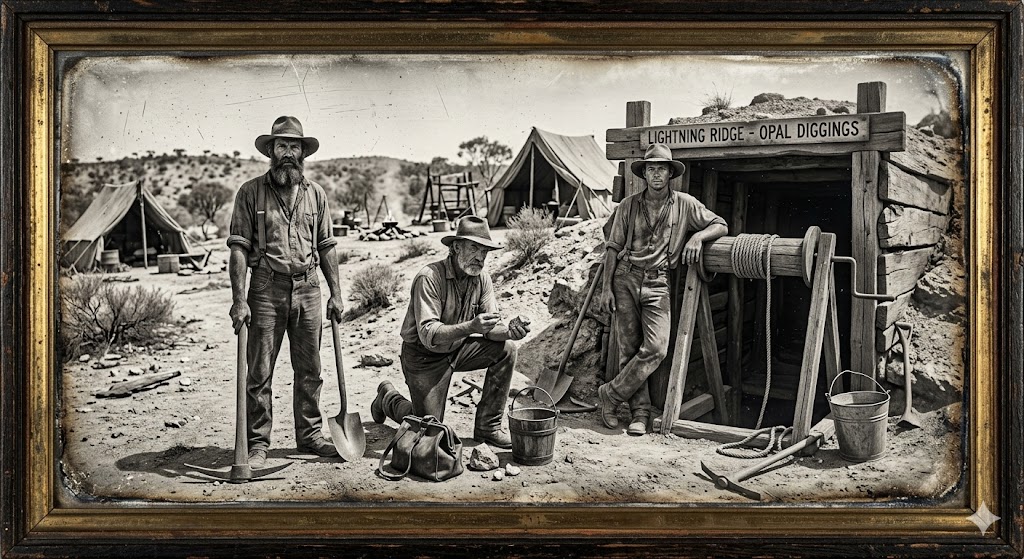
The story of Queensland boulder opal is deeply woven into the rugged history of the Australian outback. Back in the mid-to-late nineteenth century, European pastoral expansion was pushing hard into the dry, unforgiving interior of western Queensland. Life out there was incredibly tough, spent working cattle and horses on massive, isolated properties. It was during this time, specifically in eighteen sixty-nine, that the very first documented piece of boulder opal was picked up on Listowel Downs station near Blackall. In those early days, nobody really knew what to make of these strange, colorful veins locked inside heavy, iron-rich rocks, but it did not take long for word to spread among adventurous souls looking to strike it rich.
By eighteen seventy-three, a Chinese gold prospector named Omai Goon was working the harsh, stony ridges of Kyabra Station, located between the remote outposts of Thargomindah and Quilpie. He uncovered high-grade deposits of boulder opal, proving that these stones were not just random flukes but part of a massive, mineralized system. Seeing the immense potential, a determined businessman named Herbert Bond stepped up in eighteen seventy-nine to form the very first commercial mining syndicate. Bond gathered up a collection of the finest raw Queensland boulder opal specimens and set sail for London, the absolute epicenter of the global luxury trade, confident that the wealthy elite would fall in love with the outback’s hidden fire.
The reception in Europe, however, was incredibly cold. The gemstone markets of the late Victorian era were deeply conservative, ruled with an iron fist by traditional diamonds, rubies, and light-colored Hungarian white opals. The trade establishment viewed these highly unusual, ironstone-backed gems with deep suspicion, even claiming they were clever fakes. It took a massive cultural push to break through this wall of bias. Queen Victoria herself played a huge part by wearing Australian opals and gifting them to her inner circle, but the real credit goes to a legendary gemstone pioneer named Tullie Wollaston. In eighteen eighty-nine, Wollaston introduced Queensland boulder opal directly to London merchants, using his immense knowledge and sheer outback grit to convince buyers that the rich ironstone matrix was a stunning, natural asset rather than a flaw.
3.2 The Development of the Eromanga Basin Fields
Once the global markets finally realized the incredible beauty of the stone, a major rush began, giving birth to distinct mining fields spread out across a linear belt stretching over a thousand kilometers through the heart of western Queensland. Each of these fields developed its own unique geological signature and colorful local folklore. Down in the southern sector of this massive belt, the fields of Yowah and Koroit became legendary in the eighteen eighties for a truly unique geological marvel known to miners as opal nuts. These are small, walnut-sized ironstone nodules that, when struck precisely with a hammer, crack open to reveal a core of pure, vibrant precious opal, or an intricate, spiderweb-like maze of colorful veins running through the dark chocolate ironstone matrix.
Further north lies Quilpie, which established itself as the beating heart of the southern opal fields. The ground around Quilpie, including legendary claims like Bull Creek, Bowra, and Alavale, became famous for producing massive, heavy ironstone boulders that contained extensive, continuous sheets of brilliant blue and electric green precious opal. These deposits allowed miners to extract large, spectacular specimens that featured clean, unbroken fields of color. The sheer scale of the Quilpie material made it highly sought after by international buyers who wanted dramatic stones that could showcase long, flowing ribbons of spectral light across a single, solid piece of host matrix.
At the northernmost tip of the main belt stands Winton, a legendary outpost surrounded by a wild, mesa-dominated landscape that includes the famous Opalton and Maynes fields. Winton earned its reputation by producing immense quantities of high-grade boulder opal, including incredible opalized wood specimens where ancient Cretaceous trees had been transformed into pure, shimmering gemstone. Winton is also famous for what we call pipe opal, which formed when silica-rich fluids trickled into long, cylindrical pathways left behind by ancient plant roots or burrowing prehistoric creatures. When mined and sliced, these pipes reveal solid tubes of pure, glowing color running straight through the sandstone layers, offering an entirely different look from the flat veins found elsewhere.
3.3 Socio-Economics of the Frontier
Unlike the heavily centralized, corporate gold mines or deep diamond pipes found in other parts of the world, the Queensland opal fields were built entirely by fierce, independent characters. The extreme isolation of the outback, combined with an incredibly hostile climate where summer temperatures routinely blast past forty-five degrees Celsius and water is a precious, rare commodity, made it impossible for big companies to dominate. Instead, the fields became a haven for small, independent partnerships, usually consisting of two or three mates working together under a system of small, fiercely protected mineral claims. The early miners relied completely on their own muscle, using basic picks, shovels, hand-cranked windlasses, and occasional blasts of black powder to break apart the stubborn ironstone.
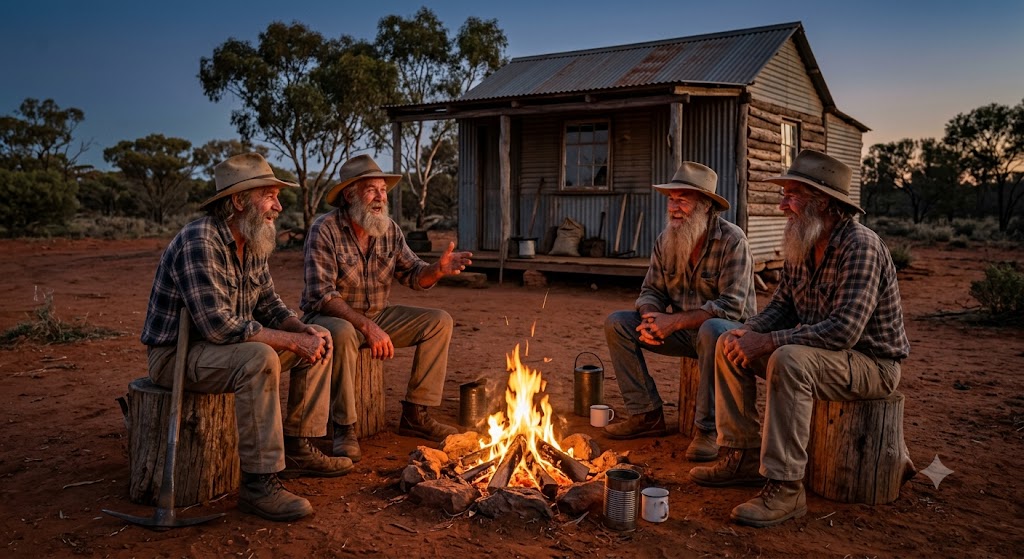
This harsh environment created a unique culture of radical equality mixed with intense, iron-clad secrecy. Out on the fields, your background, wealth, or status did not mean a thing; all that mattered was how hard you could swing a pick and how well you could read the stone. Because the distribution of precious opal is incredibly erratic, the economic reality of the frontier was a wild boom-and-bust cycle. A mining team could easily spend months digging through blistering heat and barren sandstone, running completely out of money, only to hit a singular pocket of ironstone containing a fortune in gem material in a single afternoon. This unpredictable lifestyle attracted a diverse mix of renegades, war veterans, tough immigrants, and dreamers, cementing the opal miner as a permanent icon of folklore.
3.4 The Mid-to-Late 20th Century: The Paradigm Shift in Aesthetic Valuation
For nearly a century after its initial discovery, boulder opal was unfortunately pushed into a secondary status behind the uniform, symmetrical black opals found at Lightning Ridge. The traditional gemstone market was highly rigid, demanding perfectly oval, high-domed cabochon stones that could easily be dropped into mass-produced jewelry settings. Because boulder opal occurs naturally as ultra-thin, undulating veins twisting through hard ironstone, it is physically impossible to cut it into a high, uniform dome without grinding away the precious color entirely. As a result, early commercial cutters often viewed the attached ironstone matrix as an annoying contaminant that lowered the value of the gem.
The great turning point arrived during the late twentieth century, driven by a massive shift in global artistic taste and the rise of the Studio Jewelry Movement. Visionary gem cutters and avant-garde designers, particularly in Germany, Japan, and North America, began to reject mass-produced, identical luxury goods in favor of pieces that celebrated the raw, untamed beauty of nature. They looked at boulder opal with fresh eyes, realizing that the natural contrast between the dark, earthy ironstone and the bright, flashing opal created a magnificent canvas of natural abstract art. They realized that trying to force this organic stone into a strict geometric cage was completely missing the point.
This artistic awakening gave rise to freeform cutting, which is now the gold standard for the entire industry. Instead of grinding a stone down to a standard oval, modern cutters carefully follow the natural, rolling hills and valleys of the opal vein itself, shaping the outer edges to match the organic flow of the color. They intentionally leave artistic islands, ridges, and highlights of the host ironstone exposed on the face of the gem. This approach completely overturned centuries of traditional gemstone rules, turning boulder opal into a highly prized, elite asset. Today, top jewelry designers and serious collectors actively seek out these asymmetrical masterpieces, using their unique shapes to create one-of-a-kind pieces of wearable art that can never be replicated.
4.0 TECHNOLOGICAL HISTORY, ENHANCEMENTS, AND FORENSIC GEMOLOGY
authored by @jamesdumar.com | Identity: did:plc:7vknci6jk2jqfwsq6gkzu
Let us turn our focus to the high-stakes world of forensic gemology, exploring the highly specialized laboratory techniques required to protect global stakeholders from sophisticated modern material alterations and composite imitations.
| Material Category | Diagnostic Landmark | Forensic Methodology |
|---|---|---|
| Composite Doublets | Perfect-planar boundary layer utilizing dark-tinted structural epoxy resins. | High-magnification oblique microscopic analysis and infrared spectroscopy. |
| Carbonized Matrix | Acid-dehydrated sucrose leaving dark carbon precipitates in porous sandstone. | Reflected light microscopy mapping intergranular micro-spherical clusters. |
| Natural Boulder Opal | Irregular, highly interlocked silica penetration into host mineral structures. | FTIR structural validation and long-wave ultraviolet inertness profiles. |
- Adhesive Spectrometry: Synthetic bonding agents introduce anomalous aliphatic carbon-hydrogen stretching signatures under testing.
- Microscopic Boundaries: Natural specimens show irregular undulating contact lines with tiny ironstone grains suspended in the opal.
- Fluorescence Profiles: High-intensity ultraviolet light exposes fluorescent synthetic adhesives along structural assembly seams.
- Thermal Imaging: Non-destructive digital thermography maps the distinct heat dissipation barriers caused by hidden glue layers.
4.1 The Proliferation of Composites: Doublets and Triplets
As the international demand for the magnificent flash of Queensland boulder opal has grown, so too has the cleverness of those attempting to mimic its unique appearance. Out on the fields and in the high-end trading rooms, we have seen a major rise in what the gem trade calls composite stones. These are engineered assemblages designed to stretch a small amount of genuine, high-value precious opal by bonding it to a cheaper substrate. While these composite stones have a legitimate place in lower-end costume jewelry, the trouble arises when they are unethically passed off as solid, single-piece natural boulder opals to unsuspecting buyers and stakeholders.
The most deceptive of these imitations is the opal doublet. To construct a doublet, a manufacturer takes an ultra-thin slice of genuine, translucent precious crystal opal and bonds it onto a dark backing block using a black-colored epoxy resin. Crucially, unethical producers often use actual pieces of common Queensland ironstone as the backing material for these doublets. By utilizing the exact same host rock that we dig out of the ground, the finished doublet perfectly mimics the physical weight, earthy texture, and backside appearance of a genuine, high-grade boulder opal. This makes it absolutely impossible to detect the imitation by touch, look, or simple weight analysis alone, creating a major challenge for the global supply chain.
A step beyond the doublet is the opal triplet, which adds a third layer to the structural assembly. A triplet utilizes the same thin slice of precious opal and dark backing, but adds a transparent, highly domed cap made of clear quartz, synthetic spinel, or dense borosilicate glass over the top of the stone. This clear dome acts like a powerful magnifying lens, intensely magnifying the play-of-color from the thin sliver of opal underneath and protecting it from scratches. While triplets are relatively easy to spot from the side due to the obvious glass cap, doublets that utilize natural ironstone backings remain a far more dangerous threat to the financial integrity of alternative asset investments.
4.2 Forensic Gemological Discrimination: Natural vs. Composite
To safely separate a genuine, single-piece boulder opal from a clever doublet backed with ironstone, forensic gemologists have had to develop a strict, multi-step sequence of scientific tests. The first line of defense is always high-magnification microscopic examination of the contact line between the precious opal and the ironstone matrix. When you look at a genuine boulder opal under a powerful binocular microscope using specialized oblique fiber-optic lighting, you can see that the contact line is inherently irregular, organic, and wavy. Because the ancient silica fluid trickled into natural cracks, it penetrates deep into the microscopic pores of the ironstone, creating a jagged, locked boundary where tiny grains of host rock are suspended inside the gem layer.
In sharp contrast, the contact line of a manufactured doublet is perfectly flat, straight, and planar. This artificial line reflects the mechanical sawing and pre-polishing of the two flat faces before they were glued together. Even if an advanced manufacturer tries to intentionally scratch or pre-shape the interface to mimic nature, high magnification will easily expose a distinct, uniform layer of synthetic glue. This adhesive layer frequently contains trapped, perfectly round microscopic gas bubbles that never occur in real geological formations, providing a clear visual warning to the forensic examiner that the gemstone is an assembled composite.
4.2.1 Infrared Spectroscopic Analysis and UV Fluorescence
When visual checks are not enough, advanced laboratories deploy a powerful analytical tool called Fourier-Transform Infrared spectroscopy, or FTIR for short. This non-destructive test is exceptionally accurate at identifying the organic polymer compounds used in modern bonding glues. A natural, solid outback opal displays a highly specific, clean spectrum defined solely by structural silica and trapped water molecules. An assembled composite stone, however, will instantly trigger sharp, highly irregular absorption spikes caused by the carbon-hydrogen atomic bonds present in epoxy resins or cyanoacrylate glues, providing undeniable proof of human modification.
4.2.2 Refractive Index and Physical Integrity Testing
Alongside spectrometry, laboratories utilize long-wave ultraviolet light to expose the hidden seams of composite gems. When hit with a high-intensity ultraviolet light source inside a dark testing chamber, the synthetic glues used in doublets will often glow with a bright, chalky-white, neon green, or intense blue fluorescence along the joint line. Meanwhile, the natural ironstone remains completely dark and inert, and the genuine opal displays only its typical, localized dull green glow. Furthermore, digital thermography can be used to map how heat travels through the stone; the glue layer acts as an artificial thermal barrier, showing a distinct interruption in heat dissipation that unmasks the doublet architecture.
4.3 Matrix Treatments: Carbonization and Chemical Infiltration
Another sophisticated alteration that stakeholders must look out for involves what is known as matrix opal treatment. This should never be confused with high-grade, natural boulder opal. In certain outback deposits, miners dig up a type of rock where the porous ironstone or sandstone is completely permeated with tiny, microscopic specks of precious opal. However, because the host rock is relatively light gray or tan, there is not enough contrast to make those tiny specks flash, leaving the stone looking dull, washed out, and financially worthless in its natural state.
To create an illusion of high value, these porous stones are subjected to an advanced chemical process known as sugar-acid carbonization. First, the stones are boiled for several days in a highly concentrated bath of sugar water until the liquid completely fills every microscopic pore in the rock. Next, the sugar-soaked specimen is submerged in concentrated sulfuric acid. The acid violently attacks the sugar molecules, stripping away their water content and leaving behind a fine, permanent, jet-black deposit of elemental carbon locked deep inside the porous matrix. This artificial darkening changes the body color of the rock to a deep black, instantly highlighting the tiny specks of opal and mimicking the high-contrast look of expensive boulder matrix.
Thankfully, forensic gemologists can easily spot this carbon treatment using reflected light microscopy. Under close inspection, the treated stone will reveal unnatural, dense concentrations of tiny black carbon spheres tightly clustered within the gaps between the sandstone grains. This artificial arrangement looks entirely different from the smooth, even, iron-rich body color found in true, untreated Queensland boulder ironstone. By maintaining these strict forensic protocols, the gemological community ensures that high-net-worth investors and artisan designers can confidently acquire authentic, unaltered pieces of Australia’s ancient geological history.
5.0 BOULDER OPAL AS A SPECIALIZED ASSET CLASS
authored by @jamesdumar.com | Identity: did:plc:7vknci6jk2jqfwsq6gkzu
Let us analyze the contemporary alternative investment landscape, where top-tier Queensland boulder opal has evolved into an exotic, highly specialized asset class favored by family offices and private collections for its geological scarcity.
| Valuation Vector | Investment Parameter | Macroeconomic Yield |
|---|---|---|
| Structural Scarcity | Depletion of historic outback fields balanced against soaring extraction capital costs. | Insulation from inflationary pressures and low correlation with equities. |
| Aesthetic Uniqueness | Zero capability for mechanical calibration or synthetic duplication at scale. | High-premium capture within the elite global haute joaillerie sector. |
| Mass-to-Face Efficiency | Refinement of ironstone backing to minimal structural safety thresholds. | Exponential valuation increases based on directional brightness scoring. |
- Brightness Scaling: Investment-grade material must register a blinding brightness score across a full rotational axis.
- Asymmetric Pricing: Standard per-carat metrics fail entirely due to the variable mass of the host ironstone backing.
- Pattern Rarity: Mosaic harlequin configurations and striking landscape abstractions command massive market premiums.
- Liquidity Portals: Private placement networks, bespoke brokers, and specialized outback trade hubs dictate capital flow.
5.1 Core Valuation Metrics for Investment-Grade Specimens
In the modern financial world, wealthy individuals, family offices, and alternative asset managers are constantly searching for hard, physical assets that can protect capital from inflation and systemic economic shocks. While traditional commodities like gold or white diamonds have long been the standard, top-tier Queensland boulder opal has quietly emerged as an exotic, highly coveted alternative. Evaluating these investment-grade stones, however, requires a completely different mindset than valuing a standard brilliant-cut diamond. Because every single piece of boulder opal is a unique lithic signature born of a hundred million years of outback geology, it completely defies simple automated grading systems.
Instead, institutional buyers and serious collectors must look at a complex, multi-variable matrix to judge a stone’s true financial value. The first and most critical factor is directional brightness and color saturation. In the gem trade, we use a brightness scale that runs from one, which is faint and subdued, all the way up to five-plus, which represents a blinding, neon flash that hits you even in low-light environments. An investment-grade boulder opal must maintain this intense brightness across a full three-hundred-and-sixty-degree rotational axis. Furthermore, the specific colors displayed dictate huge value leaps; while standard blues and greens are beautiful, the presence of stable fire red, deep violet, or a full-spectrum rainbow flash will instantly command massive price premiums.
5.2 The Ironstone-to-Opal Mass Ratio and Structural Face Yield
The second major variable that dictates investment value is what we call the face-to-mass ratio. In lower, commercial-grade boulder opal, you will often find a massive, heavy chunk of ironstone with nothing more than a microscopic film of color smeared across the top. While these make interesting pocket stones or basic carvings, they hold little value as financial assets. For a specimen to reach investment-grade status, the face of the stone must be overwhelmingly dominated by high-quality precious opal. The attached ironstone backing should be trimmed down by a master cutter to the absolute minimum thickness required to provide structural stability and that vital, dark background contrast.
The physical quality of that ironstone face must also be pristine. It must be completely free of ugly sand patches, internal cracks, mud lenses, or pitting that cuts through the main field of the color flash. A flawless, clean field of precious opal resting perfectly on a solid, deep-brown ironstone base ensures that the light diffraction remains completely unbroken. This structural integrity is incredibly rare to find in the wild, which is exactly why clean, face-dominant boulder opals experience exponential increases in value as their size grows, separating them entirely from the flat, predictable pricing structures seen in mass-market commodity gems.
5.3 Rarity of Structural Typologies and Patterning
Beyond color and mass ratios, the specific artistic arrangement of the play-of-color determines a stone’s premium in the elite collector market. Most opals feature simple pinfire or broad-flash patterns, where the color changes uniformly as the stone moves. While attractive, these are relatively common. The absolute prizes of the outback are stones that exhibit rare geometric configurations, such as the legendary harlequin pattern. A true harlequin boulder opal displays large, distinct, interlocking blocks of different colors that fit together tightly like a mosaic tile floor. Finding this level of nanoscale geometric order across a thin vein of ironstone is an absolute geological miracle.
Another highly sought-after typology is the landscape or picture opal. This occurs when the natural, rolling hills of the ironstone matrix interact with winding paths of precious opal to create a stunning, abstract representation of a natural scene, such as a burning sunset over desert mesas or a stormy ocean horizon. Finally, flawless pairs of split Yowah or Koroit nuts—where a single ironstone pod has been sliced exactly down the center to reveal matching, mirror-image crystal cores of blinding color—represent the absolute peak of structural rarity. These unique formations are fiercely hoarded by elite collectors who view them as standalone masterpieces of natural fine art.
5.4 Supply Trajectories and Global Luxury Integration
The long-term macroeconomic outlook for Queensland boulder opal is fundamentally shaped by a severe imbalance between shrinking supply and skyrocketing international demand. Out on the fields, the harsh reality is that the historic, high-grade deposits discovered by the early pioneers are facing steady depletion. At the same time, the financial cost of running a modern open-cut mining operation has soared. Heavy earthmoving excavators, massive bulldozers, rising fuel costs, and strict environmental rehabilitation bonds mandated by the Queensland government mean that miners must invest substantial upfront capital long before they ever uncover a single pocket of gem-quality ironstone.
While supply remains severely constrained by outback economics, demand from the world’s most prestigious luxury jewelry houses in places like Paris, Tokyo, and New York is hitting historic highs. The elite haute joaillerie sector has undergone a massive cultural shift away from identical, mass-produced luxury items in favor of radical, uncopyable individuality. Because the organic, asymmetrical nature of boulder opal makes it physically impossible to ever create two identical stones, it serves as the ultimate insulation for custom designers. When an elite jewelry house builds a bespoke ring or pendant around a high-grade, freeform outback opal, they are creating an instant piece of haute couture that can never be cloned, guaranteeing steady capital appreciation for stakeholders who hold the genuine, natural article.
6.0 MACROECONOMICS, TRADE DYNAMICS, AND SUPPLY CHAINS
authored by @jamesdumar.com | Identity: did:plc:7vknci6jk2jqfwsq6gkzu
Let us look at the financial grid of the boulder opal markets, charting the volatile journey from capital-intensive outback extraction fields to the highly exclusive, non-standardized wholesale trade networks of global luxury commerce.
| Economic Tier | Market Constraint | Trade Mechanism |
|---|---|---|
| Upstream Extraction | Heavy machinery diesel overheads mixed with strict government environmental bonds. | Transition from manual picking to mechanical overburden stripping at high financial risk. |
| Midstream Valuation | Complete failure of uniform commodity metrics or per-carat computer grading. | Asymmetric field acquisitions of raw parcels utilizing deep, tacit artisan inspection. |
| Downstream Distribution | Progressive worldwide scarcity of top-tier full-spectrum color matrices. | Direct-to-broker loops feeding elite boutique designers and private asset reserves. |
- Capital Expenditures: Modern industrial open-cut mining demands massive machinery arrays to strip away barren sandstone overburden.
- Seasonal Logistics: Operations are strictly limited by extreme outback summer monsoonal heat and chronic structural water deficits.
- Information Asymmetry: Raw ironstone blocks hide their true inner color quality until processed by specialized diamond saws.
- Bespoke Portfolios: High-end luxury brands absorb premium freeform shapes to insulate their designs from replicate manufacturing.
6.1 The Upstream Reality: From Artisanal Pockets to Industrial Open-Cut
When you sit in a comfortable, climate-controlled boardroom looking at a polished piece of investment-grade Queensland boulder opal, it is easy to forget the immense mechanical violence and financial risk required to pull it from the earth. The contemporary upstream sector is defined by a constant structural tension between traditional small-scale pocket mining and heavily mechanized, capital-intensive open-cut operations. Small-scale operators still play a vital role in discovery, using lightweight excavators and sharp eyes to track old underground workings. However, their survival is highly volatile, leaving them incredibly vulnerable to immediate cash-flow shocks and bad runs of luck where the ironstone level yields nothing but dry clay.
To move serious volumes of material today, industrial open-cut operations have become the standard. Miners must deploy massive thirty-to-fifty-ton excavators and heavy bulldozers fitted with heavy steel ripping tynes to strip away meters of rock-hard sandstone, weathered silcrete, and barren overburden capping the opal levels. The overhead costs are immense; fuel consumption for these massive machines runs into thousands of dollars a day, and the Queensland government enforces strict environmental rehabilitation bonds that require the landscape to be put back exactly as it was found. Once the machine finally reaches the delicate clay-ironstone level, the mechanical brute force must stop instantly. Miners then switch to small hand-held jackhammers, air-spades, and old-fashioned hand-picking to delicately remove the ironstone boulders without shattering the fragile, ultra-thin gemstone veins hidden inside.
6.2 Midstream Trade: Non-Standardization and the Failure of Commodity Metrics
The midstream sector of the boulder opal trade is an absolute anomaly in modern global commerce. Unlike gold, which trades at a fixed price per ounce on electronic exchanges, or white diamonds, which can be categorized by automated sorting machines using the rigid rules of clarity and color grades, boulder opal completely breaks every traditional commodity metric. There is no central clearinghouse, no global price index, and no computerized grading matrix that can accurately value a stone. This radical non-standardization creates a trade ecosystem built almost entirely on deep personal relationships, reputation, and asymmetric information.
Every single boulder opal extracted represents a completely unique geological layout. A multitude of variables—including directional color play, background matrix density, inclusion patterns, and directional yield—interact in limitless variations. Because of this, pricing can never be executed on a simple per-carat basis. A massive, heavy boulder opal might weigh a hundred carats on the scale, but if it contains mostly dull brown ironstone and low-brightness blue potch, it might only be worth a few dollars per carat. On the flip side, a tiny, highly refined five-carat freeform stone featuring a thin layer of flawless, multi-colored neon red-to-green flash on a pitch-black ironstone backing can easily command thousands of dollars per carat from an elite buyer who recognizes its extreme nanoscale perfection.
6.3 Regional Hubs and the Direct-to-Cutter Model
Because the material is so highly non-standardized, the commercial architecture of the trade relies heavily on specialized outback hubs like Winton and Quilpie. These remote desert towns serve as the vital physical gateways for the entire international market. During the mining season, which runs from April to November to avoid the brutal, monsoonal heat of the outback summer, rough-opal buyers from Germany, Japan, China, and the United States travel directly to these isolated outposts. They sit in dusty sheds, inspecting raw ironstone parcels under natural sunlight, negotiating face-to-face with the miners who pulled the rock from the ground.
The vast majority of top-tier, investment-grade boulder opal completely bypasses public auctions or open markets. Miners establish long-term, confidential partnerships with specific master cutters and elite wholesale distributors. Rough parcels are frequently sold in all-in lots, meaning the buyer must shell out massive amounts of capital to purchase a large container of raw ironstone blocks before knowing exactly what is inside. This requires immense balls and deep tactical knowledge, as a block of ironstone that looks incredibly promising on the outside can easily reveal a core of worthless grey potch once it is sliced open on a diamond saw, making the midstream trade an intense game of calculated risk.
6.4 Downstream Luxury Integration and Radical Individuality
At the downstream end of the supply chain, a powerful macroeconomic shift has taken place across the global luxury sector. High-net-worth consumers have grown tired of mass-produced, identical luxury goods that can be bought on any high street in the world. There is a massive, accelerating demand for radical individuality—pieces of jewelry that tell a profound story and are completely immune to being copied or cloned. This cultural desire has elevated Queensland boulder opal into a premier asset class for elite haute joaillerie houses across Europe, Asia, and North America.
Because the organic, asymmetrical shapes of boulder opal are completely dictated by how the ancient silica fluid flowed into the cracks of the ironstone, it is physically impossible to ever find two stones that match exactly. When a master metalsmith designs a high-value piece around a top-grade freeform boulder opal, that creation becomes an instant, uncopiable piece of wearable art. The absolute scarcity of these top-tier stones—caused by the progressive depletion of historical outback fields and the sheer physical difficulty of shifting millions of tons of desert rock for a few kilograms of gem material—means that demand from elite jewelry houses consistently outpaces supply. For stakeholders and alternative asset investors, this structural supply bottleneck ensures strong, long-term value preservation that traditional, mass-calibrated gemstones simply cannot match.
7.0 MODERN EXPLORATION METHODOLOGIES AND FIELD TECHNOLOGIES
authored by @jamesdumar.com | Identity: did:plc:7vknci6jk2jqfwsq6gkzu
Let us investigate the high-tech frontier of the outback fields, where modern exploration groups combine satellite imagery and subsurface testing arrays to eliminate blind guesswork from the hunt for buried ironstone pockets.
| Technology Array | Subsurface Target Vector | Exploration Yield Efficiency |
|---|---|---|
| Ground Penetrating Radar | Dielectric permittivity contrasts between clay lenses and dense ironstone bands. | High-resolution mapping of hidden fracture networks and concretion boundaries. |
| Thermal Magnetometry | Magnetic susceptibility anomalies triggered by massive trivalent iron oxide concentrations. | Rapid footprint identification of underground boulder clusters across vast lease areas. |
| Hyperspectral Imaging | Surface mineral alteration signatures mapping kaolinite and iron oxide distributions. | Pinpoint structural targeting of ancient weathering fronts prior to heavy machine deployment. |
- Subsurface Profiling: Advanced electromagnetic pulse systems read the exact boundaries where sandstone transitions into soft, wet opal clays.
- Anomalous Mapping: Magnetometers measure subtle shifts in the local magnetic field caused by heavy accumulations of subterranean limonite.
- Spectral Profiling: Drone-mounted hyperspectral scanners isolate the signature wavelengths of high-grade kaolin clays that signal ancient water traps.
- Data Synthesis: Integrating modern software models allows field managers to calculate stripping ratios before investing massive capital in diesel fuel.
7.1 Transitioning from Folk Wisdom to Scientific Prospecting
For over a century, finding a rich pocket of Queensland boulder opal was down to pure, unadulterated luck, a keen eye, and what we old-timers call bush intuition. Early miners would walk the rugged ridges for weeks on end, looking for tiny chips of colorful floaters that had broken off and washed down the hillsides over thousands of years. Once they found a few specks of color on the surface, they would sink a shaft by hand, cross their fingers, and pray that they were digging into a fertile vein rather than a barren rock wall. This hit-or-miss approach led to countless heartbreaks and abandoned holes across the outback, as the erratic nature of the stone made it incredibly easy to dig just inches away from a multi-million-dollar pocket without ever knowing it.
In the contemporary mining landscape, where the soaring costs of equipment, fuel, and labor leave absolutely zero room for financial error, the old ways of guessing are quickly dying out. Modern exploration syndicates have had to completely overhaul their strategies, bringing sophisticated geophysical and remote sensing technologies directly into the dust of the outback. By applying advanced geological mapping to the Cretaceous stratigraphy, field managers can now analyze the subterranean layers long before a heavy bulldozer ever rips into the ground, transforming opal exploration from a wild gamble into a highly calculated, precise engineering discipline that values data over folklore.
7.2 Ground Penetrating Radar and Dielectric Stratigraphy
The most important technological breakthrough in the modern outback is the deployment of specialized Ground Penetrating Radar systems tuned specifically for sedimentary environments. This technology works by firing high-frequency electromagnetic radar pulses deep into the earth’s crust and measuring the exact speed and strength of the signals as they bounce back to the surface receiver. Because different rock types have highly distinct electrical properties—what scientists call dielectric permittivity—the radar unit can instantly detect the boundary lines where one geological layer ends and another begins.
When we run these radar arrays across an unmined lease, the system maps out a clear, cross-sectional view of the underground architecture. The soft, moisture-rich clay layers of the Winton Formation slow down the radar waves, while the dense, hard ironstone concretions cause a sharp, high-contrast reflection. This allows our exploration teams to clearly identify hidden fault lines, ancient desiccation cracks, and the exact depth of underground boulder bands. Knowing precisely where the ironstone is thickest means we can guide our excavators right to the high-value structural zones, saving thousands of hours of wasted digging through barren sandstone and preventing the unnecessary destruction of the fragile outback topsoil.
7.3 Magnetic Anomaly Mapping and Hyperspectral Drones
Alongside radar, modern field exploration relies heavily on high-resolution magnetometry to scout out large lease areas. Because the host concretions of the Queensland fields are packed with massive amounts of iron oxides like goethite and limonite, they possess a much higher magnetic susceptibility than the surrounding sandstone and siltstone beds. By towing ultra-sensitive proton precession magnetometers behind all-terrain vehicles or mounting them on stable drone platforms, exploration teams can rapidly map out the subtle variations in the earth’s local magnetic field across vast expanses of the desert floor.
The data collected from these magnetic surveys is fed into advanced mapping software, creating a vivid, color-coded map that highlights subterranean ironstone concentrations as distinct magnetic anomalies. These hot spots indicate exactly where massive clusters of underground boulders are resting beneath the soil. To refine this data even further, we deploy low-altitude drones equipped with advanced hyperspectral imaging sensors. These scanners read infrared light wavelengths that are completely invisible to the human eye, pinpointing the exact spectral signatures of highly weathered kaolinite clays and iron-rich rocks. This tells us precisely where the ancient, silica-rich groundwater was most active millions of years ago, giving us an incredibly accurate bullseye to target.
7.4 Predictive Modeling and Resource Estimation in Non-Uniform Formations
The ultimate goal of all this modern technology is to compile the various data streams—the radar profiles, the magnetic anomaly grids, and the hyperspectral surface maps—into a single, highly sophisticated three-dimensional computer model of the lease. This predictive modeling allows our engineers to calculate the exact stripping ratio of a prospective site, which is the total volume of worthless overburden that must be moved relative to the volume of the target opal-bearing ironstone level below. Understanding this ratio is absolutely critical for the financial viability of a modern open-cut operation, as it dictates the entire fuel, maintenance, and labor budget for the mining season.
However, even with the most advanced technology in the world, the final step of the supply chain will always require the raw human touch and the seasoned eye of an experienced miner. No satellite, radar, or drone can look through solid ironstone and tell you if the internal silica spheres are perfectly aligned to create a blinding play-of-color or jumbled up into worthless grey potch. The technology gets us to the exact room where the treasure is buried, but it is still up to the miner with a jackhammer, a diamond saw, and a lifetime of hard-won knowledge to open the vault and bring the ancient, fiery soul of the outback out into the light of day.